
 Asger Risom
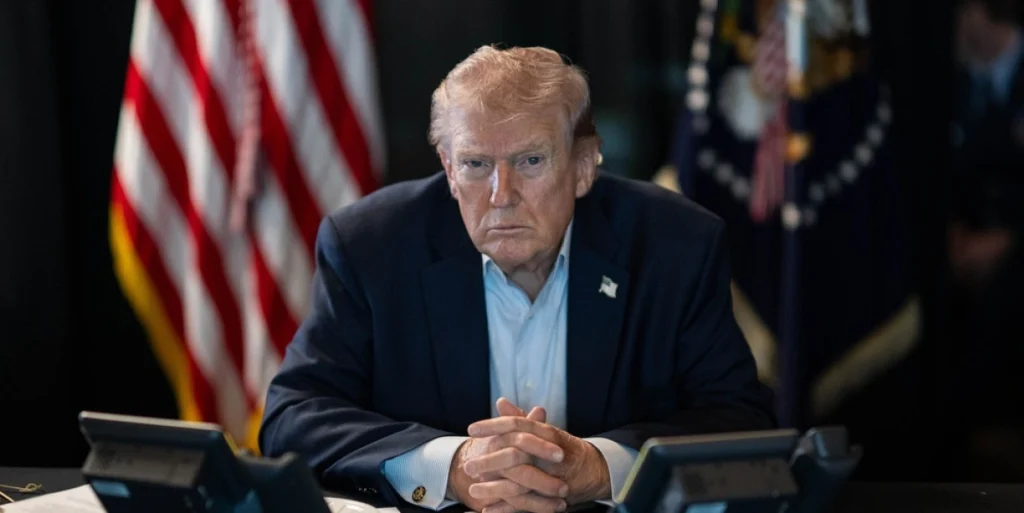
The Trump administration has officially dismantled years of Biden-era clean energy policy, gutting 2031 fuel economy targets from 50 mpg down to 35 mpg. By killing EV incentives and state emissions rules to bail out legacy Detroit automakers, regulators are locking American drivers into burning expensive gas while rendering the domestic auto industry globally obsolete.

Instead of competing with the rest of the world, Detroit just bought itself a political bailout. In a single sweeping move, the Trump administration systematically dismantled years of Biden-era climate and industrial policy, gutting federal fuel economy standards to ensure legacy automakers never have to catch up to global EV benchmarks.
According to reporting from the Associated Press, regulators took the Biden administration’s projected 2031 fleetwide efficiency target of 50.4 miles per gallon and aggressively hacked it down to 34.9 mpg—slashing standards below requirements set a full decade ago.
It completes a total scorched-earth campaign against clean transportation, stacking directly on top of Trump’s repeal of $7,500 consumer EV tax credits, the elimination of non-compliance fines for car manufacturers, and the revocation of California’s historic legal waiver to enforce its own tailpipe emissions rules.
The $4.47 per gallon bailout
The Department of Transportation tried to package this regulatory surrender as a gift to American consumers, claiming lower manufacturing hurdles will shave $1,300 off the average sticker price of a new car. That spin collapses the second you pull up to a gas pump.


The administration finalized the rollback on the exact day national gasoline prices spiked to $4.47 a gallon, driven by escalating military conflict in the Middle East and threats to the Strait of Hormuz.
While Biden’s fuel efficiency rules were projected to save American drivers 14 billion gallons of gas by 2050—easily offsetting initial vehicle costs through lifetime fuel savings—Trump’s rules actively lock consumers into burning expensive fuel in dirtier cars.
Environmental groups estimate this rollback will pump an additional 22,000 tons of carbon dioxide, nearly 5,000 tons of smog-forming compounds, and 90 tons of deadly soot into the air every single year by 2035.
Decades of hard-won public health and climate progress were wiped out overnight so Detroit can protect its short-term profit margins on gas-guzzling trucks.
The protectionist suicide pact
Predictably, Big Auto couldn’t celebrate fast enough. Ford, General Motors, and Stellantis—speaking through the Alliance for Automotive Innovation—praised the Trump administration for aligning federal rules with “market realities” and preserving consumer choice.
As an analysis from InsideEVs points out, that “market reality” is a pure fiction crafted behind protective walls.
In China, relentless domestic competition and rapid battery iteration have pushed New Energy Vehicles to a staggering 60% of all passenger car sales. In Europe, pure battery-electric cars now comfortably outsell traditional gas and diesel models. The rest of the world has already moved on.
While foreign automakers refine high-efficiency electric platforms for global dominance, American manufacturers are using Trump’s regulatory bailout to retool factories for heavy V-8 SUVs.
Shielded by 100% import tariffs that keep cheap, high-tech foreign EVs out of domestic dealerships, U.S. legacy brands are trading their long-term survival for immediate cash flow. Detroit didn’t just lose the electric vehicle race—it lobbied Washington to dynamite the track.



