
 Asger Risom

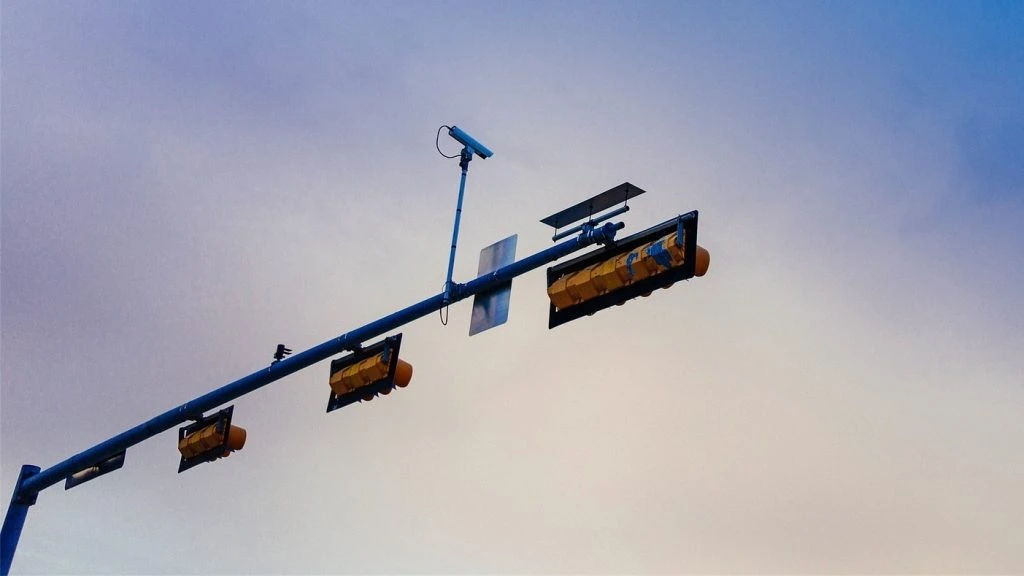
Cities are cracking down on deafening exhausts and gunshot-style engine tunes by installing automated noise cameras on streetlights. Using advanced microphone arrays and acoustic beamforming, these systems pinpoint loud tailpipes in dense traffic, overlay a visual sound map on video, and mail steep fines directly to offending drivers.

You are sitting at an outdoor cafe or trying to sleep in a second-floor apartment when a modified sedan rolls down the avenue. The driver lifts off the throttle, and the tailpipe lets loose a rapid-fire sequence of artificial backfires that sounds like a drive-by shooting. Everyone on the sidewalk flinches, the car disappears around the corner, and life moves on.
Drivers with straight-piped exhausts and antisocial engine tunes have long operated with near-total impunity. Traffic cops rarely had the time, the tools, or the inclination to chase down a loud car just to write a noise ticket.
Now, municipal governments are taking human discretion out of the equation. Cities are mounting automated noise cameras to streetlights and overpasses, using acoustic radar to single out roaring mufflers in dense traffic and mail steep fines straight to the registered owner’s door.
The failure of the old traffic stop
Until recently, stopping loud vehicles was a logistical nightmare for police departments.


To issue a legally binding noise citation, a patrol officer had to physically spot the offending car in motion, pull it over through active traffic, and whip out a handheld decibel meter. Even then, the ticket frequently fell apart in court. Defense attorneys could easily argue that the reading was skewed by a passing semi-truck, a low-flying helicopter, or an echo bouncing off concrete buildings. Because proving vehicle noise was so tedious, police departments routinely stopped bothering, leaving urban corridors to turn into drag strips after dark.
The rise of modern engine software made the problem dramatically worse. Beyond simply cutting off catalytic converters or bolting on hollow mufflers, enthusiasts began installing custom “burble tunes” or “pop-and-bang” engine maps. These ECU flashes deliberately dump unburned gasoline directly into the hot exhaust manifold when the driver lets off the gas, creating a barrage of explosive bangs purely for acoustic theater.
To catch up, city planners realized they had to treat noise pollution the exact same way they treat speeding: automate the trap.
How a camera sees sound
Putting a basic microphone on a traffic pole does not work. A single microphone can tell you that the intersection is loud, but it cannot tell a judge whether that 95-decibel roar came from a tuned BMW, a city bus with bad brakes, or a construction crew tearing up the asphalt.
To solve that, acoustic cameras rely on an engineering trick called beamforming.
Instead of a single microphone, the unit features an array of precision microphones arranged in a geometric disc or cross around a high-definition video camera. Sound travels through air at a sluggish pace—roughly 770 miles per hour, or 343 meters per second. When an illegal tailpipe cracks, that acoustic pressure wave does not hit all the microphones at the exact same instant; it reaches the microphone closest to the car a few microseconds before it reaches the ones mounted farther away on the array.
By cross-referencing those microscopic time differences thousands of times per second, the system’s onboard processor calculates the sound’s exact point of origin in three-dimensional space. The software then converts that math into a visual, multi-colored acoustic heat map overlaid directly on the camera’s live video feed.
To the computer, sound becomes visible. As traffic moves down the boulevard, the screen displays a bright red bullseye hovering directly over the shaking exhaust tips of the offending car, instantly separating it from the ordinary tire hum of the vehicles driving alongside it.
The automated paper trail
Once the acoustic heat map identifies a vehicle crossing the statutory threshold—typically around 85 decibels measured from 50 feet away—the system locks on.
The optical camera snaps high-resolution images of the rear license plate while recording a video buffer showing the car’s speed and an accompanying audio waveform graph. As detailed by AP News, New York City pioneered this automated enforcement by pairing acoustic sensors with its environmental protection codes, issuing steep fines for illegal mufflers without requiring a single patrol cruiser on the road.
Before an envelope ever reaches a mailbox, the automated package gets sent to human technicians. City inspectors review the footage to verify that an emergency vehicle was not passing by with its siren blaring and that the license plate transcription matches the car’s make and model. Once verified, a summons lands in the owner’s mailbox: in New York, penalties start at $800 for a first offense and escalate up to $2,600 for repeated violations.
Drivers who receive a notice are given a simple choice: bring the car to an official city inspection facility to prove the exhaust has been restored to factory decibel limits, or keep paying thousands of dollars in automated fines every time they drive through town.
Taking the theater off the street
Automating noise enforcement closes a regulatory loophole that has frustrated city residents for years. It eliminates dangerous, high-speed traffic pursuits, strips racial and socioeconomic bias out of traditional roadside stops, and forces drivers to pay for turning residential streets into private rev tracks.
Drivers who deliberately rattle windows once banked on the fact that human officers were too busy to care. Now that streetlights have ears, that free pass is officially gone.



