
 Kenneth Glad

We often think of the planet as a giant clock. People expect natural cycles to play out predictably over tens of thousands of years. Yet human activity has a strange way of throwing those deep historical rhythms entirely off balance.


Standard science places the next ice age roughly 50,000 years away. The United Nations and major climate models have long agreed on that distant timeline.
A new study reported by HistorieNet disrupts that theory. Researchers from Columbia University found that the deep freeze actually began about two millennia ago.
That places the start right at the peak of the Roman Empire. The cooling trend would have locked the planet in ice. But rising temperatures stopped it completely.
Trapped in the ice
Scientists usually define an ice age by massive ice caps lowering sea levels. The Columbia team countered that this standard approach misses the crucial moment when ice first starts to reform.


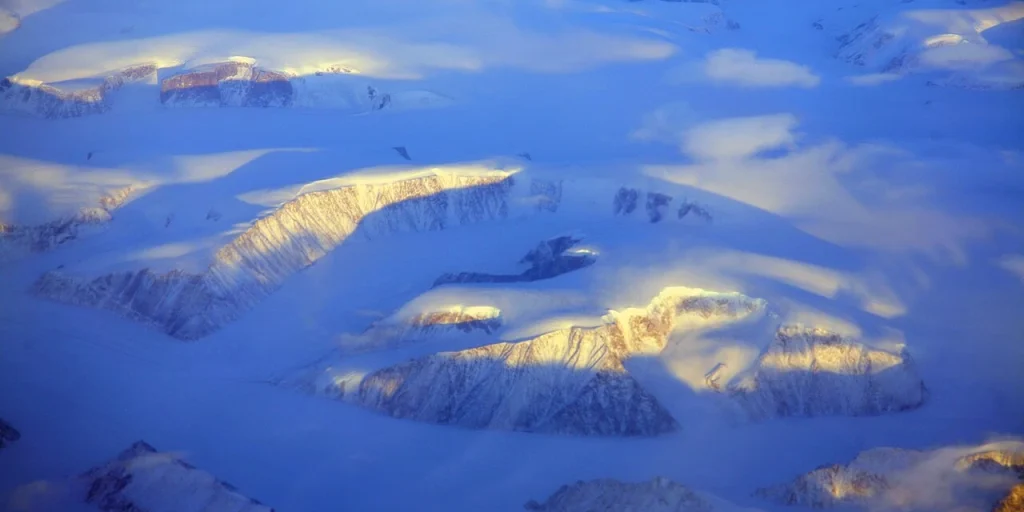
Experts instead looked closely at the Barnes Ice Cap in northern Canada. This structure is a leftover piece of the vast ice sheet that blanketed North America during the last glacial period.
Unlike most glaciers that slide and crush plant life, this specific ice cap froze directly to the bedrock. It safely trapped local vegetation as it grew.
By testing the buried plants with carbon dating, the team could pinpoint exactly when the ice swallowed them.
A permanent halt
The tests revealed a steady expansion starting around two thousand years ago. Then the industrial era arrived.
According to the study, the massive ice cap stopped growing entirely around 1960. Global warming brought the new ice age to a sudden stop.
Geologist Nicolás Young led the study. He explained to HistorieNet that the growth of this specific North American ice sheet is the true marker of an ice age, unlike smaller glaciers elsewhere.
Young noted that solar radiation is still decreasing today. Yet human greenhouse gas emissions have completely overpowered that natural cycle, forcing the ice to retreat. He concluded that a new ice age is permanently averted.
Turning back time
Reversing this warming trend would require drastic global action.
Young pointed out an extreme requirement for fixing this. Humanity would need to scrub massive amounts of carbon dioxide out of the atmosphere.
Global concentration levels must drop back to pre-industrial standards before the Earth’s natural freezing rhythm could ever resume. Until then, the ancient ice will keep melting.



