
 Lauge Risom Koch

The COP31 UN climate summit in Turkey ended without a final agreement after the EU, the UK, and climate-vulnerable nations rejected a draft text that omitted any mention of fossil fuels.
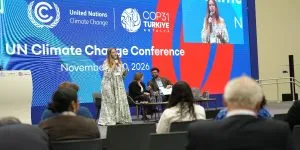

The COP31 United Nations climate summit in Antalya, Turkey, concluded without a final agreement after delegates failed to resolve disputes over whether the concluding document should explicitly mention fossil fuels. According to the Associated Press, several nations rejected a draft cover decision proposed by co-hosts Turkey and Australia during the final plenary session on Sunday.
The annual climate summit seeks to produce a cover decision that provides global direction on how countries should combat climate change. However, negotiations hit an impasse because the proposed text omitted references to coal, oil, and gas, which are the primary drivers of global warming.
Following the release of the Turkish-drafted text, multiple delegations took the floor during the closing plenary or spoke to reporters on the sidelines to explain their opposition. Meanwhile, representatives from Palau and co-host Australia offered contrasting assessments of what the talks had achieved despite the deadlock.
European, UK, and climate-vulnerable nations voice opposition
Darragh O’Brien, Ireland’s minister for climate, energy and the environment, spoke on behalf of the European Union’s 27 member states to reject both iterations of the cover decision. “It is unconscionable that we would have a climate act that makes no reference to fossil fuel,” O’Brien said, adding that the proposal went “nowhere near the level of action or ambition that are required for us to tackle climate change.”


Kate Hughes, the United Kingdom’s lead climate negotiator, similarly rejected the draft proposed by the summit presidencies. “We believe it moves us backward on the science when we must accelerate implementation,” Hughes said, arguing that the text “compromised where it should have presented bold collective ambition on climate action.”
Climate-vulnerable nations also opposed the text, with Panama’s chief climate negotiator Ana Aguilar calling it “a setback, a rollback” for relying too heavily on carbon capture and storage rather than deep emissions cuts. Envoy Kathy Jetn̄il-Kijiner of the Marshall Islands said her country had been “let down on all sides,” declaring, “We will not be forced to accept false solutions,” and “We will not compromise our future to benefit fossil fuel interests.”
Differing views on the outcome of the COP31 summit
Not every delegation opposed the proposed text, as Palau’s environment minister Steven Victor announced his country would support the draft despite reservations regarding its carbon capture language. “We support this because there’s clean electrification, there’s ocean, there is finance,” Victor said, noting that other delegations had overlooked those provisions to focus on a single issue.
Victor added that the summit should not be viewed as a failure because delegates still approved several separate work programs during the final days of the conference. Despite those parallel agreements, the lack of consensus prevented the adoption of an overarching cover decision.
Chris Bowen, Australia’s climate minister and COP31 president of negotiations, described the inability to reach an agreement on a cover decision as “very disappointing,” noting that several parties held firm red lines on mentioning fossil fuels. Even without a formal declaration, Bowen maintained that the global shift away from coal, oil, and gas remains underway: “Transition away from fossil fuels in the real world is inevitable. It’s happening, it’s happening at speed, and it’s irreversible.”



