Kenneth Glad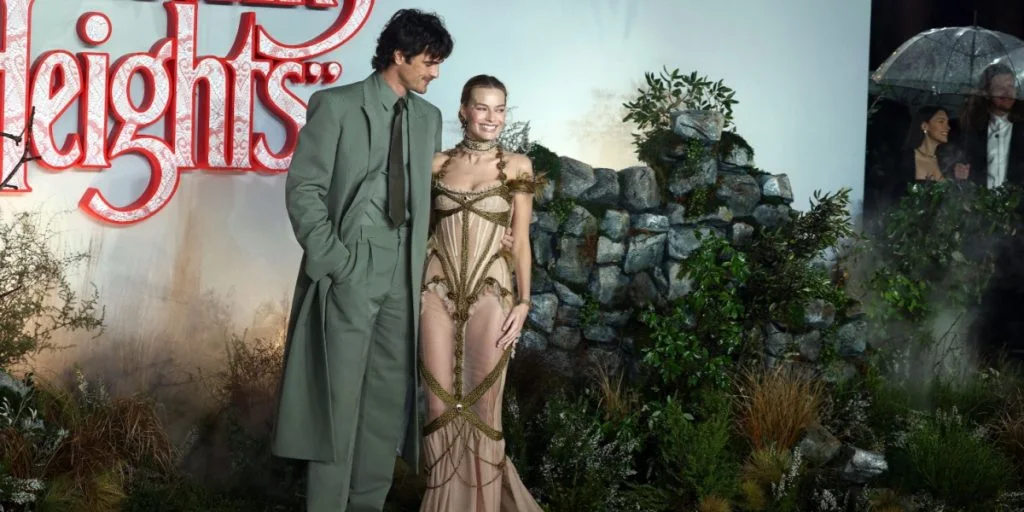
Lavish costumes and candlelit corridors are back in heavy rotation, but today’s period dramas are less about polite nostalgia and more about disruption. From revisionist royalty to frontier reckonings, television’s past has rarely felt this charged.
Emerald Fennell’s Wuthering Heights has arrived into a television landscape already primed for upheaval in corsets. The film’s stark visuals and feverish tone did not create the trend, exactly, but it has sharpened it. Suddenly, windswept longing and morally dubious romance feel inescapable again.
Streaming platforms noticed years ago, writes The Daily Mail, that historical spectacle travels well. In 2026, however, the formula looks different. These shows are not simply polishing the past. They are interrogating it, bending it, sometimes gleefully distorting it.
Royal games
Court politics remains the most reliable engine for high drama. Thrones concentrate ego. Marriage becomes strategy. And reputations shatter quickly.
1. Bridgerton (Netflix, 2020– )
Shonda Rhimes’ Regency juggernaut redefined the streaming costume drama when it debuted on Christmas Day 2020. Within weeks it became one of Netflix’s most-watched English-language series.
Season two’s enemies-to-lovers arc between Jonathan Bailey’s Anthony and Simone Ashley’s Kate dominated online discourse in 2022, while the Queen Charlotte prequel earned Emmy nominations for its production design.
Not everyone was convinced at first, according to the British newspaper. Some critics balked at the pop soundtrack and color-conscious casting. Yet that boldness is precisely what gave the series staying power.
2. The Tudors (Showtime, 2007–2010)
Long before binge culture, The Tudors proved audiences would commit to a lavishly staged monarchy meltdown. Jonathan Rhys Meyers’ Henry VIII is magnetic and frequently monstrous.
Natalie Dormer’s Anne Boleyn arc, ending in season two’s execution episode, remains the show’s emotional apex. Historians nitpicked the compressed timeline. Viewers largely did not care.
3. Mary & George (Sky/Starz, 2024)
Julianne Moore’s Mary Villiers is less romantic heroine, more corporate strategist in Jacobean silk. Nicholas Galitzine plays her son George as both pawn and operator.
The series drew attention for its frank depiction of King James I’s relationships with male courtiers.
Some praised its candor; others found the tone icy. Either way, it refuses to sentimentalize ambition.
4. The Great (Hulu, 2020–2023)
Labeled “an occasionally true story,” this Catherine the Great satire leans into absurdity. Elle Fanning shifts from wide-eyed bride to calculating empress, while Nicholas Hoult’s Peter oscillates between buffoon and tyrant.
The tonal whiplash is deliberate. One episode might stage a coup; the next, a dinner party spirals into farce. It should not work. Somehow, it does.
Time slips and rewrites
Not every period drama plays by archival rules.
5. Outlander (Starz, 2014– )
Caitriona Balfe’s Claire falls through time in the 1945 premiere and lands in 1743 Scotland, where she meets Sam Heughan’s Jamie Fraser. That pilot set the template: Romance braided tightly with war and political unrest.
The series has collected Golden Globe nominations and a fiercely organized fanbase. It also tackles sexual violence and trauma more directly than many peers, a choice that has sparked debate but deepened its emotional scope.
6. My Lady Jane (Prime Video, 2024)
This adaptation turns the nine-days queen into a rebellious protagonist in a world laced with fantasy. Talking animals and Tudor intrigue coexist.
Purists grumbled. Younger audiences embraced its irreverence though. The show seems to argue that history is less sacred text and more raw material.
7. Dangerous Liaisons (Starz, 2022)
A prequel to the classic French novel, this series charts the early manipulations of the Marquise de Merteuil and Valmont. Schemes unfold with surgical precision.
It arrived to mixed reviews, some critics questioning whether audiences needed another version. And yet, the story of intimacy weaponized refuses to disappear.
Class, cash and consequences
Step outside palaces and the texture shifts. Wealth still matters. It just looks different.
8. Harlots (Hulu/BBC, 2017–2019)
Samantha Morton anchors this Georgian London drama as brothel owner Margaret Wells. The show foregrounds survival and competition rather than fairy-tale courtship.
Its second season introduced Liv Tyler as a rival madam, sharpening the stakes. The tone is unvarnished. Ledger books matter as much as lace.
9. Poldark (BBC, 2015–2019)
Aidan Turner’s scything scene became an internet fixation, but the series digs into mining disputes and post-war disillusionment.
Eleanor Tomlinson’s Demelza is not merely an object of affection, she is a study in class mobility.
The Cornish cliffs are stunning, yes, but the story’s pull lies in its moral gray zones.
10. The Buccaneers (Apple TV+, 2023– )
Based on Edith Wharton’s unfinished novel, this adaptation follows American heiresses storming 1870s London.
Kristine Frøseth and Alisha Boe lead a cast that blends TikTok-era energy with corseted decorum.
The needle drops are conspicuously contemporary. It is a stylistic gamble, and not everyone is sold. Still, the collision of old aristocracy and new money feels pointed.
So why this sustained appetite for historical drama now? Partly economics, of course. Lavish series anchor subscriber growth. But there is something else at play, reports The Daily Mail. These stories revisit eras of rigid hierarchy and ask who benefited, who suffered and who rewrote the rules.
Fennell’s Wuthering Heights amplifies the gothic strain. The shows above take different routes: Satire, spectacle, revisionism, grit. Not all succeed equally. Some wobble between tones. A few lean too hard on aesthetic flourish.
Still, the broader shift is undeniable. The past, once treated as distant pageant, has become a testing ground. And viewers, it seems, are willing to follow it there.
Source: The Daily Mail