
 Kenneth Glad
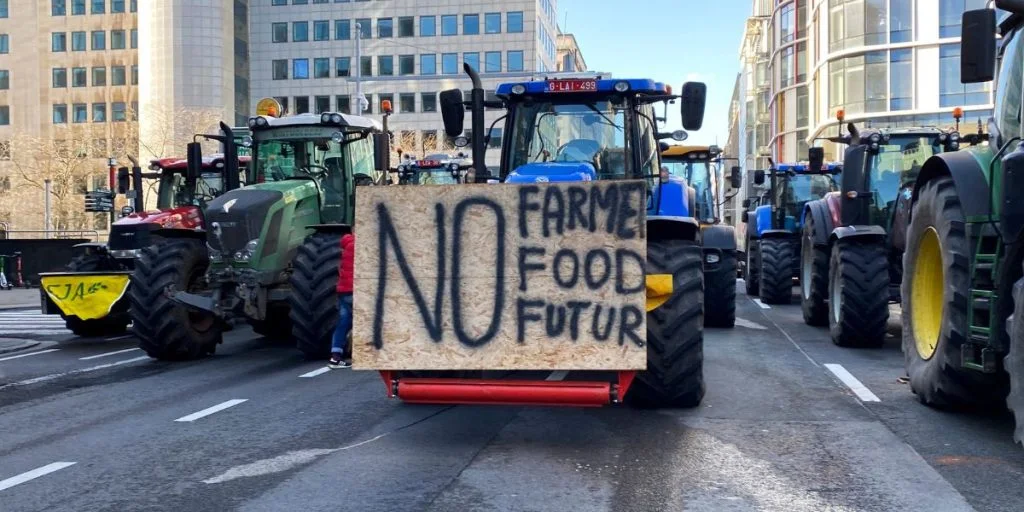
Private documents describe a sustained campaign to reshape environmental policy across Europe. The effort reached commissioners, national governments and lawmakers before several major decisions were taken.


A European plan to cut pesticide use by half was delayed and eventually withdrawn after years of pressure from Copa Cogeca, a Brussels-based umbrella group that says it represents 22 million farmers through farming unions and agricultural cooperatives across Europe, according to records obtained by Grilled and reviewed with The Guardian.
The federation, which says it represents 22 million farmers, pushed for additional assessments, encouraged lobbying of national governments and sought support from senior EU officials.
Internal discussions in September 2022 suggested keeping the pesticide proposal unresolved until after the 2024 European elections.
The Commission carried out another impact assessment, adding six months to the process. The legislation was withdrawn in February 2024.


Influence inside Brussels
The records describe a broader strategy built around delay, political alliances and technical changes introduced before proposals reached their final form. Rather than relying on one method, Copa Cogeca appears to have combined access to officials, pressure on national governments and carefully timed research to shape the policy debate.
The federation sought representation on advisory groups dealing with sustainable food systems, animal welfare, carbon removals, food security and veterinary policy.
Commissioners, directors-general and other senior officials attended its meetings, giving the organization regular contact with people involved in drafting and negotiating EU rules.
Internal notes also describe efforts to build political resistance to Frans Timmermans, then the European Commission figure most closely associated with the Green Deal. Copa Cogeca looked for senior allies who could challenge his position inside the Commission and preserve policies that favored the agricultural sector.
Privately commissioned studies formed another part of the strategy. According to Grilled, one assessment on cage-free farming remained unpublished for two years and was presented after the Commission’s own analysis encountered regulatory difficulties. The documents suggest such studies were used to question official findings and strengthen demands for longer transition periods.
The records indicate that Copa Cogeca also responded quickly to political events. After Russia invaded Ukraine in 2022, delegates argued that concerns about food security should prompt the EU to reconsider its Farm to Fork strategy and wider sustainability plans.
Rules were narrowed
The campaign extended beyond pesticides to public funding for meat advertising. When Brussels proposed stricter health conditions for promotional spending, Copa Cogeca coordinated opposition involving commissioners, national governments, wine representatives and other alcohol-industry groups.
Internal records show that the federation treated the proposal as a wider threat to the livestock sector, arguing that restrictions on meat promotion could influence other areas of EU policy. Members were encouraged to press their national governments before final decisions were taken.
The proposed conditions were first weakened and later removed altogether. One internal conclusion stated: “Lobbying has borne fruit.”
Copa Cogeca also focused heavily on industrial-emissions rules for large livestock operations. Before the draft legislation became public, the threshold determining which farms would fall under the rules increased from 100 to 150 livestock units.
That change reduced the number of operations covered by the proposal. An EU analysis estimated that the revision would lead to €1.8 billion a year in lost public-health benefits.
The pressure continued through meetings with policymakers, letters to national representatives, farm visits, publicity campaigns and demonstrations. By the time the law was finalized, cattle farms had been excluded entirely.
Higher thresholds were also adopted for pig and poultry operations, leaving fewer large farms subject to the pollution controls than under the original proposal.
Protections faced pressure
According to the records reviewed by Grilled and The Guardian, Copa Cogeca’s private discussions on animal welfare did not always match the position it promoted publicly.
In one internal meeting, an official acknowledged that cage systems could be abandoned immediately if farmers received enough financial support to make the transition. Publicly, however, the federation argued for transition periods of up to 15 years, a timetable that would have delayed the end of caged farming well beyond the Commission’s original ambitions.
The documents suggest that Copa Cogeca sought to influence both the pace of reform and the financial conditions attached to it. Its approach focused on securing longer deadlines, additional funding and more flexibility for livestock producers before new welfare rules took effect.
The organization also spent years pressing for weaker legal protections for wolves. That campaign involved contacts with national governments, political allies and groups representing hunting and landowning interests.
After the EU habitats directive was amended in June 2025, internal discussions shifted toward other species. Members were asked to identify additional animals and birds that they wanted considered for similar changes to their protected status.
Copa Cogeca declined to comment on the findings. The European Commission said its decisions were taken “on Europe’s terms, under Europe’s rules, and in the European interest”.
Sources: Grilled, The Guardian



