
 Kenneth Glad
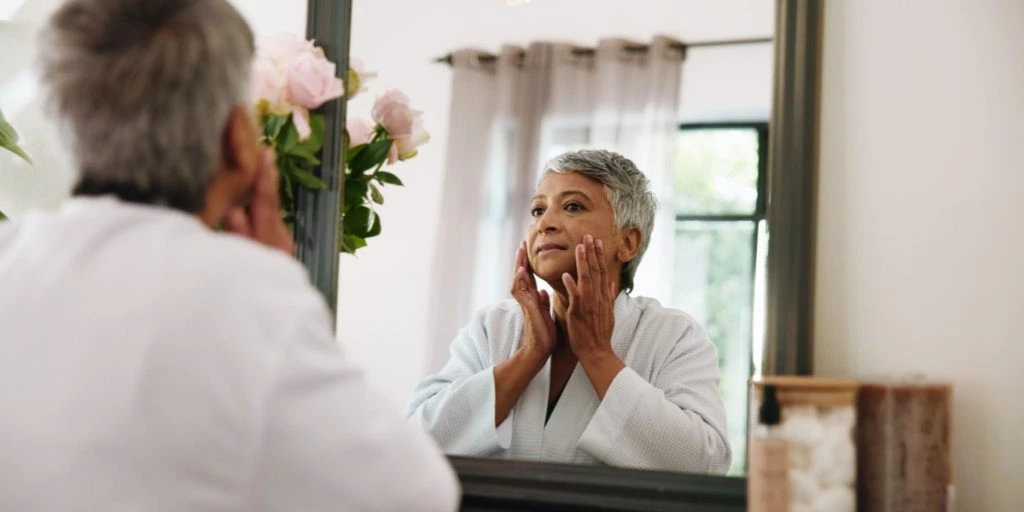
Aging used to be something people accepted, if not always gracefully, then at least quietly. That feels less true now. With cosmetic treatments normalised and visible everywhere, the choice is no longer just personal, it’s social.


In her Daily Mail column, journalist Christa D’Souza draws on her own experience to explore this tension, not as a theory but as something she ran into head-on.
Dubai, she notes, is a place where looking polished is part of the social fabric, particularly among wealthy expatriates.
Smooth skin, subtle adjustments, the sense that time has been gently edited rather than allowed to pass.
It was in that setting, she writes, that a casual question backfired. At a lunch, she asked a man to guess her age.


“I don’t know… early 70s?”
Not a dramatic insult. Just a number. But in a room where many women invest heavily in maintaining a certain look, it carried weight. Standing still, appearance-wise, can read as slipping backwards.
Ideals meet reality
D’Souza had made a clear decision not long before: No more treatments. After years of Botox and other procedures, she stopped in her early sixties. No grand announcement, just a quiet line drawn.
That might sound straightforward. It isn’t. The idea of “natural aging” is often treated as a moral high ground, but it’s also a moving target. Hair dye, skincare, lighting, even posture all play their part. Where exactly is the line?
Meanwhile, demand for non-surgical cosmetic work has been widely reported as rising year after year. The language has shifted too, from correction to “maintenance.” It’s less about changing a face than keeping it from changing too quickly.
She points to the cautionary side as well, noting how heavily altered celebrity appearances are often discussed as examples of what happens when intervention goes too far. That fear lingers in the background.
Then there’s the opposing view. The American author Joan Juliet Buck told The New York Times: “I think we are like old stone houses. We have the value of antiquity.”
It’s a romantic idea, aging as texture and history. D’Souza seems drawn to it, but she’s not entirely convinced.
A reluctant rethink
Because belief and instinct don’t always match. She admits the moment in Dubai unsettled her more than she expected. Not enough to panic, but enough to reconsider.
The pull of doing something, even something small, crept back in. Not chasing youth exactly, more like softening the edges of time.
Research is often cited about how aging accelerates at certain stages, though the lived experience can feel less clinical. One year you look the same. The next, you don’t. It’s subtle, then suddenly not.
In the end, she booked an appointment with a dermatologist she knows well. No big declaration, no sense of defeat. Just a decision.
Maybe that’s where many people land. Not fully embracing every line, not erasing them either. Adjusting, recalibrating, carrying on.
And perhaps that’s the uncomfortable truth running through her piece:
Aging isn’t a stance you take once. It’s something you keep negotiating, whether you like it or not.
Sources: Daily Mail, The New York Times


