
 Kenneth Glad
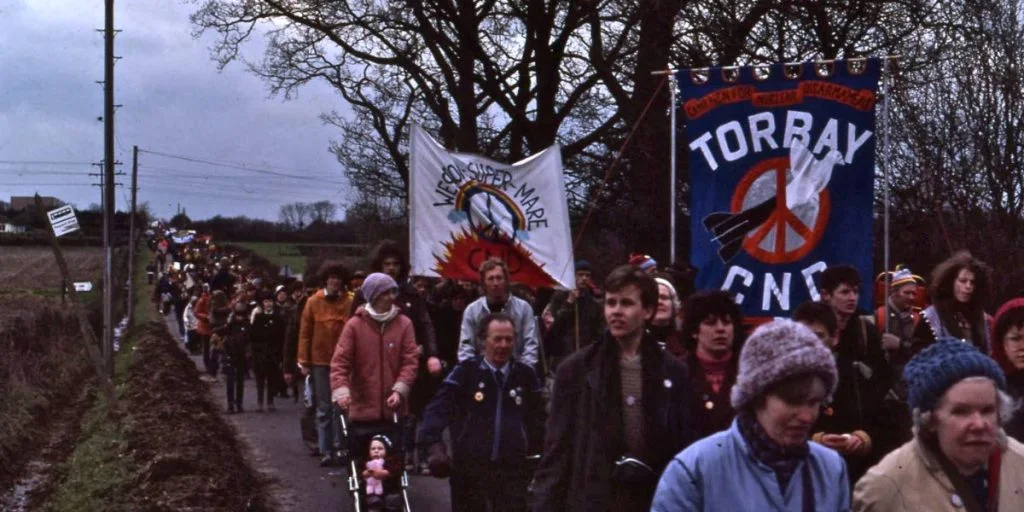
Mass political campaigns can attract attention from governments looking for opportunities abroad. Cold War records reveal attempts to shape public opinion while also showing the limits of what outside actors could achieve.

According to Churchill Archives Centre, former KGB archivist Vasiliy Mitrokhin secretly produced handwritten notes from documents he encountered while working inside Soviet intelligence. His later typescript notes were opened to researchers in 2014, although the archive cautions that it cannot independently verify the information he selected and transcribed.
A 1987 CIA reference guide said Soviet influence campaigns relied on tactics such as disinformation, forged documents, planted rumours and the use of friendly political groups. It also identified the World Peace Council as one of 17 international organisations backed by the Soviet Union and used to promote positions that suited Moscow’s interests.
A 1982 congressional inquiry looked into whether Soviet organisations were trying to influence American anti-nuclear groups. During the hearings, FBI official Edward O’Malley said Soviet-linked organisations had helped plan the June 12 demonstration in New York. He stopped short of saying, however, they were responsible for the huge crowd that turned out.
Edward Boland, who chaired the committee, later said he had found no evidence that Soviet involvement had significantly influenced the broader nuclear-freeze movement. That finding contrasts with HistorieNet’s account of Moscow’s attempts to make use of Western opposition to nuclear weapons.


Influence met clear limits
Records preserved by LSE IDEAS show that Britain’s Campaign for Nuclear Disarmament (CND) maintained contacts on both sides of the Iron Curtain. The organisation was one of Britain’s most prominent anti-nuclear groups, and by the early 1980s it had become an important voice in the debate over whether new American missiles should be stationed in Western Europe.
In 1982, a CND delegation travelled to Moscow, where members met representatives of the Soviet Peace Committee. Afterwards, the Soviet organisation wrote to CND chair Joan Ruddock expressing interest in closer cooperation.
The contact created a difficult question for Western campaigners: Whether dialogue with officially approved Soviet organisations could advance disarmament, or whether it risked giving legitimacy to groups that operated within the Communist political system.
CND later discussed whether more attention should instead be given to independent peace activists and dissidents in Eastern Europe. Unlike official organisations, those groups could challenge their own governments and raise concerns about Soviet military policy from inside the Eastern bloc.
Missile plans raise tensions
NATO was meanwhile preparing to move ahead with a decision made in 1979. It planned to place 572 American Pershing II and cruise missiles across Western Europe, unless negotiations with Moscow produced an arms-control deal first. If the two sides could agree on sufficient reductions, the new missiles would not need to be stationed.
By the 1983 general election, nuclear weapons had become a major political issue in Britain. CND was not only organising demonstrations. Local campaigners were also lobbying MPs, contacting election candidates and pushing defence policy higher up the political agenda.
Those efforts did not stop deployment. On November 14, 1983, the first cruise missiles arrived at Greenham Common, turning a site already associated with years of protest into one of the most visible symbols of the nuclear confrontation in Britain.
NATO had confirmed the previous month that deployment would begin before the end of the year if no agreement had been reached. At the same time, the alliance said negotiations could still produce changes later. A future agreement could halt further deployments or lead to missiles already stationed in Europe being withdrawn.
Sources: HistorieNet, Churchill Archives Centre, CND archival material via LSE IDEAS.



