
 Jens Asbjørn Bøgen
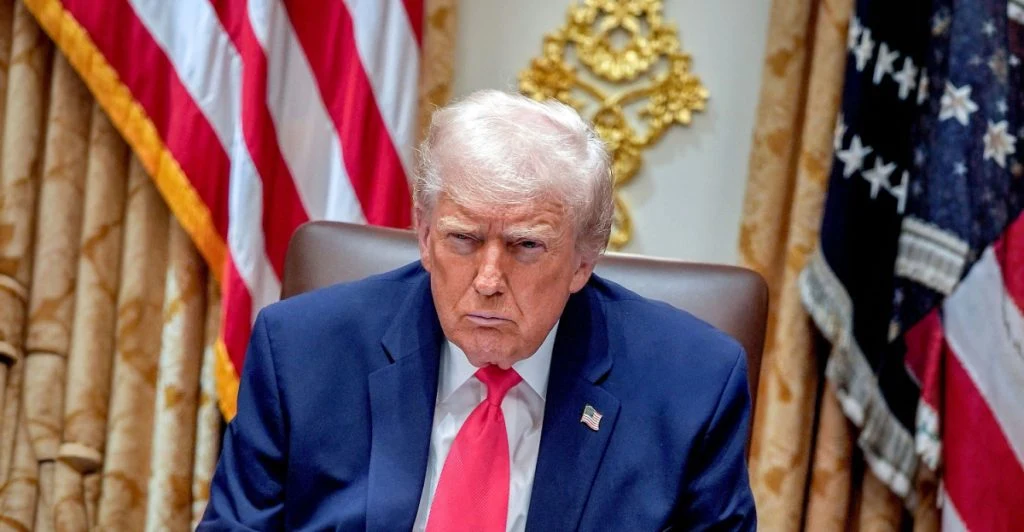
Trump “demands” that several countries help secure the Strait of Hormuz – but so far, none have agreed to help.


On February 28, the US and Israel launched an attack on Iran, starting a war that is now in its third week.
Operation Epic Fury, as the US calls the war, has already claimed the lives of 13 US service members, and on March 16, The Guardian reported that more than 200 US troops have been wounded so far.
On March 14, Donald Trump said that the US had beaten Iran “militarily, economically, and in any other way”, The Hill reported.
But apparently, that claim comes with qualifications, as Trump also said that NATO faces “a very bad future” if the allies do not step up and help the US in Iran.


That begs the question: If Iran is so badly beaten, as Trump claimed on March 14, what does he need the help of his allies for?
A narrow strait that has now plunged the world into a possible energy crisis.
The Strait of Hormuz
Following the US-Israeli attack, Iran more or less shut down the Strait of Hormuz—a narrow water passage vital for the global oil trade.
In fact, roughly 20% of all global crude oil trade has to pass through the strait, which is 60 miles wide at its widest point.
And even though Trump claims to have beaten Iran in every possible way, he is now demanding (read: threatening) that the NATO allies help secure safe passage through the strait.
And so, of course, the allies rally behind Trump and send a multinational armada of warships to help the oil flow, right?
Well …
“Not Europe’s war”
So far, not a single ally has agreed to send as much as a dinghy to help keep the Strait of Hormuz open.
At a press meeting on Monday, March 16, Vice-President of the European Commission Kaja Kallas said, “this is not Europe’s war,” according to POLITICO.
While speaking for the EU rather than NATO, her remarks may reflect a broader hesitation among European allies.
Without knowing what is going on inside the heads of the politicians, this may suggest that some US allies view the conflict as started by Trump, and they are not going to help him as things are at the moment.
So has Trump made a miscalculation regarding what NATO actually is?
A defense pact
NATO is a collective defense alliance with an emphasis on defense. This is best explained through NATO Article 5, which states that an armed attack on one member of the alliance is considered an attack against all members, triggering collective action.
Article 5 has only been invoked once, and that was to support the US following 9/11.
Trump has not talked about invoking Article 5, but do you see the fundamental difference between what happened in 2001 and what is happening now?
In 2001, the US was attacked.
In 2026, the US initiated the military operation against Iran.
He has not said it directly, but since Trump is saying that NATO might be facing a “very bad future” if the other NATO nations do not come to the US’ aid in the Middle East, it is not a stretch to interpret this as a possible threat to pull the US from NATO (or at least to be more hesitant in helping other members).
General Sir Nick Carter, former chief of the Defence Staff in the UK, but it very clearly when speaking to the BBC on Monday:
“It was not an alliance that was designed for one of the allies to go on a war of choice and then oblige everybody else to follow.”
“It’s their territories”
On Monday, Trump told reporters aboard Air Force One that he is demanding assistance from a number of countries to “come in and protect their own territory, because it is their territory.”
No, it’s not. The Strait of Hormuz is bordered by Iran, Oman and the United Arab Emirates.
But Operation Epic Fury has already drawn other NATO nations into the fighting.
Turkey has been targeted by missiles, allegedly fired from Iran, multiple times, and NATO air defenses were activated to shoot the missiles down.
Additionally, a British air base in Cyprus has been targeted by Iranian drones.
A French officer was also killed in Iraq by a drone strike last week.
The respect is gone
Trump has repeatedly cast doubt on the US commitment to NATO, and he has openly threatened to make fellow member states (or their territories) part of the US (Canada as the 51st state and Greenland, which is part of the Kingdom of Denmark).
Critics argue this is not consistent with typical alliance behavior and the other NATO members seem to have had enough.
Things really took a turn at the beginning of 2026, when Trump claimed NATO troops “stayed a little back” from the front lines in Afghanistan, even though the UK alone lost 457 service members, according to CNN.
Actions have consequences, and Trump now seems to be reaping the labor of his on-and-off attitude toward NATO and Europe.
Sources: The Guardian, The Hill, POLITICO, CNN, BBC



