
 Nicolai Haugsted

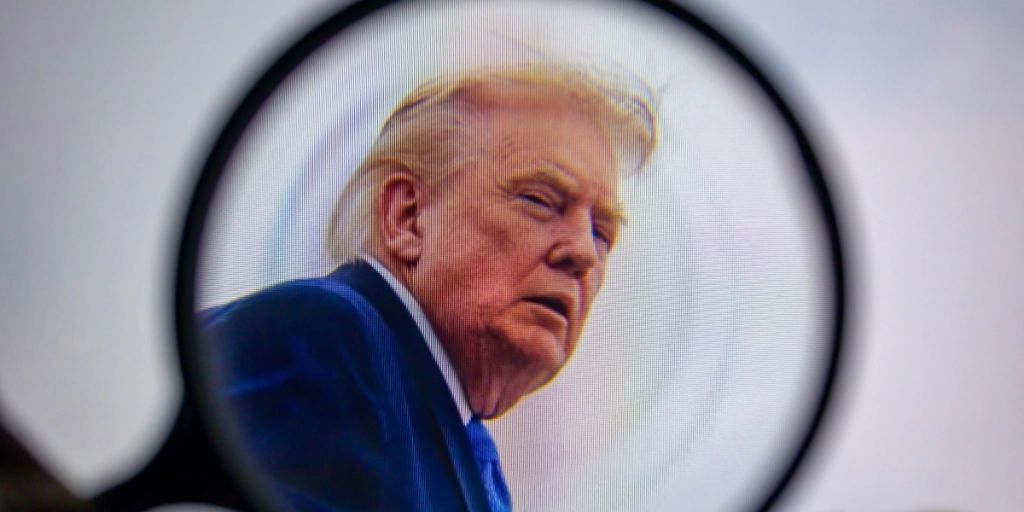
Catholic archbishop publicly apologizes after claiming Trump’s administration manipulated him.
Relations between religious institutions and political leaders can become particularly complicated when an election is approaching.
Church officials frequently meet with presidents to discuss issues affecting their communities, but those conversations can also raise questions about political neutrality, especially when the participants disagree on major government policies.
For Catholic leaders in the United States, immigration enforcement has become one such point of disagreement with President Donald Trump’s administration.
A recent meeting at the White House was supposed to offer an opportunity to discuss those concerns directly. Instead, the gathering has prompted public apologies from senior Catholic figures, who say their participation was presented in a way they never intended.


According to The Daily Beast, archbishop Jeffrey S. Grob of Milwaukee has now accused the White House of turning a religious moment into a political publicity opportunity after footage emerged of him and 11 other bishops praying over Trump.
And according to the archbishop, the participants never agreed to have the images distributed publicly.
The bishops thought they were attending a private meeting
The controversy dates back to October 22, when Grob and 11 fellow bishops attended a meeting at the White House.
According to Grob, the gathering had been arranged by the conservative Heritage Foundation, an organization closely associated with Trump’s political agenda.
The archbishop understood that the meeting would be private and might include an opportunity to pray with the president.
His primary motivation, he explained, was to raise concerns about matters affecting the Catholic Church and its communities.
Those subjects included immigration enforcement, visas for religious workers and the protection of human dignity.
Grob had previously joined other Catholic bishops in criticizing aspects of the administration’s immigration policies.
Nevertheless, he believed a direct conversation with the president could be worthwhile.
“I took some time to weigh the decision and ultimately felt that, if I had the opportunity to offer my voice in a way that might improve the lives of God’s children, I ought to take it,” he explained.
“I pray for our elected officials on a daily basis, so it seemed appropriate to do so in person.”
But the meeting did not unfold quite as he had anticipated.
Click to display external content from x,
- You can always enable and disable third-party content.

You agree to display external third-party content. Personal data may be sent to the provider of the content and other third-party services.
A prayer in the Oval Office becomes a public spectacle
Following discussions with White House staff, the bishops were escorted into the Oval Office, where Trump greeted them.
According to Grob, the religious leaders were instructed to stand behind the president and pray.
“We were then directed to stand behind him and pray. After which several photos were taken and we were ushered out,” he recalled.
The archbishop said the participants knew photographs had been taken but were unaware that the encounter was also being recorded on video.
“Unbeknownst to the group of bishops a video was also taken. But permission for the public distribution or posting of either the video or photos was not given by the bishops.”
Shortly afterward, White House aide Margo Martin shared footage showing the bishops praying over Trump.
The images circulated as the country approached the November 3 midterm elections.
For viewers unfamiliar with the circumstances of the meeting, the footage could suggest that prominent Catholic leaders were publicly expressing support for the president.
Grob insists that was never their intention.
Archbishop says the White House manipulated the situation
Following the publication of the footage, Grob began receiving messages from people concerned about the political implications of the meeting.
The archbishop subsequently issued a lengthy public apology through the Archdiocese of Milwaukee.
“I have received many questions and comments about the October 22 meeting I and 11 other bishops attended at the White House, which was soon thereafter publicized by the administration without the consent of the participants,” he wrote.
“Please know that my intention was never to cause confusion, anger, or disappointment among the people entrusted to my care.”
Grob emphasized that attending the meeting was not intended as an endorsement of Trump, his administration or the Republican Party.
He also acknowledged the distress expressed by people who believed the bishops had lent religious legitimacy to policies they opposed.
Some of those who contacted him, he explained, had personally experienced consequences from the administration’s decisions.
“I feel a heavy sadness, not only over the pain I caused, but also for the fact that something so sacred to a group of religious leaders, prayer to our Heavenly Father, would be manipulated in that way,” he wrote.
The accusation was directed at the White House’s handling of the encounter, rather than the act of praying with the president itself.
Grob admits he should have listened to his doubts
The archbishop’s apology went beyond expressing disappointment over the published footage.
He also questioned his own decision to participate in the meeting despite having reservations beforehand.
Grob explained that he had hoped the gathering would provide an opportunity to advocate for vulnerable people and discuss matters of public concern.
But he argued that the White House had placed the bishops in an inappropriate position by publicizing the prayer.
“We came in good faith to try to work for the betterment of our fellow human beings, to ease their suffering, to build up the common good, and to pray with a president, not to pose for a political photo opportunity to benefit the few,” he wrote.
“We should never have been put in that position by the White House. I did not go without reservations. I wish I had heeded them.”
Grob concluded his statement by accepting responsibility for the distress caused by his participation.
“Please know that I have heard these concerns, understand how I caused them, and I apologize for any damage my actions have done.”
The statement represented a notable public criticism of the administration from a senior Catholic leader who had recently visited the president.
Another bishop says the meeting was exploited for politics
Grob is not the only participant to express regret over the incident.
Bishop William Joensen of Des Moines also apologized for how the gathering appeared after the White House published the images.
Joensen said he believed the administration had exploited the meeting for partisan political purposes.
His criticism extended to the differences between Catholic teaching and aspects of Trump’s political agenda.
“There are many things tied to this present Administration that are blatantly at odds with our Catholic faith,” he wrote.
Joensen also acknowledged that the bishops were aware of the political sensitivity surrounding the meeting.
“None of us bishops were unaware that our meeting was on the cusp of a national election. Yet in no way did any of us intend by our involvement to endorse any political party or any individual candidate.”
The bishop then turned to scripture to explain why he believed greater caution would have been appropriate.
“That said, in retrospect, I would have done well to be more mindful of Jesus’ admonition: ‘Behold, I am sending you like sheep in the midst of wolves; so be shrewd as serpents and simple as doves’ (Matthew 10:16).”
His remarks reinforced the distinction both bishops were attempting to make between engaging with political leaders and publicly endorsing them.
The dispute raises broader questions about how meetings between religious figures and elected officials should be presented to the public.
Presidents from both major American political parties have met with religious leaders and participated in public prayers. Such encounters can serve diplomatic, pastoral and political purposes, depending on their circumstances.
In this case, however, the bishops say the White House publicized a moment they understood to be private, without obtaining their permission.



