
 Nicolai Haugsted

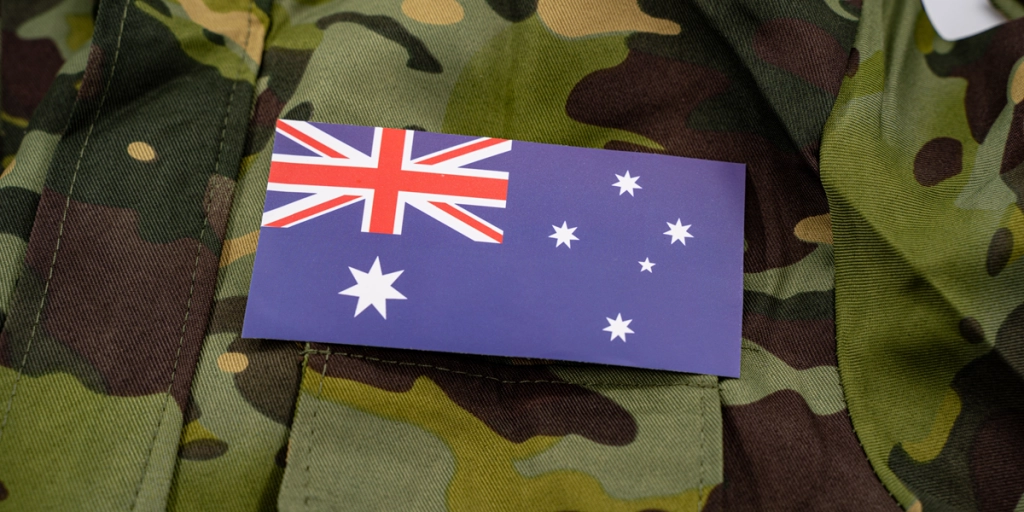
The Australian government has acknowledged decades of mistreatment that destroyed military careers and damaged personal lives.

Serving in the armed forces traditionally comes with an expectation of loyalty to one’s country. For generations of Australian military personnel, however, that loyalty was not necessarily reciprocated by the institution they had dedicated their lives to protecting.
According to Reuters, Australia has now formally acknowledged one of the darker chapters in its military history, addressing decades of discriminatory practices that damaged careers, reputations and personal lives.
Speaking before parliament on Wednesday, Australian Defence Minister Richard Marles delivered an official government apology to current and former LGBTQ military personnel who suffered under the country’s previous defence policies.
According to the report, the apology specifically addresses the mistreatment of service members who were investigated, interrogated and effectively driven out of the armed forces because of their sexual orientation or gender identity.


“You and your families offered this nation everything that service asks. In return our nation offered condemnation, derision, and suspicion,” Marles said.
Fighting discrimination within their own ranks
For decades, Australia’s military maintained policies that prevented openly lesbian, gay and bisexual individuals from serving in the Australian Defence Force.
Consensual homosexual activity could even result in prosecution under military law, placing service members in a position where their private lives could effectively bring an end to their professional careers.
Marles acknowledged that the policies encouraged systematic persecution within the military, with personnel subjected to investigations and questioning over their sexuality.
Some were pressured into resigning, while others were dishonourably discharged from the institution they had committed themselves to serving.
The defence minister also challenged the historical justification for such practices, arguing that discrimination against LGBTQ personnel had contributed nothing to Australia’s national security.
“We asked these Australians to defend a fair go. Then we refused them one. None of this made our nation safer.”
Changing the rules was only the beginning
Australia officially lifted its ban on lesbian, gay and bisexual military personnel in 1992, marking an important departure from its previous approach to recruitment and military service.
However, transgender individuals had to wait another 18 years before restrictions preventing them from serving were finally removed in 2010.
Marles also acknowledged that changing official regulations did not automatically eliminate discriminatory attitudes within the armed forces.
Military culture took considerably longer to catch up with the revised policies, meaning that the removal of formal restrictions did not immediately translate into equal treatment for everyone wearing the uniform.
Australia has recently taken further steps towards addressing the consequences of its historical military policies.
In September, parliament passed legislation allowing historical convictions relating to homosexual activity to be extinguished from military service records.
The legislation represents a practical measure alongside the government’s symbolic acknowledgment of past wrongdoing.
Recognition decades in the making
Wednesday’s parliamentary apology cannot restore the careers that were prematurely ended or undo the personal consequences of years of institutional discrimination.
However, it represents a formal acknowledgment that the Australian government failed to uphold the same principles of fairness and loyalty that it expected its military personnel to defend.
Marles concluded that the country owed those affected an acknowledgment of that failure.
“This country did not keep faith with you. But today, it says sorry.”



