
 Kenneth Glad
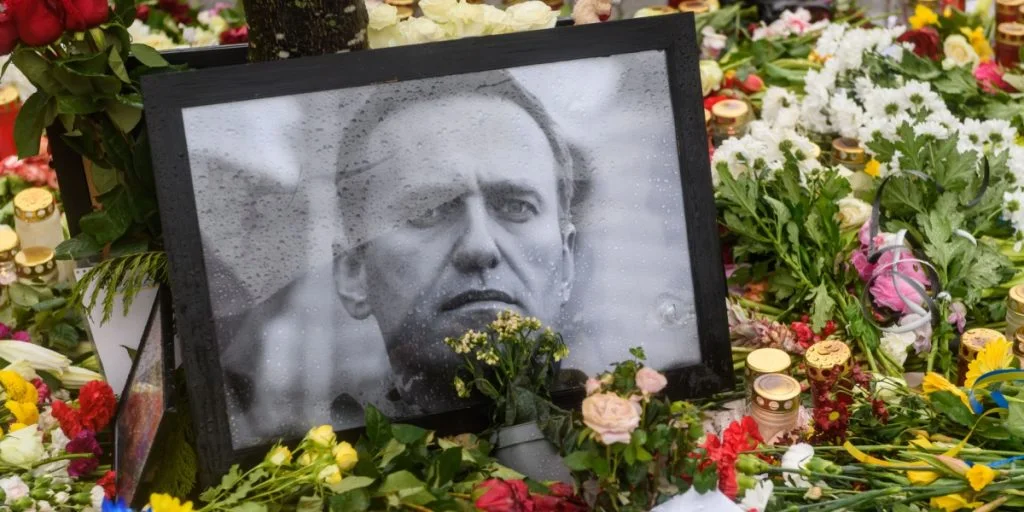
Questions surrounding a high-profile prison death have resurfaced after new forensic material became public. The disclosure has renewed debate over the circumstances surrounding the case and the official explanation of how it occurred.


Two years after the death of Russian opposition leader Alexei Navalny, new claims about how he died are intensifying an already bitter international dispute.
Supporters of the Kremlin critic say laboratory analysis points to poisoning, while Russian authorities maintain he died of natural causes in prison.
The renewed controversy follows the publication of excerpts from the official forensic report into his death, Digi24 reports.
Poison claim and autopsy release
At a recent memorial marking the second anniversary of Navalny’s death, his widow Yulia Navalnaya and Germany’s foreign minister Johann Wadephul said laboratory analysis suggested he had been poisoned with a powerful neurotoxin associated with South American poison dart frogs.


The laboratory reports cited during the event have not been publicly released. Moscow has rejected the allegation and challenged the claims through the Organisation for the Prohibition of Chemical Weapons.
Against that backdrop, Navalny’s allies released excerpts from the official forensic examination conducted after his death.
The Romanian outlet writes that members of Navalny’s team published portions of the official report prepared in mid-2024. The forensic document reportedly runs to about 270 pages.
Maria Pevchikh, a senior member of Navalny’s Anti-Corruption Foundation, said the material was published after reports that Russian outlets were preparing dramatic coverage of the findings. Writing on X, she said the release was approved by Navalny’s family.
Click to display external content from twitter,
- You can always enable and disable third-party content.

You agree to display external third-party content. Personal data may be sent to the provider of the content and other third-party services.
Pevchikh sharply criticised the document’s contents. “The content does not meet any ethical standard, not even the minimum,” she said.
The report had circulated privately among Navalny’s relatives and advisers for months before excerpts were released.
Official version disputed
Russia’s Federal Penitentiary Service announced Navalny’s death on 16 February 2024. Authorities said he collapsed after a walk in the IK-3 penal colony, known as “Polar Wolf”, located in Russia’s Arctic Yamalo-Nenets region.
Officials concluded that the 47-year-old died of natural causes.
Navalny’s supporters strongly dispute that explanation. They argue that the Russian state ultimately bears responsibility for his death, an accusation the Kremlin has repeatedly dismissed.
Western governments and international organisations have raised concerns over the circumstances surrounding the opposition figure’s death.
Navalny’s long clash with the Kremlin
Navalny spent more than a decade challenging President Vladimir Putin’s political system and exposing alleged corruption among Russia’s elite. Through his Anti-Corruption Foundation, founded in 2011, he published investigations targeting senior officials and mobilised large anti-government protests.
In August 2020 Navalny fell gravely ill during a flight in Siberia and was later treated in Germany, where laboratories confirmed poisoning with the Novichok nerve agent. Navalny blamed the Kremlin for the attack, which Russian authorities denied.
After recovering abroad, he returned to Moscow in January 2021 and was immediately arrested. Russian courts later handed him several prison sentences on charges that Western governments and human rights organisations described as politically motivated.
In December 2023 Navalny disappeared for several weeks from the prison where he had been held before resurfacing in the remote Arctic colony where he died two months later.
The release of the autopsy excerpts is unlikely to resolve the debate. Instead, the publication is likely to deepen the political dispute surrounding Navalny’s death.
Source: Digi24



