
 Nicolai Haugsted

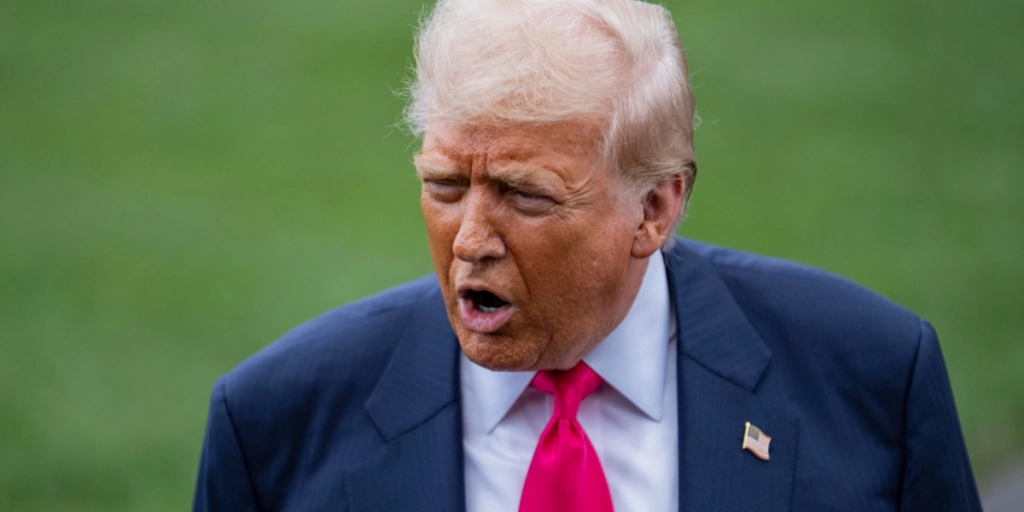
Democrats set their sights on Trump’s controversial tariffs, but the president still holds a powerful advantage.
Donald Trump’s trade policies have become one of the defining features of his presidency, reshaping America’s economic relationships with countries around the world. His sweeping tariffs have affected businesses, international trade negotiations and the prices consumers pay for imported goods, while repeatedly triggering criticism from political opponents.
Now, following the Republicans’ crushing defeat in Tuesday’s midterm elections, the political balance in Washington has changed dramatically.
Democrats have secured control of both the House of Representatives and the Senate, giving them considerably more influence over the administration’s economic agenda.
And Trump’s controversial tariffs are already attracting attention from lawmakers eager to challenge his policies.


However, according to Reuters, the president has a significant advantage that could make reversing his trade decisions much more complicated than Democrats might hope. Even with Congress under Democratic control, Trump retains considerable authority over American trade policy.
Democrats face a major obstacle despite their election victory
The election results have given Democrats new opportunities to scrutinize the administration’s decisions, launch investigations and introduce legislation targeting Trump’s tariffs.
But according to trade experts interviewed by Reuters, the victory is unlikely to produce immediate changes to the president’s trade agenda.
Blake Harden, managing director for trade policy at Ernst & Young’s Washington Council office, believes the administration will retain substantial control.
“The swing in Congress, the results of the election, are very unlikely to have a significant impact on the president’s trade agenda and the tariffs that are in place,” Harden explained.
“This is because there is so much trade authority within the executive branch that’s been delegated by Congress.”
The problem for Democrats is that previous Congresses have granted presidents extensive powers to impose trade restrictions without seeking fresh legislative approval.
Trump has repeatedly used those powers to introduce tariffs against foreign trading partners.
Among the legal provisions involved is Section 338 of the Tariff Act of 1930, an almost century-old measure that Trump has used to impose punitive duties on Canadian imports.
Democrats have expressed interest in repealing or restricting some of the laws that give the president such broad authority.
But passing legislation is only the beginning of the challenge.
Trump’s veto could stop Democrats in their tracks
Although Democrats have secured majorities in both congressional chambers, they do not have enough seats to guarantee that their proposed trade legislation becomes law.
According to Reuters’ latest projections, Democrats have won at least 235 seats in the House of Representatives, with some estimates placing their total as high as 258.
In the Senate, the party has secured 54 seats, with the possibility of gaining two more depending on the final results in Mississippi and Alaska.
Those numbers give Democrats substantial legislative influence, but they still face important procedural obstacles.
Most legislation in the Senate requires 60 votes to overcome a filibuster, meaning Democrats would need Republican support to advance certain proposals.
More importantly, Trump can veto legislation that reaches his desk.
Overriding a presidential veto requires a two-thirds majority in both chambers, equivalent to 67 senators and 290 representatives if all seats are filled.
Democrats are nowhere near those numbers on their own.
Greta Peisch, a former general counsel at the Office of the United States Trade Representative during Joe Biden’s presidency, believes bipartisan cooperation could theoretically change the calculation.
“It still feels like a stretch, but it seems like a question that should be asked,” she told Reuters.
For now, however, Trump’s veto power remains a formidable obstacle to any attempt to dismantle his tariff policies through Congress.
Democrats plan to put Trump’s trade policies under the microscope
While overturning tariffs may prove difficult, congressional investigations offer Democrats another way to challenge the administration.
Control of important committees will allow Democratic lawmakers to summon witnesses, examine government decisions and demand explanations about how trade restrictions have been implemented.
Richard Neal, who is expected to return as chairman of the House Ways and Means Committee, has already indicated that reducing household expenses will be a central priority.
Neal promised an agenda “that puts people’s needs first.”
He also accused the administration of placing unnecessary financial pressure on Americans.
“We know they are tired of paying for Trump’s needless war with Iran and price-hiking tariffs every time they visit the checkout counter or the gas pump,” Neal said.
“It’s time for us to roll up our sleeves and advance policies that will rein in costs, fix our health care system, shore up the programs Americans rely on, and put an end to Trump’s enrichment off the backs of workers and families.”
Democrats could also investigate whether major corporations have received preferential treatment when seeking exemptions from tariffs.
William Reinsch, a trade adviser at the Center for Strategic and International Studies, believes congressional hearings could bring considerable attention to the financial difficulties facing smaller American companies.
“It’s not hard to find small businesses that will come in with sad stories about how the tariffs are putting them out of business,” he said.
Such testimony could increase political pressure on Trump even if Congress cannot immediately force him to reverse his policies.
Democrats have their own complicated history with tariffs
Despite their criticism of Trump’s trade agenda, Democrats are not universally opposed to tariffs.
The party has traditionally supported certain import restrictions designed to protect American manufacturing and strategically important industries.
Former President Joe Biden, for example, retained Trump’s tariffs on Chinese goods during his administration.
Biden also introduced additional restrictions, including tariffs of 100 percent on Chinese electric vehicles and substantial duties on other products considered strategically important.
That history creates a complicated political situation for Democrats.
While many lawmakers want to reduce costs for American consumers and businesses, removing every tariff could conflict with their own commitments to protecting domestic industries.
Reinsch noted that Democrats have not yet developed a fully unified alternative trade strategy.
Consequently, their initial efforts may focus more on investigating Trump’s decisions and challenging specific measures than on completely rebuilding American trade policy.



