
 Nicolai Haugsted
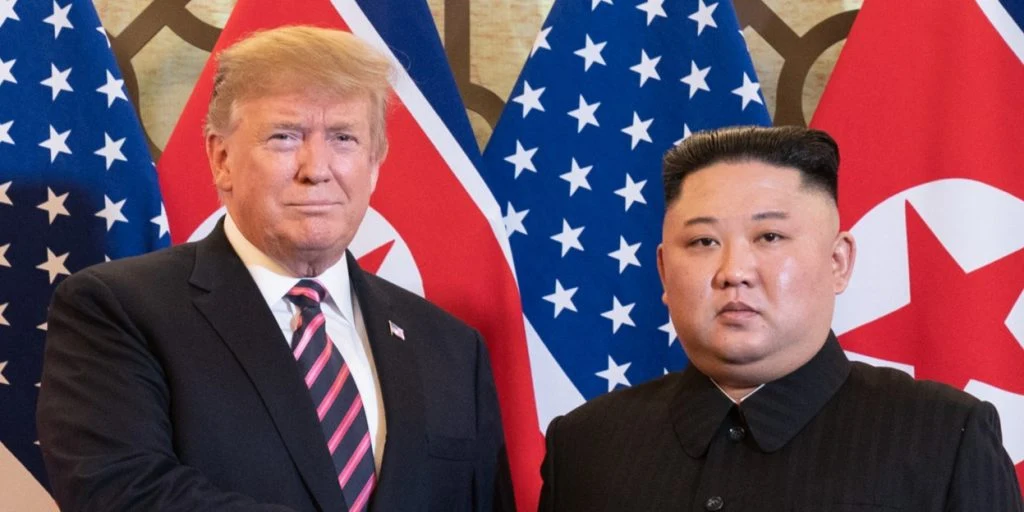
Pyongyang tests missiles while Kim Yo Jong outlines strict conditions for Donald Trump talks.
High-stakes diplomatic maneuvering in East Asia has taken center stage as Washington attempts to restart direct communications with Pyongyang.
Looking to secure a major foreign policy breakthrough later this year, Donald Trump announced plans to pursue a face-to-face meeting with North Korean leader Kim Jong Un, even taking the dramatic step of scaling back joint military exercises with South Korea to signal goodwill.
Reactions from Pyongyang, however, indicate that warm personal rapport between top leaders will not translate into easy policy concessions.
Personal ties versus national security priorities
Rebuffing efforts to treat minor military adjustments as major progress, North Korean officials delivered a icy assessment of Washington’s latest gestures.


“If the U.S. side attempts to promote the measures they have taken this time as some kind of ‘goodwill gesture,’ they will not get the answer they desire,” Kim Yo Jong, the influential sister of Kim Jong Un, stated through state news agency KCNA according to Reuters.
Academic experts highlight that Pyongyang is carefully separating personal relationships from formal security demands.
“Personal ties will never be allowed to compromise national security interests or efforts to strengthen military capabilities,” Lim Eul-chul, a professor at Kyungnam University’s Institute for Far Eastern Studies, noted regarding the dynamic. “In other words, Pyongyang is signalling that personal diplomacy has limits and will not override strategic priorities.”
High bars for renewed summitry
Requirements for a formal summit remain steep. Analysts point out that Pyongyang enters negotiations from a position of relative strength compared to earlier summits in 2018 and 2019, driven by closer economic and military ties with Moscow and Beijing.
“North Korea has options and is cultivating relations with states that require no sacrifices but are only win-win propositions,” Jenny Town, senior fellow at the Stimson Center, explained. “There is little incentive for him to rush back into negotiations where there is an expectation for him to concede anything, much less something he considers crucial to the country’s defences.”
Despite official U.S. State Department assertions that Washington “remains committed to the complete denorganisation of North Korea,” experts note that Pyongyang expects Washington to drop denuclearization demands entirely before returning to the table.
Calibrated signals and regional posturing
Demonstrations of military strength continue alongside diplomatic signaling. North Korea launched approximately ten ballistic missiles off its east coast shortly after the diplomatic announcements, underlining its intention to maintain strategic leverage.
Research fellows analyze the combined missile tests and public statements as part of a calculated negotiation strategy.
“The core objective appears to be encouraging a more accommodating U.S. posture,” Hong Min, senior research fellow at the Korea Institute for National Unification, remarked. “Kim Yo Jong’s statement appears less a rejection of dialogue than an effort to manage Trump’s perceptions, shape his understanding of North Korea and lay the groundwork for possible future U.S.-North Korea talks.”



