
 Kenneth Glad
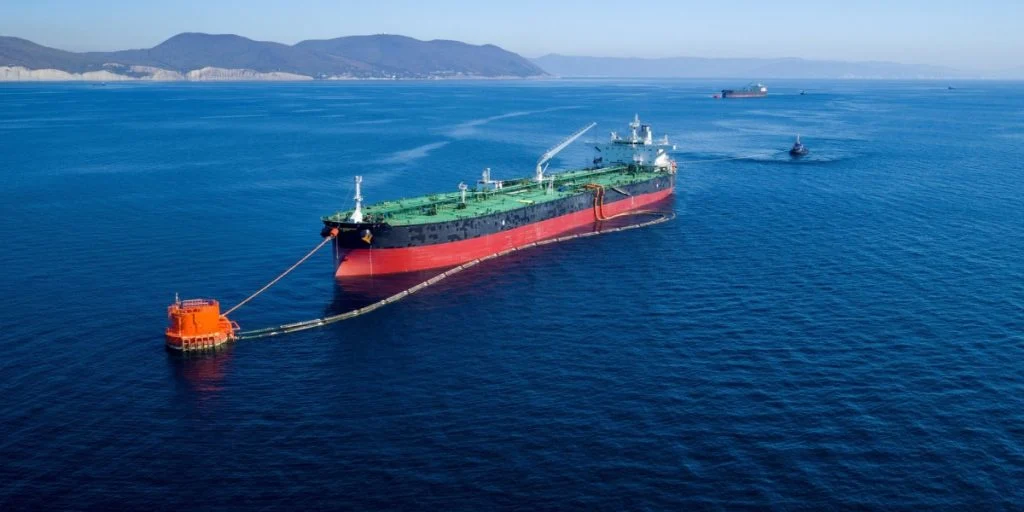
A Ukrainian drone strike on a strategic Black Sea export hub has prompted a formal response from Washington. The brief disruption drew attention not for its military impact, but for the commercial interests tied to the facility.


Tankers leaving Russia’s Novorossiysk port carry vast volumes of crude oil each month, much of it pumped from Kazakhstan and shipped onward to international buyers.
The terminal handles roughly 1.2 million barrels per day through the Caspian Pipeline Consortium system, according to CPC data, cited by TASS, making it one of the Black Sea’s most important energy gateways.
When Ukrainian drones targeted the area, operations briefly stopped, writes Reuters.
Loadings paused. Traders noticed. In Washington, the reaction followed quickly.


Oil exports pause
Novorossiysk is the main outlet for the CPC route, whose shareholders include the Russian government, Kazakhstan’s state energy firm and several Western companies. The pipeline carries the majority of Kazakhstan’s crude exports across southern Russia before reaching the Black Sea.
Reuters reports that exports were temporarily halted after the strike, disrupting cargoes linked to Kazakh supply. Shipments later resumed, but the interruption affected volumes tied to Western commercial interests.
Ukraine’s ambassador to the United States, Olha Stefanishyna, said the State Department sent a formal diplomatic message after the incident. U.S. officials were concerned because the strike affected “American (and) Kazakh economic interest.”
She emphasized that Washington’s outreach was limited to the economic dimension. “This reach-out was not related to encouraging Ukraine from refraining to attack Russian military and energy infrastructure. It was related to the very fact that American economic interest was affected there,” she said. The State Department declined to comment publicly.
Coordination under strain
Since Russia launched its full-scale invasion on February 24, 2022, Kyiv and Washington have worked closely on arms transfers and strategy. Energy infrastructure sits at the intersection of military pressure and global supply stability, and strikes in this area can reverberate beyond the battlefield.
Speaking on the invasion’s fourth anniversary, Stefanishyna argued that the episode revealed a longer-term vulnerability: Ukraine has yet to secure substantial, embedded American investment in its economy.
In practical terms, she suggested that sustained U.S. commercial involvement would reinforce the bilateral relationship, alongside security assistance and diplomatic support.
Sanctions debate continues
The exchange comes as ceasefire talks remain stalled and President Donald Trump has reduced certain military aid while continuing to press for an end to the war.
“What I can say is that we have not been abandoned by the U.S. government,” Stefanishyna said.
She urged Congress to advance broader sanctions targeting Russian energy revenues. “So it should be either passed now, or we will just have to recognize that there’s no will to do it,” she said.
Exports from Novorossiysk have since resumed, according to Reuters. Oil prices showed little immediate reaction. Still, the incident illustrated how strikes on infrastructure tied to more than a million barrels a day can quickly move from the battlefield into diplomatic discussions.
Sources: Reuters, TASS



