
 Nicolai Haugsted

Trump approves a firing squad execution that the Pentagon now plans to broadcast live to the public.
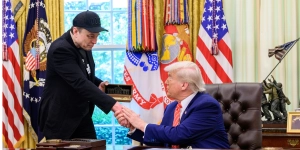

Trump administration plans to livestream firing squad execution in unprecedented move
The United States has spent decades moving executions away from public view, restricting access to the final moments of condemned prisoners and keeping cameras out of execution chambers.
But the Trump administration is now preparing to take a radically different approach.
Reuters can report, that a military execution scheduled for December will not only revive a method of punishment the US armed forces have not used since World War II. The Pentagon also intends to make the event available for people to watch live.


The decision concerns Nidal Hasan, the former Army psychiatrist convicted of killing 13 people at Fort Hood, Texas, in 2009.
And according to military officials, his execution will be broadcast online.
Pentagon confirms unprecedented plans
Hasan, now 56, is scheduled to be executed by firing squad on December 3 at Fort Hood, the same military installation where he carried out the deadly shooting.
A Pentagon official confirmed the broadcasting plans to Reuters.
“It will be livestreamed. Details will follow,” the official said on condition of anonymity.
Defense Secretary Pete Hegseth subsequently confirmed the decision in a post on X.
The announcement represents a remarkable departure from how executions have traditionally been handled in the United States.
News organizations have previously attempted to secure permission to televise executions, but courts have prevented such broadcasts.
According to experts cited by Reuters, no other country is known to televise or livestream legally sanctioned executions.
Public executions themselves have become exceptionally rare internationally, although Iran and Taliban-controlled Afghanistan are among the countries where they have occurred in recent years.
Execution deliberately scheduled to mirror the killings
The timing and location of Hasan’s execution are no coincidence.
Hegseth has made clear that the administration deliberately selected arrangements that closely resemble the circumstances of the original attack.
Hasan opened fire inside a medical facility at Fort Hood in November 2009, killing 13 people.
His execution is scheduled for Thursday, December 3, at 1 p.m., approximately matching the weekday, time and location of the shooting.
Speaking on the Human Events Daily program, Hegseth described the decision as a “no-brainer.”
He also explained why the administration wants the public to witness the execution.
“We’ll make sure that people are able to watch it, that it’s public. Because people need to understand that … there’s serious consequences for these types of things,” Hegseth said.
Asked whether Hasan had made any final requests, the defense secretary offered an equally blunt response.
“Don’t care. We’ll see him on December 3.”
Trump personally approved the execution method
Hasan was convicted in August 2013 of 45 counts of premeditated murder and attempted premeditated murder.
A military jury sentenced him to death.
The attack occurred shortly before Hasan, then serving as an Army psychiatrist, was scheduled to deploy to Afghanistan.
Police shot him during his arrest, leaving him partially paralyzed and dependent on a wheelchair.
Under US military law, a firing squad execution requires presidential approval.
President Donald Trump authorized the method following a recommendation from Hegseth, according to the Pentagon.
The White House has declined to say whether Trump personally supports livestreaming the execution, directing questions about the broadcast to the Defense Department.
If carried out, Hasan’s execution would be the first conducted by the US military since 1961.
It would also mark the military’s first use of a firing squad since 1945.
Legal experts question the decision
The proposed livestream has prompted serious questions about the purpose and legality of turning an execution into a public broadcast.
Eugene Fidell, a military law specialist who lectures at Yale Law School, described the plan as highly unusual.
“It would be extremely, extremely strange,” he told Reuters.
Fidell noted that while firing squads have a long history in American military justice, he knew of no precedent for broadcasting an execution on television or online.
He suggested that Hasan would have to bring a federal lawsuit if he wanted to prevent his death from being publicly broadcast.
The legal questions surrounding such a challenge remain largely unexplored.
“The Supreme Court has never addressed this question, and it’s an interesting question whether the current Supreme Court would put on their originalist hat and say, ‘Well, it was OK in 1790, so what the hell?'” Fidell said.
Military justice historian Jonathan Lurie was similarly skeptical about the proposed broadcast.
“What’s the point of it? Who would want to see that?” he asked.
America’s troubling history of public executions
The United States has a long and complicated history with public punishment.
According to death penalty experts, the country’s last legally sanctioned public execution took place in 1936.
Thousands gathered to watch the hanging of a young Black man convicted of raping a white woman.
Extrajudicial lynchings, frequently carried out by white mobs against Black Americans, also attracted public spectators well into the 20th century.
Modern executions, by contrast, generally take place behind prison walls with tightly controlled access for witnesses.
The Pentagon’s proposal would therefore reopen a practice of public spectatorship that American authorities have largely abandoned.
The decision also arrives during renewed national debate over execution methods and the treatment of death-row prisoners.
Botched execution adds to death penalty controversy
The announcement follows a disturbing incident in Tennessee, where officials recently attempted to execute death-row inmate Christa Pike by lethal injection.
The procedure failed, leaving Pike alive but hospitalized.
Her attorneys said Wednesday that she had awakened “angry and confused” in hospital.
According to her legal team, she remained seriously ill and shackled to her hospital bed.
The incident has renewed concerns about lethal injection, particularly as American authorities continue to experience difficulties obtaining the drugs used in executions.
The Trump administration has expanded the permissible methods for federal executions to include firing squads, electrocution and gas asphyxiation.
At least five US states authorize firing squads under certain circumstances, according to the Death Penalty Information Center.
South Carolina carried out the country’s first firing squad execution in 15 years in 2025.



