
 Nicolai Haugsted

Donald Trump’s latest behavior leads psychiatrist to issue stark warning about presidential power.

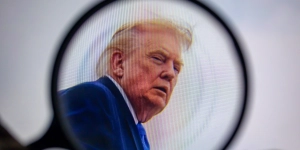
Donald Trump’s latest retelling of his experience following the September 11 attacks has reopened a familiar debate about the 80-year-old president – and prompted a particularly stark warning from one psychiatrist who has publicly criticized him for years.
Dr. Bandy Lee, a forensic psychiatrist and president of the World Mental Health Coalition, argues that several aspects of Trump’s recent public behavior point to what she views as serious psychological concerns.
Speaking on MeidasTouch’s The Weekend Show, Lee focused partly on Trump’s recent claims about his activities around Ground Zero after 9/11. She also pointed to material the president has posted online as evidence for her assessment.
Her comments remain an outside professional opinion. Lee has not personally examined Trump, and public behavior alone cannot establish a psychiatric diagnosis.


Trump’s 9/11 story comes under scrutiny
Trump marked the 25th anniversary of the September 11 attacks this month with several commemorative appearances.
During a September 8 ceremony in Washington, he recalled travelling to lower Manhattan with construction workers after the attacks and described an incident involving two firefighters near what was then known as the U.S. Steel Building, now One Liberty Plaza.
“They grabbed me under the arms, said, ‘Got to get out of here,’ and they literally lifted me up, They lifted me up and they started running with me. I said, ‘Fellas, I can run myself.'”
Trump also said he brought workers from one of his construction projects to the area.
“I took the whole crew down there right after this happened. wasn’t too much we could do.”
Independent verification for those accounts has proved elusive. PolitiFact reviewed Trump’s statements this month and found no evidence supporting his claims that his construction crews assisted with the recovery or that firefighters carried him away from a potentially collapsing building.
Trump did visit lower Manhattan in the aftermath of the attacks, but that is separate from whether the specific episodes he described occurred.
Psychiatrist sees something more troubling
Lee interpreted Trump’s repeated placement of himself within the 9/11 story as psychologically significant.
“It is abnormal and pathological when it involves a fully-grown adult, whether it is because of arrested development or because one has regressed to that state,” she said during The Weekend Show.
Lee compared the behavior to a young child wanting to be the “king or queen of the universe,” arguing that it demonstrated how “fragile he is in his sense of self.”
Her comments form part of a series of appearances on the MeidasTouch program concerning Trump. The Weekend Show has recently promoted episodes featuring Lee as examinations of what she describes as Trump’s unfitness for office and the potential danger associated with presidential control over nuclear weapons.
Such conclusions are Lee’s assessment rather than an independently established diagnosis of the president.
Click to display external content from iFrames except google ads,
- You can always enable and disable third-party content.

You agree to display external third-party content. Personal data may be sent to the provider of the content and other third-party services.
Online posts also concern Lee
Trump’s social-media activity featured prominently in Lee’s argument.
She singled out imagery posted by the president that depicted him aboard a spacecraft and destroying the world, interpreting such material as an expression of how she believes Trump responds to perceived threats.
Lee called the posts “alarming indications of how endangered he feels psychologically and how he needs to fight back, and become the most powerful and dangerous person on the planet.”
“That is where his mind is going,” she added.
Political memes and provocative online imagery cannot, by themselves, establish a person’s mental condition. Lee nevertheless argued that they should be considered alongside other behavior she has observed.
Lee’s strongest concern involved the enormous authority attached to Trump’s office.
She argued that a president who felt personally threatened could potentially respond in ways carrying consequences far beyond domestic politics, particularly because of the president’s role in the nuclear command system.
“The setup that we have is that we have no way of countermanding a, fit or not … there’s no way to countermand a nuclear weapon,” Lee said.
Her comments came during an episode advertised by The Weekend Show as part of a discussion about what Lee calls “the nuclear threat of Donald Trump.”
Lee has made similar arguments about Trump for years and was among the mental-health professionals who publicly questioned his fitness during his first presidency.
Public appearances fuel wider speculation
Questions and speculation about Trump’s health have also followed several recent appearances, including footage showing him appearing to close his eyes for extended periods during public events.
Late-night host Jimmy Kimmel recently mocked Trump over footage from the Pentagon’s September 11 ceremony, while media coverage has also highlighted images and video of the president appearing tired at official events.
Such footage does not establish cognitive impairment or a psychiatric disorder, and no independent medical examination cited here supports Lee’s conclusions.
Trump, meanwhile, continued with his official schedule after the anniversary commemorations. At the Pentagon ceremony on September 11, he delivered an approximately 18-minute address honoring victims, first responders and military personnel.
Lee sees the broader pattern very differently. Her concern is not simply whether Trump occasionally misspeaks, exaggerates or posts provocative material online, but whether those behaviors reflect something more consequential.



