
 Jens Asbjørn Bøgen
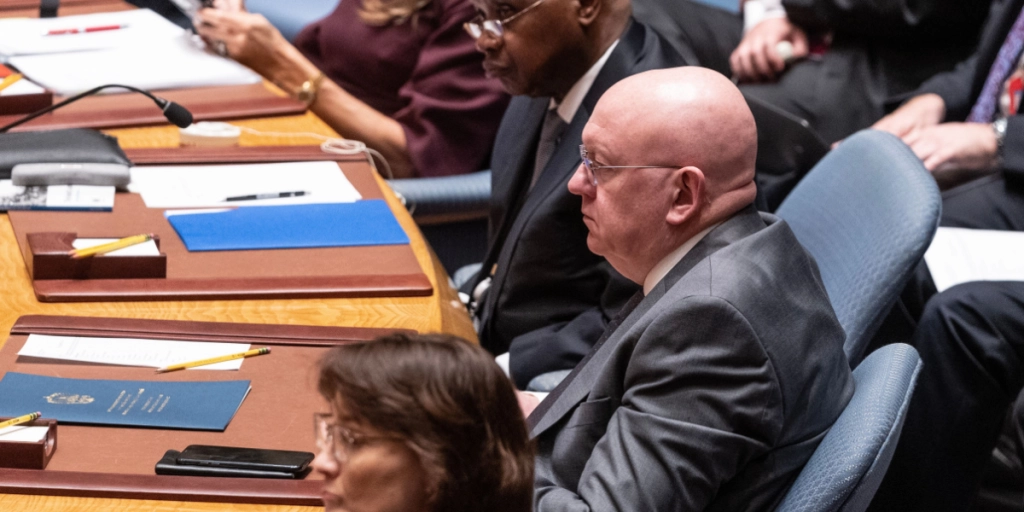
He was immediately slammed by the Ukrainian Deputy Foreign Minister.


Tensions flared at the United Nations Security Council this week as Russia’s ambassador made unexpected remarks about his own identity.
The exchange quickly escalated into a pointed dispute with Ukraine’s representatives, underscoring the deep divide between the two countries.
Vasily Nebenzya, Russia’s permanent representative to the UN, told the council on Feb. 25 that he considers himself Ukrainian, citing his family roots and surname.
“If formally, I am Ukrainian; and I have this strange surname, Slavs know it, it’s hard to find, even in Ukraine,” he said according to The New Voice of Ukraine.


He added that his family name traces back to the Zaporizhian Cossacks and stressed his heritage during a heated session focused on the ongoing war.
Roots and rhetoric
“It comes from the Zaporizhian Cossacks. My father is a true Ukrainian and my mother, too — from the Cossacks. More true [Ukrainians] than you, Ms. [Mariana] Betsa [Ukraine’s Deputy Foreign Minister], and you, Mr. [Andriy] Melnyk [Ukraine’s permanent representative]. But for us there is no difference — we are all one… Our nationality is the same, but our faith is different.”
Nebenzya also addressed the war directly, saying he is “not pleased that people are dying [in the Russo–Ukrainian war],” but maintained that it would continue “as long as necessary.”
His comments reflect Moscow’s long-standing narrative that Russians and Ukrainians share a common national identity, a claim Kyiv has repeatedly rejected.
Sharp rebuttal
Mariana Betsa, Ukraine’s deputy foreign minister, responded at the start of her remarks by challenging Nebenzya’s assertions.
“You are not Ukrainian; don’t pretend,” she said.
“Second, we were never one nation with Russia and never will be. Ukraine is a democratic, free, European country, while Russia is an aggressor state committing terror, war crimes, crimes against humanity, and genocide. Third, Nebenzya’s entire statement is a vivid example of manipulation, disinformation, and Russian propaganda.”
The exchange highlighted the starkly opposing narratives presented before the Security Council as the conflict enters another year.
You can watch the entire meeting in the UN Security Council on YouTube (opens new tab). The Russian representative begins speaking at 1 hour, 45 minutes in. It is not translated, but you can chose to have an AI-generated transcript in English on the side.
Sources: United Nations Security Council meeting, Feb. 25, The New Voice of Ukraine



