Nicolai Haugsted

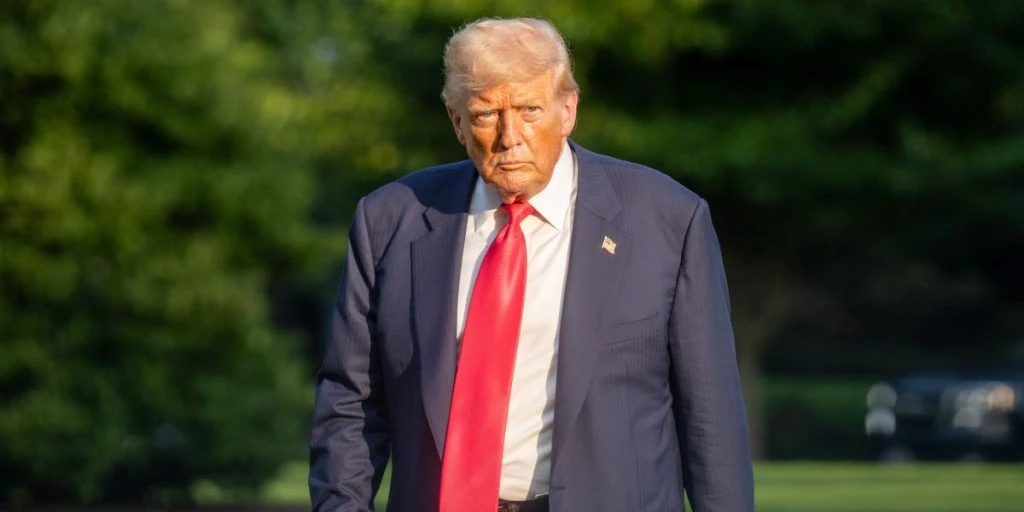
Trump’s longtime biographer predicts an explosive response if the midterms go badly for Republicans.


Donald Trump has never been particularly enthusiastic about accepting political defeat.
His refusal to acknowledge the outcome of the 2020 presidential election remains one of the most controversial episodes of his political career, and another potentially difficult electoral test is approaching.
With the November 3 midterm elections just two weeks away, Republicans are fighting to maintain control of Congress while Democrats hope to capitalize on growing dissatisfaction with the administration.
But according to an author who has spent years examining Trump’s behavior and relationships inside the White House, the consequences of a major Republican defeat could extend far beyond the usual political fallout.


Michael Wolff reveals on Inside Trump’s Head, he already has a good idea of how the 80-year-old president would respond.
And his prediction is anything but reassuring.
Biographer points to Trump’s reaction in 2020
Speaking on the Inside Trump’s Head podcast, Wolff argued that Trump’s behavior following his 2020 election defeat offers important clues about what could happen after the midterms.
The author expects the president to respond to a significant Republican setback by attempting to dominate the political conversation.
“I know what he will do after crushing defeat. He will understand that what he has to do on the day after,” Wolff said.
“The imperative for him is to seize as much attention as he can.”
Wolff pointed to the aftermath of the 2020 presidential election, when Trump refused to concede to Joe Biden and repeatedly made false claims about widespread election fraud.
Trump publicly declared himself the winner despite losing the election and pressured the Justice Department to challenge the results.
The confrontation ultimately culminated in the January 6, 2021, attack on the US Capitol by Trump supporters.
However, Wolff does not necessarily expect a similar outbreak of violence following the upcoming midterms.
Instead, he believes the president would attempt to overshadow the election results through an aggressive campaign to reclaim public attention.
Democrats could gain control of Congress
The November 3 elections could significantly reshape the remainder of Trump’s presidency.
Recent polling has suggested growing opportunities for Democrats, with control of both the House of Representatives and the Senate at stake.
The results remain uncertain, however, and the outcome will ultimately depend on voters.
Should Democrats capture the House, they could gain the power to launch investigations into the administration and potentially initiate another impeachment proceeding against Trump.
The president has already been impeached twice, although the Senate acquitted him on both occasions.
Any future conviction would require a two-thirds majority in the Senate, regardless of which party controls the chamber.
For Wolff, however, the immediate political consequences of a Democratic victory are only part of the story.
He believes Trump would focus on preventing his opponents from enjoying the spotlight.
Trump could attempt to overshadow Democratic celebrations
Wolff described a scenario in which Democrats celebrate their electoral success while Trump works to convince the public that the political balance of power has not fundamentally changed.
“The Democrats, if they win, will be obviously celebrating,” Wolff said.
“Obviously trying to impress upon the world that it is a new day. Donald Trump, for his part, will be trying to impress upon the world that he still controls the stage, that it doesn’t make any difference.”
According to the author, Trump would likely attempt to portray a Democratic victory as less significant than his opponents claim.
“They may say they won, and they may act like they’ve… won, and maybe they technically have won, but the reality is it is still Donald Trump’s world, and he will do everything possible to make that case,” Wolff said.
The author believes such efforts would continue well beyond election night.
“And he will do everything possible to make that case the day after and then the day after that.”
His comments represent a prediction based on his interpretation of Trump’s previous behavior, rather than evidence of any specific plans within the administration.
Author raises possibility of military action against Cuba
Wolff went further by suggesting that a major electoral setback could encourage Trump to pursue some of the more extreme measures he has previously discussed.
Among the possibilities mentioned by the author was a potential US invasion of Cuba.
Wolff speculated that Trump might consider dramatic foreign-policy actions as a way of regaining political attention and asserting his authority.
However, there is no evidence presented that the president is planning to invade Cuba in response to a possible midterm defeat.
The suggestion remains Wolff’s hypothetical assessment, not a confirmed administration strategy.
“There will be a series of Trumpian things greater than, you know, greater than anything we’ve ever seen, greater than anything, actually, I think we’ve imagined,” Wolff said.
The author expects the president to respond to political setbacks with increasingly attention-grabbing actions rather than adopting a more restrained approach.
Wolff predicts Trump will refuse to retreat
Wolff has written extensively about Trump and his inner circle, often offering sharply critical interpretations of the president’s political instincts.
His latest assessment centers on his belief that Trump views public displays of weakness as unacceptable.
“Donald Trump will not go willingly. He will not be humbled,” Wolff said.
The author argued that Trump’s attitude toward losing would shape his response to any significant Republican defeat.
“That goes back to this idea that he never loses. The idea of humility does not exist in Donald Trump’s soul,” he continued.
Wolff concluded with a particularly stark prediction.
“Therefore, he will do the opposite—not retreat, but attack.”
The White House did not respond to a request for comment on the author’s remarks, according to the original report.