
 Nicolai Haugsted

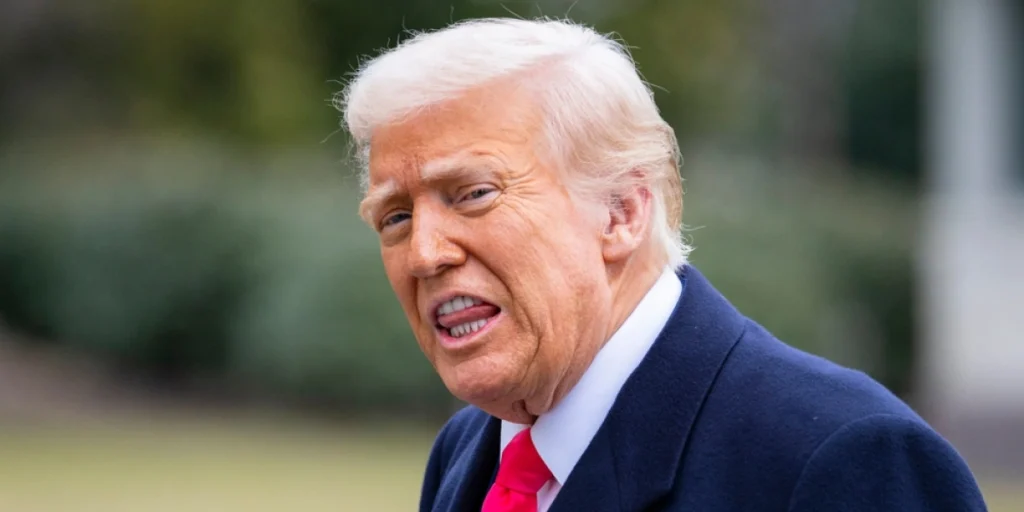
Donald Trump receives devastating news just minutes after securing approval for his controversial monument.


Donald Trump’s ambitious plans to reshape Washington have become an increasingly contentious part of his second presidency.
The president has championed several major construction projects in the nation’s capital, arguing that his architectural ambitions will leave a lasting mark on the city long after he leaves office.
But his proposals have also attracted criticism from preservationists, veterans and lawmakers who question their cost, appearance and potential impact on some of America’s most historically significant landmarks.
Now, one of his most controversial projects has encountered a particularly serious obstacle, according to The irish Star.


Just days after Republicans suffered a crushing defeat in the midterm elections, Trump appeared to secure an important victory for his proposed 250-foot triumphal arch near Arlington National Cemetery.
That celebration proved remarkably short-lived.
According to The Mirror, a federal judge blocked construction of the enormous monument shortly after a federal planning commission voted to approve it, ruling that the project could not proceed without congressional authorization.
The decision represents another setback for a president determined to complete his architectural vision before leaving the White House.
Trump’s major victory lasts only minutes
The National Capital Planning Commission spent approximately nine hours hearing testimony on Thursday before voting on Trump’s proposed monument.
More than 130 people reportedly registered to speak, reflecting the intense public disagreement surrounding the project.
Supporters defended the president’s plans, while opponents raised concerns about the structure’s location, size and potential consequences for nearby historic sites.
Despite those objections, the commission voted 8-4 in favor of approving the arch.
The decision appeared to clear an important administrative hurdle for the Trump administration, which has been eager to begin construction before Democrats assume control of Congress in January.
Mark Paoletta, the Trump-appointed chairman of the commission, had reportedly indicated that he intended to secure a vote on Thursday even if proceedings continued beyond midnight.
For the White House, the approval represented a welcome political victory following the Republicans’ disastrous midterm performance.
However, the project was still facing a legal challenge.
Later that evening, US District Judge Tanya S. Chutkan intervened and blocked construction, finding that the administration needed authorization from Congress before proceeding.
The ruling effectively prevented the commission’s approval from becoming an immediate green light for construction.
Trump’s plans were once again on hold.
A 250-foot monument with a complicated legal problem
The proposed structure, commonly described as Trump’s Triumphal Arch, was initially conceived as a monument commemorating the United States’ 250th anniversary.
The president has envisioned an enormous gilded archway standing approximately 250 feet tall near Arlington National Cemetery.
However, critics argue that the scale and placement of the monument would fundamentally alter one of Washington’s most recognizable historic landscapes.
The location is particularly sensitive because of its relationship to Arlington House, the Lincoln Memorial and other nationally significant sites.
Preservationists and veterans have warned that such a large structure could disrupt important sightlines and overshadow existing memorials.
Opponents have also questioned whether the administration possesses the legal authority to construct the monument without congressional approval.
Their arguments center on the Commemorative Works Act, which establishes requirements for the authorization and placement of new commemorative structures in the nation’s capital.
Critics contend that the legislation requires Congress to approve the project before construction can begin.
The administration’s position has been challenged in federal court, creating uncertainty over whether the planning commission’s approval is sufficient.
Judge Chutkan had already imposed an additional requirement on Wednesday.
She instructed the administration to provide her with 30 minutes’ notice before taking any construction-related action, regardless of whether the planning commission approved the project.
That requirement underscored the court’s continuing involvement in the dispute.
Thursday’s subsequent intervention made the legal obstacle even more significant.
The White House is running out of time
The timing of the dispute is particularly important for Trump.
Following Tuesday’s midterm elections, Democrats are preparing to take control of both the House of Representatives and the Senate in January.
The change will make it considerably more difficult for the administration to obtain congressional approval for controversial projects.
The White House has reportedly made clear that it wants construction to begin before the new Congress takes office.
Trump has also expressed a desire to see the arch completed before his presidency ends in January 2029.
However, the proposed construction schedule presents another challenge.
Current estimates suggest that building the monument would take approximately three years.
That timeline could extend beyond Trump’s remaining two years in office, even without additional legal or administrative delays.
The president therefore faces a difficult combination of political opposition, legal uncertainty and practical construction constraints.
With Democrats soon gaining control of Congress, securing the authorization demanded by the court could prove particularly challenging.
Trump’s Cabinet offers an unusual defense of the arch
The legal battle has also produced an unexpected argument from senior administration officials.
Rather than presenting the proposed arch solely as a commemorative monument, Defense Secretary Pete Hegseth and Homeland Security Secretary Markwayne Mullin have described it as a potentially valuable national security asset.
According to court filings cited in the report, both officials argued that the structure could serve military and protective purposes.
Hegseth described the project as a “generational national defense opportunity.”
He suggested that the arch could help address security threats involving drones and other potential attacks.
“The Arch is a generational national defense opportunity to mitigate these evolving threats,” Hegseth stated.
The defense secretary also argued that the monument could combine its symbolic purpose with practical military functions.
“It will be utilized as a dual-purpose structure: a major national monument that also incorporates military utility to support Homeland defense,” he added.
According to the administration’s argument, the arch could potentially accommodate security personnel, surveillance equipment and technology designed to detect or counter drones.
Mullin similarly suggested that the Secret Service could use the structure to improve monitoring and protection for senior government officials.
The unusual justification effectively presents the monument as both a national landmark and a security installation.
Hegseth says the monument could help stop drones
The proposed arch’s extraordinary height is central to the administration’s security argument.
At 250 feet, the structure would provide an elevated position overlooking parts of the surrounding area.
Hegseth argued that the location could improve surveillance capabilities and provide security personnel with better visibility.
“Its height and strategic location provide enhanced lines of sight from both sensors and personnel, which is critical to C-UAS and other security operations,” he said.
C-UAS refers to counter-unmanned aircraft systems, which are designed to detect, track or neutralize drones.
Administration officials have suggested that the arch could accommodate sensors, communications equipment and personnel involved in protective operations.
The proposals have added another dimension to an already contentious debate.
Critics have questioned the necessity of such a large monument near Arlington National Cemetery, while the administration maintains that the structure could offer benefits beyond its commemorative purpose.
However, the proposed security functions do not automatically resolve the legal questions surrounding congressional authorization.
The court’s intervention indicates that the administration must still address those requirements before construction can proceed.
The monument could cast shadows across thousands of graves
Beyond the legal controversy, the proposed arch has generated considerable concern because of its potential impact on Arlington National Cemetery.
The cemetery is among America’s most important military burial grounds, containing the graves of service members, veterans and prominent historical figures.
Its proximity to the proposed monument has prompted criticism from veterans and preservationists who believe the structure would intrude upon the solemn character of the site.
An analysis by The Washington Post examined how shadows from the 250-foot arch could move across the cemetery throughout the year.
The newspaper’s modeling suggested that the structure could cast shadows over numerous burial sites and memorials.
On May 12, for example, the arch’s shadow would reportedly begin reaching the cemetery at approximately 5:28 a.m.
The analysis indicated that the shadow could temporarily cover the John F. Kennedy Memorial, including the eternal flame, for approximately nine minutes.
It could then move across the Military Women’s Memorial for around 22 minutes.
Other prominent burial sites potentially affected include those of former Supreme Court justices Thurgood Marshall, William H. Rehnquist and Ruth Bader Ginsburg.
The modeling also suggested that shadows could reach memorial markers associated with the First and Second World Wars.
For opponents of the project, the findings raise questions about whether a new monument should be permitted to affect the appearance and atmosphere of such historically significant grounds.
The shadow could reach the cemetery on 284 days each year
The Washington Post’s analysis suggested that the effects would not be limited to a handful of occasions.
According to the modeling, the proposed arch could cast shadows onto Arlington National Cemetery on approximately 284 days annually.
The John F. Kennedy Memorial’s eternal flame could experience shadowing on 18 days, while other parts of the presidential memorial could be affected on approximately 50 days.
The Military Women’s Memorial could fall within the arch’s shadow on 109 days.
The analysis also identified potential effects on graves belonging to veterans of conflicts including the Civil War, the Spanish-American War, the First and Second World Wars, the Korean War and the Vietnam War.
Burial sites associated with formerly enslaved people could also be affected.
The report discussed both approximately 2,000 graves touched by particular shadow patterns and a broader estimate of up to 75,000 potentially affected burial sites.
Most of the projected shadowing would occur early in the morning, before the cemetery’s usual 8 a.m. opening time.
However, the modeling suggested that shadows could persist beyond that point on 26 occasions.
The findings are projections based on the proposed structure’s dimensions and location, rather than observations of an existing monument.
Nevertheless, they have provided critics with another argument against the project.



