
 Nicolai Haugsted
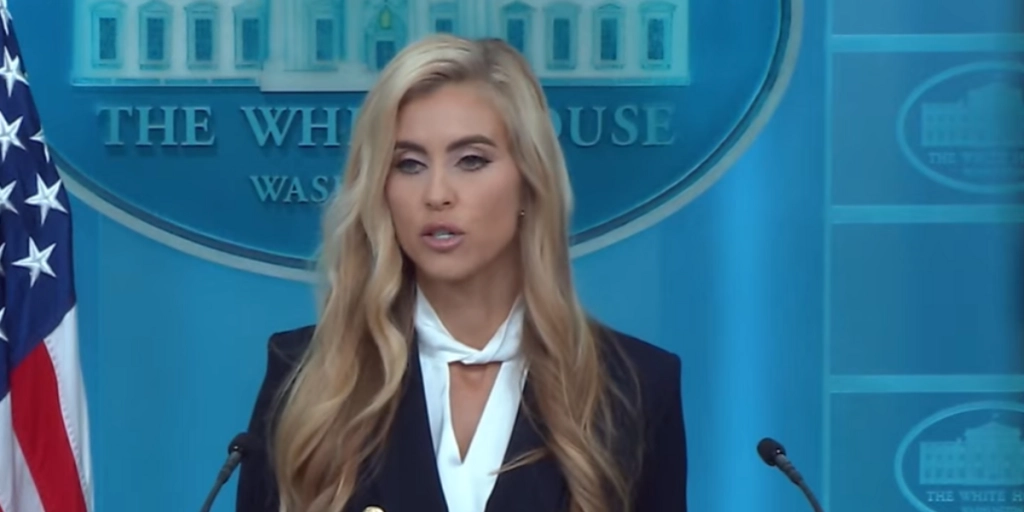
Legal experts question whether Karoline Leavitt’s background at a Chinese law firm qualifies her to call herself a lawyer.

A career in the White House comes with intense scrutiny, particularly for the person responsible for answering questions on behalf of the president.
For Donald Trump’s new press secretary, Katie Zacharia, that scrutiny has extended beyond her performance in the briefing room and into the details of her professional background.
The 41-year-old has presented herself as an experienced legal professional, citing work at a prominent Chinese law firm and a senior legal position with a conservative organization in California.
But legal scholars are now questioning whether those experiences justify one of the most prominent titles on her résumé.


And the distinction between attending law school and actually being licensed to practice law is proving particularly important.
Law professors question her credentials
Zacharia graduated from Pepperdine Caruso Law School in 2011 before moving to Beijing, where her husband, Tyler, was already living.
The couple spent approximately two years in China, between 2011 and 2013.
According to her LinkedIn profile, Zacharia worked as an associate at Zhong Lun Law Firm, a prominent Chinese legal practice.
Her professional history also lists a fundraising position with Compassion for Migrant Children, an organization supporting the children of migrant workers.
However, questions have emerged about whether Zacharia was ever formally admitted to practice law.
According to the reporting, no publicly identified record has established that she passed a bar examination in any American state, including California.
Asked about her qualifications during her second day as White House press secretary, Zacharia reportedly said she passed the bar “when I moved to China,” without identifying a particular US jurisdiction.
That explanation has raised further questions among legal experts familiar with China’s restrictions on foreign legal practitioners.
China explanation faces skepticism
Georgetown Law professor Mark Jia, who specializes in Chinese law, told independent publication Popular Information that he was unaware of a comparable case involving someone with Zacharia’s reported background becoming licensed to practice law in China.
He questioned why a Chinese law firm would employ an American graduate to advise clients on foreign law without a license from her home country.
“Why would a Chinese law firm hire someone to advise on foreign law if they were not licensed to practice that law in their home countries?” Jia asked.
He suggested that Zacharia might instead have worked in a supporting legal capacity, although her precise responsibilities have not been independently established.
Even employment as a foreign legal consultant, he explained, would not automatically confer the professional status of a licensed attorney.
“It is not accurate for her to call herself a lawyer. There is a difference between being licensed to practice law and doing legal work,” Jia said.
“The Chinese government does not make someone an attorney simply by allowing them to perform some legal work for a law firm. You have to be admitted as a lawyer somewhere, and I have seen no evidence that she was admitted as such anywhere.”
His assessment challenges the assumption that working inside a law firm necessarily means someone is qualified to practice law.
Another professor draws a firm distinction
Bruce Green, director of the Louis Stein Center for Law and Ethics at Fordham University School of Law, raised similar concerns in comments to The Washington Post.
“A law school graduate is just that — a law school graduate,” he said.
Green emphasized that legal education and professional licensing are separate qualifications.
“Someone in the U.S. who just flat-out calls themselves a lawyer, without further qualification or explanation, will mislead listeners or readers to think that they are permitted to practice law here in the U.S. — which they are not,” he explained.
His remarks do not establish whether Zacharia possesses an undisclosed qualification, but they underline why the question matters.
Graduating from law school does not, by itself, authorize someone to represent clients as a licensed attorney.
White House stands by her experience
The White House has defended Zacharia’s professional background, although its public explanation has not resolved the questions surrounding her licensing status.
According to the administration, she “worked on international transaction law” during her time in China.
Officials also maintained that she “practiced international transactional law, with all the appropriate credentials.”
The statement did not identify a licensing jurisdiction or provide details of a bar admission.
Questions have also been raised about another position listed in Zacharia’s professional history.
Her résumé identifies her as general counsel for Fix California, a conservative nonprofit founded by Trump ally Ric Grenell.
According to her employment history, she held that position from January 2024 until March 2025.
The title has attracted attention because general counsel is ordinarily associated with senior legal responsibilities, although the precise duties and qualifications required can vary.
Her social media biography adds another complication
Zacharia’s public descriptions of her career have also changed over time.
Archived versions of her X profile show that she has repeatedly used the title “Lawyer” alongside references to her work with Fix California and television news outlets.
In September 2025, her biography described her as a Fox News and Newsmax analyst, general counsel to Fix California, a lawyer and a political strategist.
The legal title reportedly disappeared from her profile in November 2025 before returning several months later.
An archived version from May 2026 again identified her as a lawyer and general counsel.
Her references to Fox News have also drawn scrutiny.
Although Zacharia has described herself as a Fox News commentator, the network previously disputed that she was employed by the channel.
The distinction between appearing as a television guest and holding a formal position with a network has therefore become another point of contention surrounding her professional history.



