
 Nicolai Haugsted

King Charles is preparing to reverse decades of land drainage near Andrew’s home as part of an ambitious conservation project.

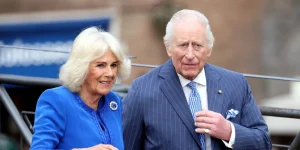
King Charles has made no secret of his determination to modernise the royal family’s properties, with environmental conservation becoming an increasingly important part of his plans.
At Sandringham, the monarch has already introduced several initiatives aimed at making the historic Norfolk estate more sustainable.
But his latest project comes with a rather unusual twist, particularly for one member of the royal family who has recently settled into a quieter life on the estate.
Charles has received planning permission to restore an area of marshland close to the home of his younger brother, Andrew Mountbatten-Windsor.


The project could dramatically alter the landscape surrounding Andrew’s residence, Marsh Farm, although the changes are primarily intended to support wildlife and grazing cattle.
A bog is coming to Andrew’s neighbourhood
According to Hello Magazine via. planning documents, Charles intends to return part of the Sandringham estate to its former wetland condition.
The land near Wolferton was originally marshland before drainage systems transformed it into drier agricultural ground.
Now, the King wants to reverse that process.
King’s Lynn and West Norfolk Council has approved the proposal, although work still requires permission from Natural England before it can begin.
The plans involve creating low earth embankments, known as bunds, which will help retain water across the site.
The planning application explains how the restoration will work.
“Rewetting the land will be achieved via a gravity-fed inundation from the River Ingol via a scrape.”
The documents continue:
“The water will then be retained by a slight change in levels including the creation of perimeter bunds around the edge of the site.”
The result will be a wetter landscape designed to support grazing animals and improve the area’s natural environment.
The King has already introduced some new neighbours
The marshland project follows another change that Charles recently made near his brother’s home.
A herd of British White cattle has been introduced to the area as part of the estate’s land-management programme.
The distinctive breed has a long history in Britain, with roots in Norfolk dating back to the late 18th century.
Restoring the wetlands is expected to improve grazing conditions for the animals.
However, the prospect of living near marshland might not appeal to everyone.
An early 20th-century book, The King’s Homeland, offered a rather unflattering description of the surrounding landscape.
The author described a walk near Marsh Farm towards the sea wall protecting the reclaimed land.
“But he must not expect to find beyond this sea-wall a shingly beach or a stretch of golden sand, for not of such are the shores of Wash.”
Instead, the writer warned visitors to expect something considerably less picturesque.
“Instead he will see, if the tide be out, an apparently limitless expanse of gleaming – and often steaming – ooze.”
Whether Andrew will share that historical assessment remains unknown.
There is no indication that he has publicly objected to the plans.
Charles continues his environmental transformation
The proposed wetland restoration is consistent with the King’s longstanding interest in conservation.
Charles has repeatedly championed environmental protection, sustainable agriculture and the preservation of natural habitats.
At Sandringham, those priorities have already resulted in several significant changes.
The estate has introduced a biomass boiler to provide heating for Sandringham House, alongside solar energy installations.
Another initiative involves planting a tree for every visitor to the estate.
Restoring marshland would add another environmental project to the list, while also helping return part of the Norfolk countryside to its earlier natural state.
For Andrew, however, the transformation means that the surroundings of his new home could soon look considerably different.



