
 Nicolai Haugsted

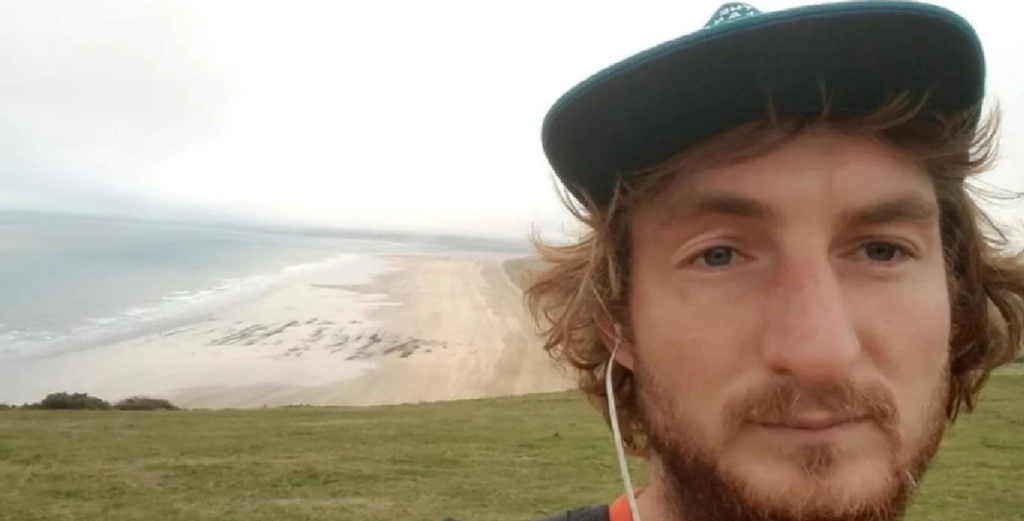
Police failed to act on crucial information before a man murdered three elderly victims in their homes.


British police are facing renewed scrutiny over a triple killing that investigators say might have been prevented if authorities had acted on repeated warnings about a man’s deteriorating mental health.
The case dates back to 2019, when three elderly men were murdered in their homes in Exeter, England. Their killer had already attracted police attention on two separate occasions in the preceding 48 hours, but officers released him both times.
According to The Guardian, a joint investigation by The Sunday Times and BBC Radio 4’s File On 4 Investigates has uncovered a series of failures involving police officers and medical professionals before the killings.
The findings have intensified demands for accountability from the victims’ families, who say they are still waiting for a proper explanation and an apology.


Police ignored repeated warnings before the killings
Alexander Lewis-Ranwell, who was 27 at the time and had paranoid schizophrenia, killed Anthony Payne, 80, and 84-year-old twin brothers Roger and Dick Carter during a psychotic episode in 2019.
Just two days before the murders, police arrested Lewis-Ranwell after he broke into a farm.
Officers subsequently released him, only to arrest him again after he attacked a farmer with a four-foot logging saw.
His behaviour during the second detention raised serious concerns. Police footage showed Lewis-Ranwell partially undressed, spitting, hissing and striking the hatch of his cell while making disturbing statements about paedophiles and animals.
Despite his condition, authorities released him again.
Investigators have since established that officers failed to act on warnings from a national police database and a mental health assessor.
Lewis-Ranwell’s mother had also contacted authorities, warning that her son was experiencing a psychotic episode and should remain in custody.
Her concerns went unheeded.
Medical assessment failed to identify serious warning signs
The investigation found that the medical professional assigned to examine Lewis-Ranwell lacked specialist mental health expertise and failed to recognise the seriousness of his condition.
Police officers also failed to properly document and communicate crucial information about his behaviour.
Investigators discovered another significant problem: officers were unaware that they could legally detain Lewis-Ranwell under the Mental Health Act without first obtaining a medical assessment.
Following his release, Lewis-Ranwell threatened several people during a prolonged period of increasingly dangerous behaviour.
He eventually killed Payne with a hammer before murdering the Carter brothers with a spade.
At Exeter Crown Court in December 2019, Lewis-Ranwell was found not guilty by reason of insanity.
He received a hospital restriction order requiring him to remain in psychiatric care until the relevant authorities consider him safe for release.
A psychiatrist who examined the case described him as one of the most severely mentally ill patients he had encountered.
Victims’ families demand answers seven years later
The latest revelations have added to the frustration of relatives who believe the authorities had several opportunities to intervene.
An inquest last month concluded that police failures contributed to Lewis-Ranwell’s release after a doctor overlooked clear indications of delusional and disordered thinking.
Amanda Taylor, whose uncles were the Carter twins, told The Sunday Times that her family was still seeking justice.
“All I want is for just one of the agencies involved to stand up and say: ‘We are so sorry. Serious mistakes were made. We recognise the devastating consequences of those failures and we will do everything in our power to make sure this never happens again,’” she said.
The families have called for the Independent Office for Police Conduct (IOPC) to investigate Devon and Cornwall Police.
However, the watchdog previously directed the police force to investigate itself, and relatives say they have received no meaningful response for two years.
The IOPC maintains that the family can request a review of the internal investigation but says it has not yet received such a request.
Devon and Cornwall Police, meanwhile, says it is addressing lessons identified by the case and will consider the inquest jury’s recommendations.
Another tragedy raises questions about Britain’s mental health system
The Exeter murders have also renewed concerns about how British authorities respond when people experiencing severe mental illness present a potential danger to themselves or others.
Similar questions emerged following the 2023 Nottingham attacks, when Valdo Calocane, who also has paranoid schizophrenia, killed three people.
A subsequent Care Quality Commission review identified serious mistakes in his treatment and discharge, despite warning signs that included aggression and difficulties with medication.
NHS England has since strengthened guidance for supporting patients with severe mental illnesses who are considered high-risk or struggle to engage with treatment.
Julian Hendy, from the victims’ charity Hundred Families, believes lessons from the Exeter killings could have helped prevent subsequent tragedies.
“In my view, had the lessons in the Lewis-Ranwell case been learnt earlier, and effective action taken, there is a real chance that the Nottingham attacks could well have been prevented,” he said.



