
 Kenneth Glad
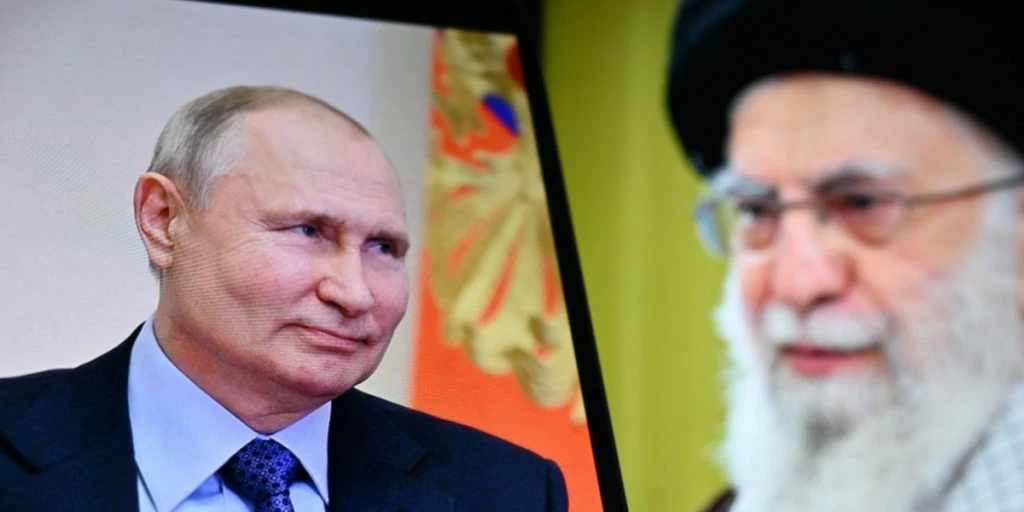
The Russian president criticized the attacks as a blatant breach of international norms and extended personal condolences to Iran’s leadership and people.

Iran has confirmed that Supreme Leader Ayatollah Ali Khamenei was killed in joint U.S. and Israeli air strikes, ending a leadership tenure that began in 1989, writes France24.
The country now moves into a constitutional transition. Under Iranian law, a temporary leadership arrangement steps in until the Assembly of Experts, an 88-member clerical body elected by voters but vetted by the Guardian Council, selects a successor.
The process is formalized, but outcomes are political. Iran enters this period under sanctions, amid economic strain, and after repeated waves of domestic protests in recent years. The leadership question is therefore not abstract. It intersects with security, legitimacy, and regional power projection.
Tehran has declared a period of national mourning. The armed forces remain on alert.


Two different systems, one concentration of power
Iran’s political system combines elections with clerical oversight. Voters choose a president and parliament, but the Supreme Leader stands above them as commander-in-chief of the armed forces and the ultimate authority over the judiciary, state broadcasting and key security institutions such as the Islamic Revolutionary Guard Corps. Candidates for parliament and the presidency must be approved by the Guardian Council before appearing on ballots.
According to the V-Dem Institute’s 2024 classification, Iran is categorized as an electoral autocracy. Russia is classified in the same category.
Russia’s constitutional structure differs. It is formally a semi-presidential republic with a directly elected head of state. In practice, power has become increasingly centralized around President Vladimir Putin though.
Regional governors are tightly managed from Moscow, national television is state-dominated, and opposition figures face significant political and legal barriers. The presidency defines strategic direction.
The ideological foundations differ, clerical guardianship in Iran, secular presidential authority in Russia, but both systems rely heavily on centralized control at the top.
Moscow condemns the strike
In a message released by the Kremlin and cited by Reuters, President Vladimir Putin described the killing as “a murder committed in cynical violation of all norms of human morality and international law.” He added that Khamenei would be remembered in Russia as “an outstanding statesman” who contributed significantly to bilateral relations.
Russia’s Foreign Ministry separately condemned the U.S.–Israeli operation and called for a return to diplomatic resolution.
At the same time, Moscow has not announced military support. Reuters reports that the 20-year strategic partnership agreement signed between Russia and Iran in 2025 does not include a mutual defense clause. Russia remains heavily committed to its war in Ukraine and continues to operate under extensive Western sanctions, which constrains its room for escalation.
There is also an economic dimension. Iran has been part of Russia’s sanctions-era trade strategy, including through the North–South Transport Corridor linking Russia to markets in South Asia. Any sustained disruption in Iran could complicate that route.
Oil markets reacted immediately to the strikes. Higher prices could increase Russian export revenues in the short term. Whether that offsets longer-term geopolitical uncertainty is less clear.
Sources: Reuters; France24; V-Dem Institute 2024 regime classification.



