
 Nicolai Haugsted
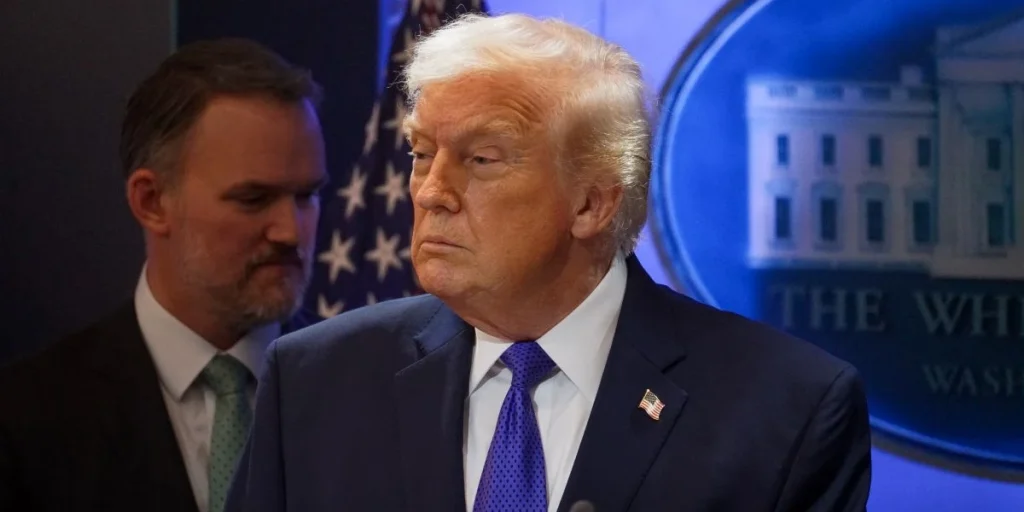
Former MAGA loyalists are threatening to stay home in November as disappointment with Trump’s presidency continues to grow.


Donald Trump has spent years building a political movement whose supporters were willing to stand by him through controversies that would have ended many other political careers.
His ability to mobilize loyal voters has repeatedly frustrated Democrats and helped transform the Republican Party around his political brand.
But with November’s midterm elections approaching, Republicans are confronting a potentially serious problem. Some of the voters who once enthusiastically backed Trump are beginning to question whether showing up at the ballot box is worth the effort.
According to RadarOnline, growing frustration over living costs, foreign policy and political fatigue is threatening Republican turnout, particularly in Michigan.


The danger for Trump’s party is not necessarily that his supporters will vote Democrat. It’s that they might not vote at all.
Trump’s most loyal supporters are losing patience
Political insiders speaking to RadarOnline warn that enthusiasm among some MAGA voters is fading as the president’s priorities appear increasingly disconnected from their everyday concerns.
“The biggest danger for Trump isn’t that millions of his supporters are suddenly going to become Democrats. It’s that people who once couldn’t wait to vote for him are beginning to wonder whether it’s worth turning out at all,” one political strategist told the outlet.
The strategist warned that even a relatively small decline in turnout could have serious consequences for Republicans in closely contested congressional races.
Another Republican insider pointed to growing disappointment over Trump’s economic and foreign policy decisions.
“People voted for cheaper groceries, affordable gasoline, secure jobs and an end to America’s involvement in foreign wars,” the source said.
“Instead, they’re watching their household bills rise while the president talks about projects that seem completely removed from their everyday struggles.”
For some longtime supporters, that frustration has become difficult to ignore.
Former Trump voters are speaking out
Jim Pasek, a retired pharmaceutical worker from Michigan who voted for Trump twice, recently expressed his disappointment to The New York Times.
“He’s not making sense,” Pasek said.
“It confuses me, and then I just get disgusted and tune out.”
His criticism focused partly on gasoline prices and Trump’s willingness to pursue military action despite his previous promises to avoid foreign conflicts.
“He’s losing touch with the American people,” Pasek added.
Former Republican statehouse candidate Lindsay Kronemeyer, who previously campaigned for Trump, has also noticed a change in political conversations around her.
“People are just more focused on everyday life,” she told the Times.
“I don’t hear the chatter on the Republican side of ‘Trump this, Trump that.’ He’s just not there in my head anymore.”
The shift suggests that Trump’s political influence may be encountering a different kind of resistance from voters who have not necessarily abandoned their conservative beliefs.
Democrats gain an advantage as Republican enthusiasm fades
Polling cited in the report offers another indication of the challenges facing Republicans.
A New York Times/Siena University survey found that 61 percent of Democrats said they were certain to vote, compared with 56 percent of Republicans.
Democrats also held a seven-point lead among registered voters, which increased to nine points among likely voters.
The figures do not guarantee a Democratic victory, but they suggest turnout could become a decisive factor.
Political analyst Charlie Cook has described the phenomenon as a “red undertow,” referring to Republicans quietly withdrawing their support rather than openly switching political allegiance.
Local developments in Michigan have added to those concerns.
In Ottawa County, where MAGA-aligned politicians previously controlled eight county commission seats, their representation has fallen to three.
Meanwhile, Republican officials in neighboring counties have reported internal divisions and difficulties attracting campaign volunteers.
Doug Koopman, a Republican official in Kent County, offered a particularly troubling assessment.
“There’s very low energy on the Republican side,” he said.
Former Michigan Republican lawmaker Al Pscholka believes voters have simply grown weary of the president’s confrontational approach.
“People are tired,” he said.
“The whole divider-in-chief thing, it’s gotten to the point where it’s just exhausting.”
Some voters are considering staying home
The dissatisfaction is not confined to Michigan.
Brandon Tremaine, a Texas graduate student who supported Trump in 2020, has openly questioned whether he intends to participate in the upcoming elections.
“President Trump has been saying, ‘Vote as if I was on the ballot,’ and that’s exactly what I’m going to do – not vote,” he said.
Others remain loyal despite the criticism.
Michigan voter Jeff Gilbert insisted that his support for the president remains unchanged.
“I’ll go the length with Trump,” he told the Times.
But economic concerns continue to trouble voters who previously backed the president.
Sebastian Covey, a Trump voter in 2024, described struggling with gasoline prices, housing expenses and a lengthy commute.
“I should care more, but it’s hard to keep up,” he admitted.
Michigan home restorer Warren Stewart was similarly skeptical about Trump’s handling of the economy.
“Does he really know what he’s doing?” Stewart asked.
“I just spent $60 on $30 worth of groceries and am about to go fill up for $5 a gallon.”
Such complaints illustrate the political challenge confronting Republicans ahead of November.
Trump may still command considerable loyalty among his core supporters, but winning congressional races also requires those supporters to turn up and vote.
With Republican officials already reporting difficulties mobilizing volunteers, the question is whether dissatisfaction will remain a collection of isolated complaints or translate into lower turnout when voters head to the polls.



