
 Nicolai Haugsted
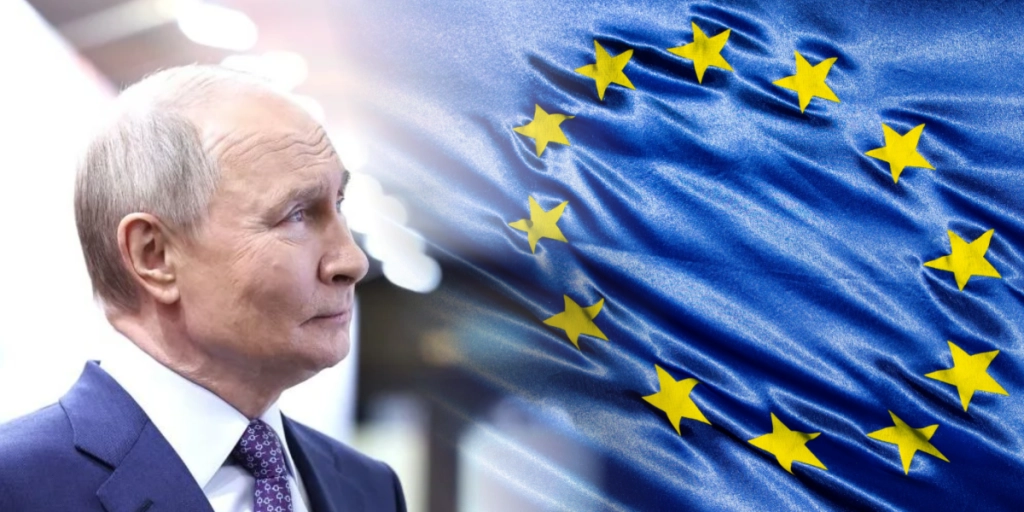
Things in Europe are escalating.

Tensions between the Kremlin and Western capitals have reached a perilous new threshold following a series of aggressive maneuvers and diplomatic ultimatums from Russian officials. European nations providing military assistance to Ukraine find themselves increasingly positioned in the crosshairs of Moscow’s strategic planning.
European leaders stand accused by the Russian defense establishment of actively pulling their respective populations into an open conflict through their continued logistical and financial backing of Kyiv.
Strategic risks are multiplying rapidly as geopolitical friction transitions from regional combat toward a broader international confrontation.
Catastrophic Consequences on the Horizon
Warnings regarding an impending direct clash have intensified significantly according to recent statements from high-ranking diplomats. Russian Deputy Foreign Minister Sergei Ryabkov made the state’s position explicitly clear during an interview with the TASS news agency, pointing to nuclear developments as a primary catalyst for the current instability.


“As a result of this escalation of tensions, including blatantly provocative actions in the nuclear sphere, strategic risks are mounting, as is the danger of a head-on clash between NATO and our country, with all the potentially catastrophic consequences that would entail,” warns Ryabkov according to Reuters.
Russian authorities previously targeted drone manufacturers across the UK, Germany, and Denmark, explicitly labeling these private entities as legitimate military objectives.
Deadlocks at the United Nations
Diplomatic avenues appear entirely blocked following a fierce debate at the United Nations Security Council on May 19. Russian Permanent Representative Vasily Nebenzya laid the blame for the diplomatic stagnation squarely on Ukrainian President Volodymyr Zelenskyy, citing a refusal to order troop withdrawals or implement a ceasefire.
“Until [Zelenskyy] realizes this, achieving the goals of the special military operation will be done by the armed forces of the Russian Federation,” says Nebenzya to the UN via The Guardian.
Nebenzya further alleged that the European Union is intentionally prolonging the fighting to maximize destruction on Russian infrastructure, actively supporting what he described as Ukrainian stubbornness.
Triumphant Rhetoric and Atomic Exercises
President Vladimir Putin remains highly confident regarding the eventual outcome of the hostilities, telling state media that the military campaign is nearing its conclusion.
“Victory has always been and will be ours. The key to success is our moral strength, courage and valour, our unity and ability to endure anything and overcome any challenge. I think that the matter is coming to an end,” says Putin.
Words have been accompanied by concrete military actions, as the Russian defense ministry initiated a three-day nuclear weapons exercise running from May 19 to May 21, 2026. Official statements defend the maneuvers as essential preparations against potential foreign encroachment.
“From May 19 to 21, 2026, the Armed Forces of the Russian Federation are conducting an exercise on the preparation and use of nuclear forces in the event of a threat of aggression.”



