
 Nicolai Haugsted
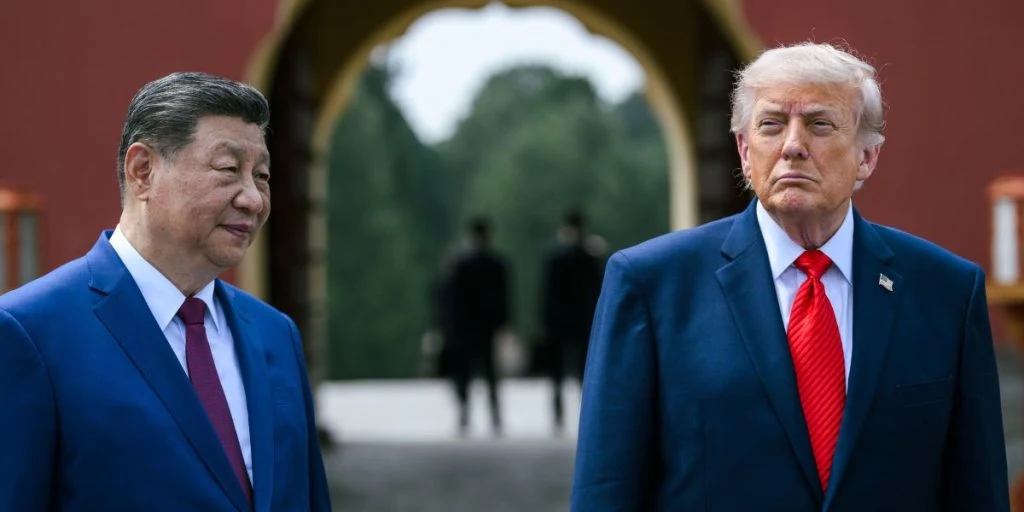
Trump administration ready to shut countries out unless they distance themselves from China.

Washington is preparing to draw a much sharper line between its allies and China as competition over artificial intelligence moves beyond technology companies and deeper into global diplomacy.
Countries cooperating with the United States on AI could soon face a choice over which technological bloc they want to belong to. According to an internal State Department draft reviewed by Reuters, Washington is considering telling dozens of governments that participation in a US-led initiative cannot be combined with membership in a competing Chinese framework.
Such a demand would raise the stakes for countries trying to maintain close economic and technological relations with both superpowers.
Washington prepares ultimatum
American officials are focusing on Pax Silica, an initiative launched last year to strengthen supply chains involving semiconductors, critical minerals and the infrastructure required for advanced AI.


Roughly two dozen countries have joined the framework, including Japan, Australia and South Korea. Kazakhstan has also signed up, providing the initiative with a partner possessing potentially important critical-mineral resources.
Concerns in Washington intensified after Kazakhstan also joined China’s rival AI initiative, according to Reuters.
A draft State Department letter is addressed to 35 countries that signed an AI Opportunity Statement with the United States in June. Washington now wants governments involved in its technology ecosystem to make a clearer commitment.
“To be part of everything is to be part of nothing. Signature of the Pax Silica Declaration is not merely a membership subscription, but a commitment,” the draft says according to Reuters.
The document urges participating governments to choose deliberately and argues that membership cannot coexist with competing initiatives whose requirements conflict with the American framework.
Reuters reported that the draft does not explicitly name China. Timing also remains uncertain, and the language could still change before any letter is formally distributed.
China builds competing AI network
Beijing launched its World Artificial Intelligence Cooperation Organization in July under President Xi Jinping, offering another model for international cooperation as Chinese AI systems increasingly compete with leading American technology.
China has promoted open-weight technology as part of its approach, while Chinese models have made rapid progress against proprietary systems developed by US companies such as OpenAI and Anthropic.
Washington’s broader strategy extends beyond software. Advanced semiconductor production and access to critical minerals have become increasingly important components of the geopolitical contest surrounding AI.
Pax Silica seeks to bring participating countries closer together on investment, supply chains and export controls while reducing dependence on geopolitical rivals for strategically important technology and resources.
Kazakhstan’s decision to participate in both camps has consequently presented Washington with an early test of how much overlap it is willing to tolerate.
US wants partners to choose
A US official familiar with the internal discussions told Reuters that the proposed message is intended to establish that participating governments “can’t have it both ways.”
Washington believes countries presenting themselves as trusted members of an American technology ecosystem could undermine that position by simultaneously joining a Chinese initiative designed around a competing vision for artificial intelligence.
China has rejected that approach. Its embassy in Washington accused the United States of politicizing technological and commercial cooperation.
“Such actions will only stifle global AI advances and serve no one’s interests,” an embassy spokesperson said.
The State Department declined to discuss what it described as purportedly leaked internal documents, while Kazakhstan’s embassy did not respond to Reuters’ request for comment.
Should Washington proceed with the proposal, governments already balancing commercial relationships with both powers could face a more explicit strategic decision over AI cooperation, semiconductor supply chains and access to the resources underpinning the technology.



