Nicolai Haugsted

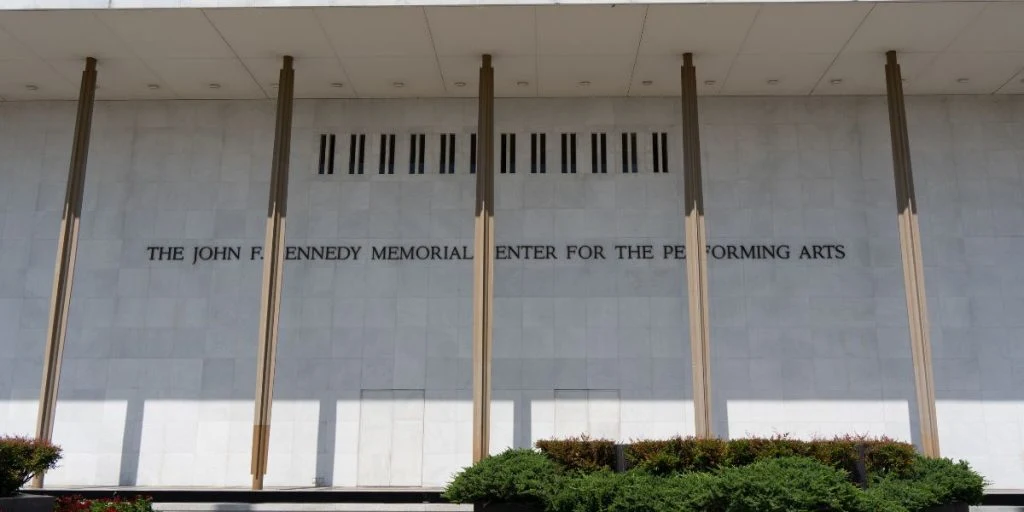
The Trump administration has admitted that a crucial $41 million comparison came from a report the Kennedy Center board never reviewed.


The Trump administration’s plans to close the performing arts venue for two years have already prompted a legal challenge, placing the decision-making process behind the closure under judicial scrutiny.
Now, government lawyers have been forced to correct an important part of their defense after acknowledging that a financial comparison presented to the court was not included in the report reviewed by the Kennedy Center’s board.
The correction concerns a $41 million figure previously used to support the argument that temporarily closing the entire building would be more economical than carrying out renovations in stages.
And one legal commentator was quick to notice the rather awkward admission.


A $41 million argument suddenly disappears
According to a filing submitted Wednesday to a federal court in Washington, Justice Department attorneys have withdrawn their earlier assertion that renovating the Kennedy Center in phases would cost $41 million more than shutting the building completely for a temporary period.
The financial comparison had been presented as part of the government’s justification for the proposed two-year closure.
However, attorneys have now acknowledged that the calculation came from a different version of a consultant’s report than the one available to the Kennedy Center’s board before its August 13 meeting.
The discrepancy matters because the board’s decision is at the heart of the legal dispute.
Government lawyers had previously cited the cost comparison in support of their position, but the newly filed correction establishes that the board had not received that particular analysis before the meeting.
The administration is therefore withdrawing the $41 million comparison from its legal argument.
Legal expert responds with a single word
The correction quickly attracted the attention of legal journalist and commentator Adam Klasfeld, who highlighted the filing on X.
“Whoops!” he wrote.
Klasfeld then explained why the admission was significant.
“The Kennedy Center’s Trump-installed Board quietly revises a key justification for the two-year closure,” he wrote, referring to the financial argument that had appeared in the government’s earlier submission.
“A report supposedly found phased renovations would cost $41M more.”
“The Board admits it never read that before voting,” he added.
His reaction underscored the central problem for the government’s presentation of the evidence.
The withdrawn comparison may have supported the administration’s argument in court, but the board could not have relied on that particular figure at its August meeting if it had not yet received the document containing it.
Click to display external content from x,
- You can always enable and disable third-party content.

You agree to display external third-party content. Personal data may be sent to the provider of the content and other third-party services.
Two versions of the same report created the confusion
The explanation provided by the Justice Department centers on a report prepared by real estate and professional services company JLL.
According to the government’s notice of errata, the Kennedy Center’s board received a June 8 version of the JLL Comprehensive Project Development Plan before its August 13 meeting.
That document contained 160 pages.
A different version, comprising 180 pages, was provided to the Kennedy Center on August 20, a week after the board meeting.
The later document included the financial comparison that subsequently appeared in the government’s legal arguments.
Justice Department attorneys acknowledged that their earlier submission had confused the two versions.
The filing states that portions of three sentences “mistakenly describe the JLL Comprehensive Project Development Plan shared with the Center’s Board in advance of its August 13, 2026 meeting.”
It further explains that the disputed comparison “references not the June 8 version of the JLL report presented to the Board in advance of its August 13, 2026 meeting, but an alternate version of the report provided to the Center on August 20, 2026, which was not provided to the Board.”
In other words, the government had cited information from a report that arrived after the relevant board meeting.
Justice Department acknowledges its mistake
The correction was signed by Justice Department trial attorney William S. Jankowski.
Besides withdrawing the $41 million comparison, the government corrected its description of the report’s length.
The earlier submission referred to a 180-page document, although the version actually presented to the board contained only 160 pages.
Attorneys also withdrew the assertion that JLL had established that “a phased closure of parts of the building would cost $41 million more than a temporary closure of the building,” based on construction costs alone.
The notice offered a brief acknowledgment of the mistakes.
“Defendants regret these errors,” the filing states.
According to the government, the updated version of the JLL report has since been provided to the opposing party through the legal discovery process.
The correction does not establish that the underlying renovation figures were fabricated or that the Kennedy Center’s board acted unlawfully.
It does, however, remove a specific financial comparison from the administration’s arguments about the proposed closure.
Congressional lawsuit keeps the pressure on
The dispute is part of a lawsuit brought by Democratic Representative Joyce Beatty of Ohio.
US District Judge Christopher R. Cooper is overseeing the case in federal court.
The government’s corrected filing relates to its renewed motion for partial summary judgment and its request to dissolve a preliminary injunction.
Both motions are important to the administration’s effort to defend its position in the ongoing litigation.
The withdrawal of the cost comparison could affect how the court evaluates the financial justification offered for the closure, although its ultimate significance remains for the judge to determine.
Other arguments supporting the administration’s plans may still be considered.