
 Nicolai Haugsted

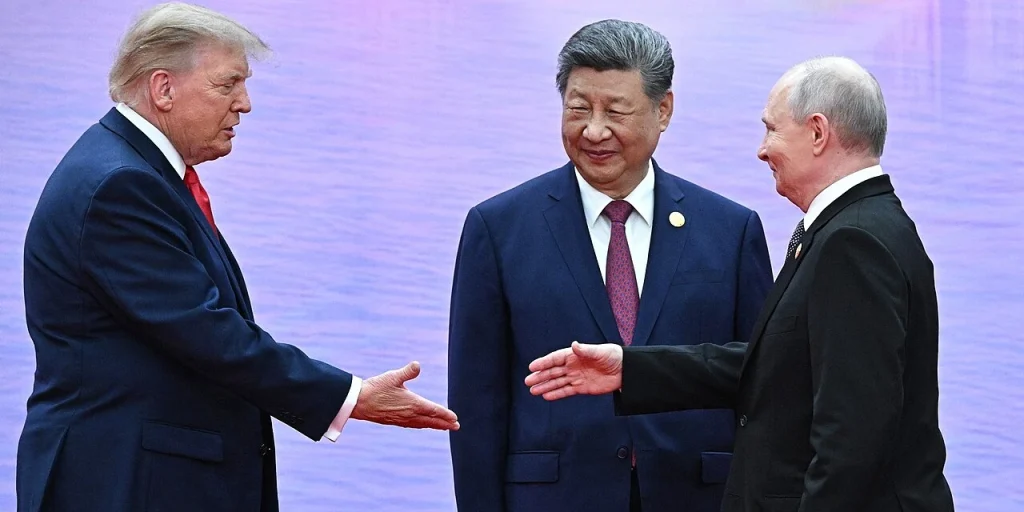
Trump reveals why his ambitious nuclear deal with Russia and China may never become reality.


Donald Trump has made no secret of his ambition to negotiate major international agreements. But persuading the world’s biggest nuclear powers to surrender thousands of weapons is proving to be a particularly difficult challenge.
The US president has now acknowledged that his plans for a historic nuclear arms agreement with Russia and China face enormous obstacles, despite holding talks with both countries’ leaders.
Speaking to Reuters on Thursday while returning to Washington from a trilateral summit in China, Trump admitted that even getting the three nations to agree on substantial reductions would be extremely difficult.
“I love the concept of it but in terms of pure negotiation, it’s a very hard thing for me as a president to do,” he told the news agency.


Thousands of nuclear weapons complicate negotiations
Nuclear arms control was among Trump’s main priorities during his visit, where he met Chinese President Xi Jinping and Russian President Vladimir Putin.
Washington and Moscow possess the overwhelming majority of the world’s nuclear weapons, while Beijing has been rapidly expanding its own arsenal.
According to estimates cited by Reuters, China possessed approximately 410 nuclear warheads in 2023, compared with roughly 3,708 in the United States. Russia’s arsenal was estimated at approximately 5,420 warheads in March 2026.
The Pentagon has also projected that China could possess more than 1,000 operational nuclear warheads by 2030.
Such enormous differences make negotiations particularly complicated, especially when each country must consider its own military position.
Trump suggested that Xi supports the general idea of nuclear reductions but acknowledged that convincing countries to give up a substantial proportion of their arsenals presents a formidable political and psychological challenge.
He illustrated the difficulty by describing how reluctant a country with thousands of nuclear weapons would be to surrender half of them.
Trump refuses to abandon his ambitions
Despite his reservations, Trump insisted that he intends to continue raising the issue with both leaders.
The president believes reducing nuclear stockpiles remains a worthwhile objective, even if the negotiations prove far more difficult than he initially hoped.
For now, however, the three countries appear to have settled on a considerably more modest commitment.
Following their discussions, the leaders issued a joint statement declaring that nuclear conflict must never occur.
They also agreed to pursue further dialogue aimed at reducing nuclear risks and preventing the spread of nuclear weapons.
The statement reaffirmed that “a nuclear war cannot be won and must never be fought.”
While the declaration signals a willingness to continue discussions, it contains no specific commitments to reduce existing arsenals.
Trump may have secured agreement on the principle of nuclear restraint, but persuading three competing powers to actually dismantle their weapons remains a much bigger undertaking.



