
 Kenneth Glad
The question of who will lead Iran next is drawing growing attention beyond the country’s borders. The potential transition could reshape regional politics and future relations with the West.

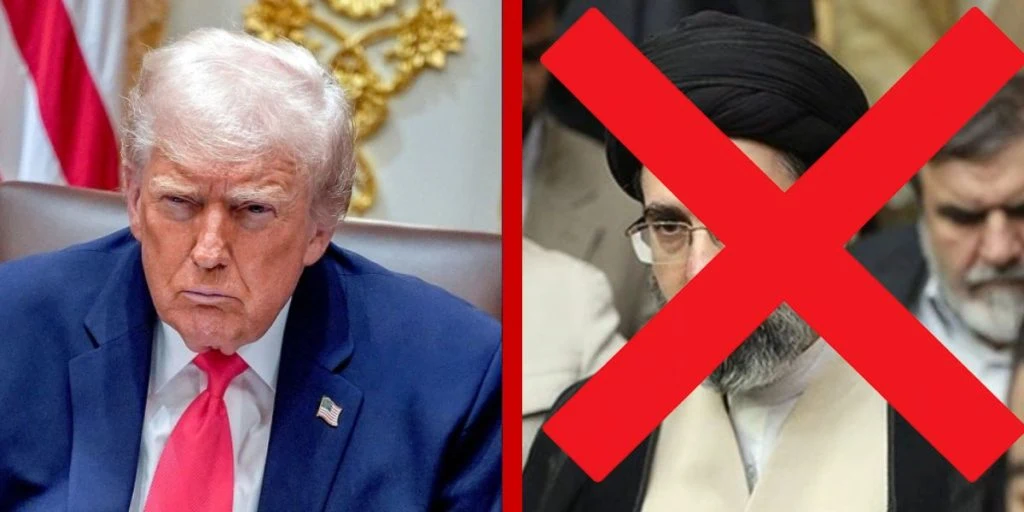
Iran’s opaque succession process is colliding with an unusually blunt claim from Washington: President Donald Trump says the U.S. should help shape who becomes Tehran’s next supreme leader after Ayatollah Ali Khamenei’s death.
In separate interviews reported by Axios and Politico, Trump argued that influencing the choice is necessary to prevent a return to war and to ensure Iran does not continue the policies he associates with Khamenei’s rule.
The remarks land as Iranian officials delay a formal announcement of the next leader and the U.S. continues a major military campaign whose stated aims, according to U.S. officials, are focused on degrading Iran’s capabilities rather than pursuing outright regime change.
A Succession System Built for Control
Iran does not elect a supreme leader by popular vote. The selection is traditionally made by the Assembly of Experts, a clerical body empowered to appoint – and theoretically dismiss – the country’s top authority.


In practice, the process is highly managed: Vetting, internal bargaining among elite factions, and pressure from security institutions all shape the outcome long before any public decision is revealed.
That is why the current pause in naming a successor has drawn attention. A delay can signal internal disagreement, efforts to secure consensus among power centers, or concern that a rushed appointment could destabilize the regime at a fragile moment.
Trump’s Demand to “Be Involved”
Axios reports that Trump told the outlet he “has to be involved in the appointment,” comparing Iran’s succession to his intervention in Venezuela.
He also rejected the most-discussed heir apparent, Mojtaba Khamenei, the late leader’s 56-year-old son, calling him “unacceptable” and saying the U.S. wants “someone that will bring harmony and peace to Iran.”
Politico, in a separate account of Trump’s comments, reported the president describing U.S. leverage in more transactional terms – suggesting that American influence would be tied to whether Iran can reach a settlement that prevents future conflict.
In that framing, the succession becomes part of a broader negotiation: Leadership in Tehran, Trump implies, should be compatible with a postwar order that blocks a return to fighting and curbs Iran’s nuclear ambitions.
Why Mojtaba Khamenei Is So Sensitive
Mojtaba Khamenei is often portrayed as a hardline figure with deep ties to the Islamic Revolutionary Guard Corps, but he has never held public office – an unusual profile for someone who could inherit the system’s highest position.
His potential elevation is controversial partly because it risks looking like dynastic succession, undermining the republic’s revolutionary legitimacy.
Trump’s comments, however, push the controversy into a different arena: Not merely who Iran chooses, but whether an outside power claims a seat at the table.
That assertion could sharpen Iranian resistance, complicate any internal compromise, and further blur the line between military objectives and political endgame.
Sources: Axios; Politico



