
 Nicolai Haugsted


Trump allies accuse Supreme Court of failing America just hours before crucial midterm elections.
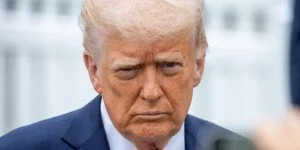

With Americans heading to the polls for the congressional midterm elections, Donald Trump and his Republican allies are facing a series of high-stakes political and legal battles.
Control of Congress hangs in the balance, and disputes over voting procedures have become an increasingly contentious part of the final days of the campaign.
Trump’s administration has sought to challenge thousands of ballots in California, arguing that questions surrounding voters’ citizenship should be resolved before those ballots are included in the election results.
But the effort has repeatedly encountered resistance in federal courts.


On Monday evening, just hours before Election Day, the administration suffered another setback when the US Supreme Court declined to intervene.
The decision left approximately 20,000 disputed ballots outside the restrictions sought by the Justice Department.
And while the court’s ruling was brief, the reaction from some of Trump’s most vocal supporters was anything but.
Prominent conservative activists immediately took to social media, directing their anger at the country’s highest court and warning that the decision could undermine confidence in the election.
Supreme Court delivers another setback to Trump
The dispute began with a Justice Department lawsuit seeking to force California to separate approximately 20,000 ballots identified through a federal review as potentially belonging to noncitizens.
Federal law prohibits noncitizens from voting in federal elections, but the government’s identification of a ballot as potentially suspicious does not establish that an ineligible person cast it.
The administration wanted the ballots set aside while officials investigated the citizenship status of the voters involved.
However, the legal effort ran into difficulties.
Lower courts found insufficient justification for imposing the requested restrictions, while the Justice Department acknowledged during legal proceedings that its list of potentially ineligible voters could contain substantial errors.
That admission complicated the administration’s argument that the flagged ballots required extraordinary intervention.
The dispute eventually reached the Supreme Court, where the administration sought emergency relief ahead of Tuesday’s election.
The justices declined to grant the request on Monday evening.
The decision did not establish that every flagged voter was eligible, nor did it amount to a ruling that noncitizens should be permitted to vote.
Rather, it left the lower courts’ decisions in place and rejected the administration’s attempt to impose the requested ballot restrictions at the last minute.
For Trump’s supporters, however, the distinction offered little consolation.
‘Supreme cowards’ as conservative lawyer attacks the justices
The backlash began almost immediately after news of the Supreme Court’s decision emerged.
Mike Davis, a conservative lawyer who previously clerked for Justice Neil Gorsuch, delivered one of the shortest and sharpest responses.
“Supreme cowards,” he wrote on X.
His criticism was particularly striking given the court’s conservative majority, which includes three justices appointed by Trump during his first presidency.
The ruling demonstrated that the administration’s request had failed to persuade the court, despite the ideological composition of the bench.
Davis was far from alone in expressing frustration.
Chaya Raichik, the conservative activist behind the Libs of TikTok account, also condemned the decision.
“The Supreme Court just DENIED the Trump admin’s request to set aside 20,000 ballots in California that were flagged as potention non-citizen votes until citizenship could be verified. Unbelievable,” she wrote.
Her post reflected a broader argument among critics of the ruling that the ballots should have remained separated until additional eligibility checks could be completed.
However, the underlying allegation that the ballots were cast by noncitizens had not been established.
The courts had instead been presented with a disputed government list whose reliability was itself in question.
Trump supporters warn of election consequences
Other conservative commentators went further, arguing that the ruling could create problems once ballots were included in the election count.
Eric Daugherty, chief content officer at RightLine, expressed disbelief at the number of courts that had declined to grant the administration’s requests.
“UNREAL. That means those ballots get mixed in with everyone else’s on Election Day,” he wrote.
He then listed the judicial setbacks and warned about the possibility of identifying disputed ballots after counting.
“A district judge, a split Ninth Circuit, Judge Boasberg, and now SCOTUS have all refused to act. Absolutely outrageous. If even a fraction of those voters turn out to be noncitizens, nobody will be able to pull those votes back out. Get out and vote TOMORROW!”
The warning rested on the possibility that some of the flagged voters might eventually prove ineligible.
No evidence presented in the supplied account establishes that the 20,000 ballots were illegally cast.
Nevertheless, Daugherty’s reaction illustrated how the legal dispute had become intertwined with broader conservative concerns about election integrity.
His message also urged Republican supporters to participate in Tuesday’s vote despite the setback.
‘Unreal’ as another Trump ally joins the backlash
Ryan Fournier, the founder of Students for Trump, delivered a similar response.
“SCOTUS just shut down Trump’s emergency request to halt 20K suspected noncitizen ballots in CA. Unreal. Once they’re mixed in, they can’t be pulled out. Get out and vote TOMORROW!” he wrote.
Fournier’s message echoed the argument that separating the ballots before counting would have been preferable to attempting to address eligibility questions afterward.
His reaction also highlighted a recurring theme in the conservative response.
Rather than treating the Supreme Court’s decision as the end of the dispute, several commentators portrayed it as an additional reason for Republican voters to turn out.
The criticism was therefore accompanied by calls for political action, with Election Day only hours away.
The strongest rhetoric came from an X account called Vitruvius Republic.
“Citizenship is not optional. The Court just told America it is. This is how elections die,” the account wrote.
The statement was an interpretation of the ruling, not an accurate description of what the Supreme Court had decided.
Federal citizenship requirements for voting remained unchanged.
The court had rejected the requested emergency intervention, not eliminated the legal requirement that voters in federal elections be US citizens.
Click to display external content from x,
- You can always enable and disable third-party content.

You agree to display external third-party content. Personal data may be sent to the provider of the content and other third-party services.
Click to display external content from x,
- You can always enable and disable third-party content.
You agree to display external third-party content. Personal data may be sent to the provider of the content and other third-party services.
Click to display external content from x,
- You can always enable and disable third-party content.
You agree to display external third-party content. Personal data may be sent to the provider of the content and other third-party services.
The government’s own evidence became a problem
The legal dispute was complicated by questions surrounding the Justice Department’s evidence.
According to the reporting, the government acknowledged that its list of approximately 20,000 potentially ineligible voters had a substantial likelihood of containing errors.
Such inaccuracies matter because incorrectly identifying eligible voters as noncitizens can interfere with their ability to participate in elections.
Courts evaluating emergency requests must consider not only the government’s concerns but also the potential consequences of restricting ballots without sufficient supporting evidence.
In this case, multiple judges declined to impose the restrictions the administration sought.
The Supreme Court’s refusal to intervene left those decisions intact.
The outcome did not prevent authorities from investigating credible evidence of illegal voting.
It did, however, mean that the administration could not use its disputed list to secure the particular emergency restrictions it wanted before Election Day.
That legal distinction was largely absent from some of the angrier social media responses.



