
 Nicolai Haugsted

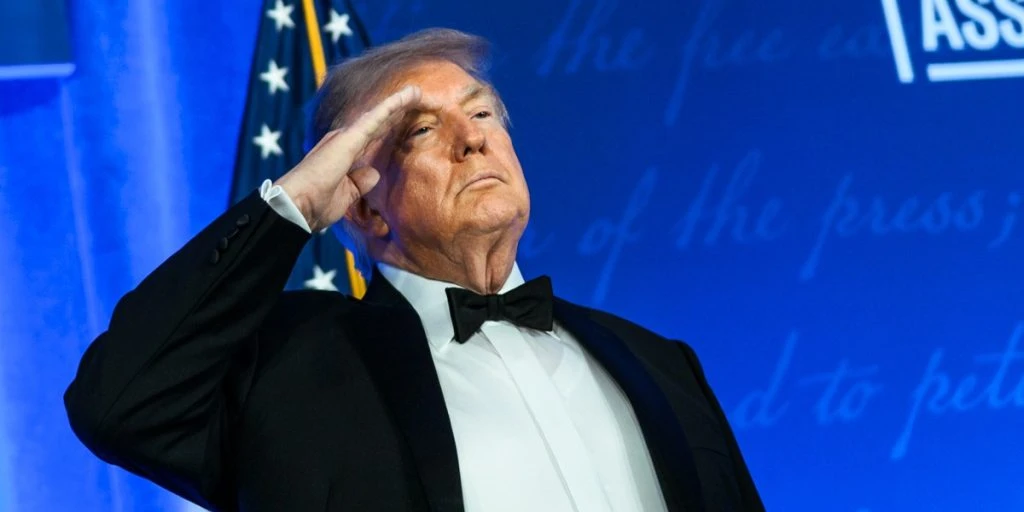
Trump accused of ignoring military families’ suffering while promoting AI-generated propaganda.


American military families are growing increasingly frustrated as the war with Iran continues to keep thousands of service members away from home, with no clear indication of when their deployments will end.
For some sailors, the prospect of spending Christmas with their families has already disappeared, while reports of food shortages and difficult conditions aboard American warships have added to concerns about their welfare.
Against that backdrop, President Donald Trump has attracted fierce criticism for sharing an artificial intelligence-generated video portraying American soldiers praying beside military aircraft.
According to the Daily Express, the president posted the footage on Truth Social on Sunday, prompting accusations that he was using fabricated military imagery while real service members faced increasingly difficult circumstances.


Trump’s AI-generated video sparks outrage
The video depicts uniformed American troops kneeling in prayer beside two Boeing C-17 Globemaster III military transport aircraft.
Trump accompanied the footage with a religious appeal.
“May God protect our troops say AMEN,” the president wrote.
However, the footage was reportedly not authentic.
MeidasTouch senior writer Troy Matthews traced the video to an earlier TikTok upload from April, where it carried a label identifying it as AI-generated content.
That disclosure was absent from the version Trump shared on Truth Social.
The omission prompted criticism from political commentators, including MeidasTouch co-founder Ben Meiselas, who accused the president of being insensitive to the difficulties facing American military personnel, calling it “”deeply irresponsible” and “absolutely SICKENING.”
Meiselas described the post as deeply irresponsible and condemned Trump for circulating artificial imagery while troops remained deployed amid the ongoing conflict.
He was particularly critical of the situation aboard the USS George H.W. Bush, whose crew faces the prospect of remaining at sea throughout the holiday season.
Click to display external content from truthsocial,
- You can always enable and disable third-party content.

You agree to display external third-party content. Personal data may be sent to the provider of the content and other third-party services.
Click to display external content from iFrames except google ads,
- You can always enable and disable third-party content.

You agree to display external third-party content. Personal data may be sent to the provider of the content and other third-party services.
American sailors face Christmas away from home
According to a November 12 report from Navy Times, families of sailors serving aboard the USS George H.W. Bush have been warned to prepare for the possibility of an unusually lengthy deployment.
During a November 9 Navy town hall, relatives were reportedly advised to consider a worst-case scenario involving 12 months away from home.
Military officials have not confirmed that the deployment will last that long.
Nevertheless, the uncertainty has taken a considerable emotional toll on families.
Military spouse Shawna Berret told Navy Times that her children were struggling with their father’s prolonged absence.
Her 10-year-old had reportedly expressed concern about whether his father was receiving enough food aboard the ship.
Berret also arranged counselling for her children to help them cope with the separation.
Reports of food shortages have further complicated conditions aboard the aircraft carrier.
Fresh produce transported from Japan and the Philippines reportedly spoiled before reaching the vessel, leaving sailors increasingly dependent on canned vegetables.
Personnel aboard the USS Abraham Lincoln and its accompanying carrier group have also reportedly endured difficult conditions during extended deployments.
Iran war has already claimed American lives
The controversy comes as the conflict with Iran enters its ninth month, with mounting casualties and financial costs.
A CBS 60 Minutes investigation broadcast on November 15 examined the scale of Iranian attacks against American military and diplomatic facilities across the Middle East.
According to the programme’s satellite imagery analysis, Iranian forces had struck at least 31 US installations across eight countries.
Figures cited in the investigation indicate that at least 23 American service members have been killed and more than 800 wounded since fighting began in February.
The Pentagon’s latest reported estimate places the financial cost of the conflict at approximately $47 billion.
Those figures illustrate the growing human and economic consequences of a war whose conclusion remains uncertain.
Trump rejects diplomatic deal as criticism grows
The president’s approach to ending the conflict has also attracted scrutiny.
Trump recently declared on Truth Social that the United States did not need to reach an agreement with Iran, despite reports suggesting that Vice President JD Vance was considering talks with Iranian representatives.
No meeting between Vance and Iranian officials has been confirmed.
The president’s rejection of a diplomatic agreement has contributed to uncertainty surrounding the duration of the conflict and the eventual return of American personnel.
Meanwhile, military families continue to face the possibility of further separation, particularly as the holiday season approaches.



