
 Nicolai Haugsted

Trump’s taxpayer-funded ad puts his former official in the hot seat as CNN’s panel challenges her defense.
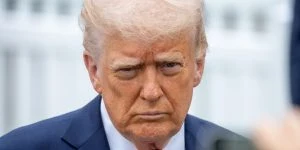

Donald Trump has found plenty of ways to keep himself visible during the final stretch before the midterms.
His latest television push, however, comes with an unusual detail attached to the bill: american taxpayers are paying for it.
The White House insists its new advertisements promoting Trump and his political agenda are public service announcements rather than campaign material. That explanation received a spirited defense from former Trump deputy press secretary Abigail Jackson on CNN Monday.
Her colleagues around the table were considerably less enthusiastic.


Jackson argued that ordinary voters were not particularly interested in the controversy surrounding the ads. Former Biden White House communications director Kate Bedingfield responded by questioning the political wisdom of showing voters what she described as little more than glamorous footage of Trump.
Then CNN legal analyst Elliot Williams introduced another problem.
Voters not caring, he argued, does not necessarily make something legal.
Jackson thinks Washington is obsessing over the wrong thing
CNN host Kasie Hunt began by pointing to an awkward feature of the Republican midterm strategy.
Most Republican advertising spending in individual races does not prominently feature Trump, Hunt said, even as the president encourages voters to treat the election as though his own name were on the ballot.
Hunt therefore asked Jackson whether Republicans really wanted government money being used to broadcast ads centered so heavily on Trump.
Jackson dismissed the controversy as Beltway noise.
“I think this entire mini-news cycle that’s been created around this public service announcement is a good example of everyone in the Beltway caring about something that really doesn’t matter that much to voters sitting around the kitchen table,” she said.
Hunt quickly interrupted with a rather obvious question.
“Don’t they care what the government’s spending their money on?”
Jackson argued that voters were instead interested in economic issues and pointed to Trump’s announcement involving a steel project in Iowa.
“They care about things that the president announced today in the Oval Office, the largest steel mill in United States history,” Jackson said. “They care about the jobs that’s bringing to Iowa.”
Her defense then moved directly onto political territory.
“I think if Democrats say that not wanting communism is partisan, I do think they’re telling on themselves a little bit.”
Bedingfield hears a political argument hiding inside the defense
Bedingfield immediately challenged that reasoning.
Calling Democrats communist or socialist, she argued, sounded remarkably like the kind of partisan political message Jackson was insisting the advertisements were not delivering.
Bedingfield also turned Jackson’s economic argument back on the White House.
“You talk about the focus on job creation,” she said. “We never hear that from the president.”
Her broader objection was less about government accounting and more about what voters actually see on television.
“What voters are seeing is this self-aggrandizing ad that’s like a glamor shot of him,” Bedingfield said.
She argued that polling showed voters repeatedly expressing frustration that Trump had not delivered on promises they believed he made to them.
“So again, I just go back to if the point of this is to try to help Republicans in swing districts, I don’t think that message is the one that’s going to do it.”
Jackson remained unconvinced.
“I think Iowa voters are going to be pretty happy about the announcement today,” she replied.
Then the lawyer spoils the public service announcement defense
Williams approached the argument from a different direction.
He actually agreed with part of Jackson’s premise.
“I agree with the point that the public does not care about this,” Williams said. “The public’s not locked into something like this.”
Then came the catch.
“But that’s not the standard we should be following if the White House might be breaking the law.”
Williams said federal rules and legal precedent create problems when taxpayer-funded government communications become self-aggrandizing, explicitly partisan or covert about who financed them.
His attention landed particularly heavily on the first category.
One Trump ad includes UFC president Dana White describing the president as “the toughest, most resilient person that I’ve ever met” and saying that nothing could stop Trump from fighting for the country.
Williams did not see much room for interpretation.
“If a president or someone in the government is using public money to lift themself up, and the language, he’s the most resilient person I’ve ever met, nothing can stop him, that’s self-aggrandizement under the law,” he said.
“Sorry, there’s no ambiguity about it.”
The White House calls them public service announcements
Trump’s administration has defended the spots by comparing them with public service campaigns produced under previous presidents.
White House officials have pointed to government advertising promoting programs such as Obamacare enrollment and COVID-19 vaccination as examples of administrations spending public money to communicate directly with Americans.
Williams argued that the comparison misses an important distinction.
Previous public service announcements, he said, generally directed viewers toward identifiable government programs or services. Past administrations have also faced findings that particular government communications crossed legal lines.
“You cannot look at this and call it just a public service announcement,” Williams said.
According to Williams, earlier examples cited by the White House can be distinguished from Trump’s current advertisements on legal grounds.
“You just can’t say that because past administrations did something sort of similar that it’s OK to do it now,” he said. “It’s just not the same thing.”
His conclusion was forceful, although it remains a legal analyst’s assessment rather than a court ruling on the current ads.
“It’s just they’re breaking the law in all likelihood on a lot of this,” Williams said.
Republicans have their own reasons to feel awkward
Political discomfort surrounding the ads is not limited to Democrats.
Republican Senator John Kennedy of Louisiana has publicly criticized using government money for personal promotion, despite supporting Trump.
“I don’t think any public official, including President Trump or Kristi Noem or John Kennedy, should spend public money on private ads for themselves,” Kennedy said.
“The White House sees it differently, but I don’t.”
Kennedy then offered his own suspicion about the rules.
“I think there ought to be a rule that you can’t. Well, there probably is a rule you can’t spend public money to promote yourself.”
CNN’s discussion ultimately exposed two separate arguments that Jackson’s defense had to carry at once.
Politically, she maintained that voters care far more about jobs and their household finances than a Washington dispute over advertising.
Legally, Williams argued that voter indifference is beside the point.



