
 Nicolai Haugsted
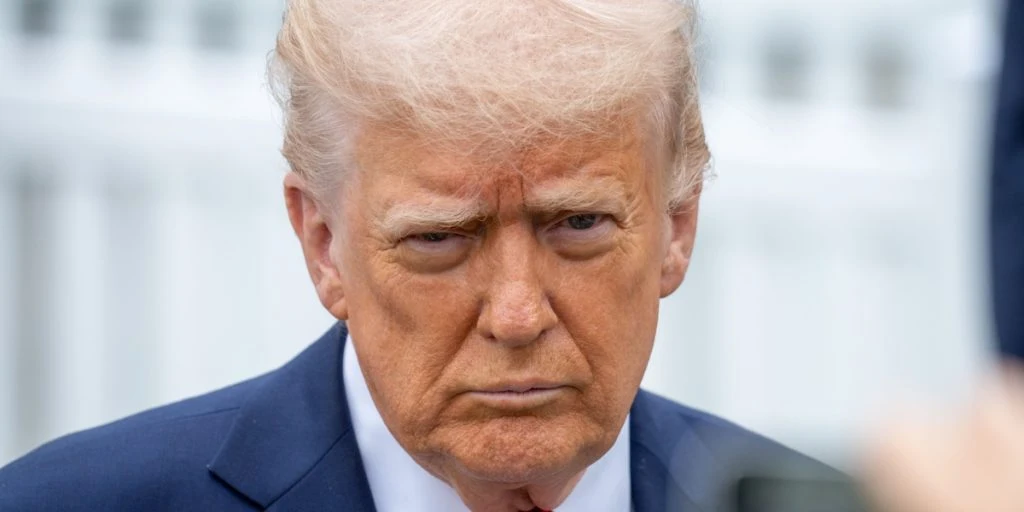
Trump eyes sweeping change to who gets a say over billions in federal research grants.


Trump considers new layer of control over billions in medical research funding
Billions of federal research dollars normally travel through a system built around scientific review rather than direct White House approval. Donald Trump’s administration is now considering another layer in that process – one that could give senior political officials considerably more influence over which projects receive money.
Trump and several top officials discussed the future of National Institutes of Health grants during a heated Oval Office meeting on Friday, according to reporting by The Washington Post.
White House budget director Russ Vought pushed for greater scrutiny of NIH spending, while agency director Dr. Jay Bhattacharya defended the existing grant-making operation. Trump appeared receptive to Vought’s concerns, according to people familiar with the private meeting.


A possible executive order could establish a commission tasked with reviewing NIH grants, potentially placing political appointees much closer to decisions over federal biomedical research money.
Billions of research dollars are at stake
NIH sits on a particularly large pile of federal research money.
The agency has a budget of roughly $47 billion and is the country’s largest single funder of biomedical research, supporting work at universities, hospitals and research institutions across the United States.
Vought reportedly argued during Friday’s meeting that NIH continued to finance projects conflicting with Trump’s priorities. According to The Washington Post, the budget director specifically accused the agency of supporting what he called “woke” initiatives, including projects he believed ran contrary to Trump’s restrictions on equity-related federal grants.
Bhattacharya pushed back and defended how NIH awards its money.
Friday’s disagreement therefore concerned considerably more than another Washington turf war. Whoever gains greater control over NIH grants could potentially influence which areas of medical and scientific research receive federal support.
Discussions inside the White House included the possibility of creating a commission with additional authority to review NIH grants.
Reporting cited in the original account goes further, saying Trump instructed Vought to work on an executive order creating such a body.
The Washington Post independently confirms that officials discussed a potential executive order establishing a commission to review grants, though its initial report did not describe a finalized order or say that a new system had already been approved.
NIH also rejected the idea that existing research money would simply disappear.
“There will be no rescissions to NIH grant monies. All NIH grant monies will be spent,” an agency spokesperson told The Washington Post.
White House and Office of Management and Budget representatives did not provide the newspaper with additional comment about the meeting.
Congress has already put up a roadblock
Vought’s interest in greater political oversight of federal grants is hardly new.
The Office of Management and Budget previously proposed giving political appointees more authority over the grant-making process. Congress responded through a government funding measure that blocks implementation of that approach until December.
Republican lawmakers have also joined Democrats in resisting some of the administration’s attempts to reduce or delay NIH research spending.
Vought defended his broader approach during a congressional hearing in June, arguing that administration officials need the ability to intervene when grants escape earlier scrutiny.
“When we find something that’s problematic that our policy officials would not have caught, we need to be able to turn it off,” he said.
Bhattacharya has taken a different public line regarding money already appropriated by Congress.
“We will spend the allocation on excellent science this year,” the NIH director told House appropriators in March.
Harvard reportedly entered the Oval Office fight
Harvard University also featured in Friday’s discussions, according to subsequent reporting cited in the original account.
Politico reported that Trump asked Bhattacharya about cutting Harvard’s research funding, with the NIH director resisting the request.
Such a confrontation would fit into a much larger dispute between Trump’s administration and the university over federal money. Attempts by the administration to restrict Harvard’s funding have already produced legal battles, adding another layer to any effort to use NIH grants as leverage against the institution.
Vought and Bhattacharya have meanwhile disagreed before over the level of political scrutiny NIH grants should face. Friday’s meeting brought that disagreement directly into the Oval Office.
The Washington Post reported that Vought criticized grants he believed conflicted with Trump’s agenda, while Bhattacharya defended the agency’s process.
Vought could get a seat much closer to the money
Perhaps the most consequential question concerns what authority any new commission would actually receive.
The proposal described in reports could place Vought and Bhattacharya on the same review body, potentially giving the White House budget chief a direct role in decisions traditionally handled through NIH’s scientific grant-review structure.
No executive order establishing such a commission had been publicly issued in the reporting reviewed here, so its final membership, voting rules and powers remain unsettled.
Still, Friday’s discussion shows that the administration is actively considering another mechanism for scrutinizing how NIH spends its congressionally appropriated research budget.
For researchers competing for federal dollars, that distinction matters enormously. Scientific peer review asks whether a project is methodologically strong and worth funding; political review can introduce a separate question about whether the subject itself fits an administration’s priorities.
Trump has not yet put his signature on the reported plan.
Vought, however, has made his ambitions for NIH clear before.
“We have an agency that needs dramatic overhaul,” he said in 2025.
Friday’s Oval Office meeting suggests the White House is still working out just how dramatic that overhaul should become.



