
 Asger Risom
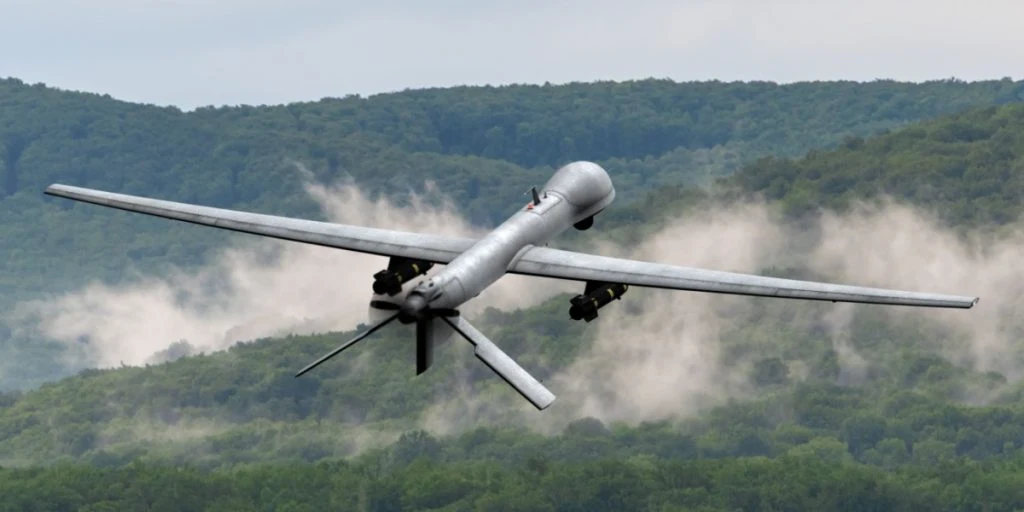
The U.S. Government is prioritizing blockchain technology, and it may soon play a role in how drone systems are secured and managed across critical infrastructure.


As drones move closer to critical infrastructure and civilian environments, securing airspace is becoming a growing priority for the U.S.—and increasingly, a technological one.
According to Fortune, concerns are partly driven by supply chain risks, particularly China’s dominance in the global drone market. DJI alone accounts for around 70% of commercial drone sales, meaning many systems used by U.S. institutions rely on foreign-built hardware, software, and control systems.
That dependence has raised questions about who ultimately controls how drones navigate, authenticate, and enforce restricted airspace.
Blockchain now part of U.S. policy direction
At the same time, blockchain is no longer just a private-sector experiment.


A 2025 White House executive order explicitly states that it is U.S. policy to support the growth and use of blockchain technology and related systems across multiple sectors of the economy, positioning it as a strategic priority rather than a niche tool.
This shift gives federal agencies more room to explore blockchain-backed infrastructure—not just in finance, but in areas like identity, security, and potentially airspace management.
The case for a decentralized airspace system
Against that backdrop, some proposals suggest using blockchain as a neutral “trust layer” for drones.
The idea is to move away from closed, vendor-controlled systems toward a shared framework where critical data—such as drone identity, geofencing rules, and flight permissions—is cryptographically verified and not controlled by a single company.
In theory, that could reduce single points of failure, improve transparency, and make it harder to manipulate navigation or spoof location data.
But the technology comes with real trade-offs
Despite the policy momentum, blockchain remains a controversial choice for infrastructure.
The technology has a history of scalability challenges, uneven reliability, and security issues tied not to the cryptography itself, but to implementation, governance, and surrounding systems.
It is also not inherently “trustless” in practice—many real-world deployments still depend on trusted inputs, hardware, and operators, which introduces new points of vulnerability.
A strategic decision still taking shape
What’s emerging is less a clear solution and more a direction of travel.
The U.S. is moving to reduce reliance on foreign drone technology while simultaneously encouraging the use of blockchain and decentralized systems. Where those two trends meet—if they do—will depend on whether blockchain can prove itself in real-world, high-stakes environments.
For now, the debate is not settled. But it signals a broader shift: drone infrastructure is no longer just about hardware—it’s becoming a question of digital trust, control, and national strategy.
Sources: Fortune, White House Executive Order “Strengthening American Leadership in Digital Financial Technology” (January 23, 2025)



