
 Mikkel Christensen
In Ukraine, some of the most critical battles are no longer fought on the ground.
Others are reading now


In Ukraine, some of the most critical battles are no longer fought on the ground.
Instead, they are playing out in the air, where speed, cost and constant innovation are shaping the outcome.
Cost-driven fight
One of Kyiv’s biggest advantages lies in economics rather than firepower.
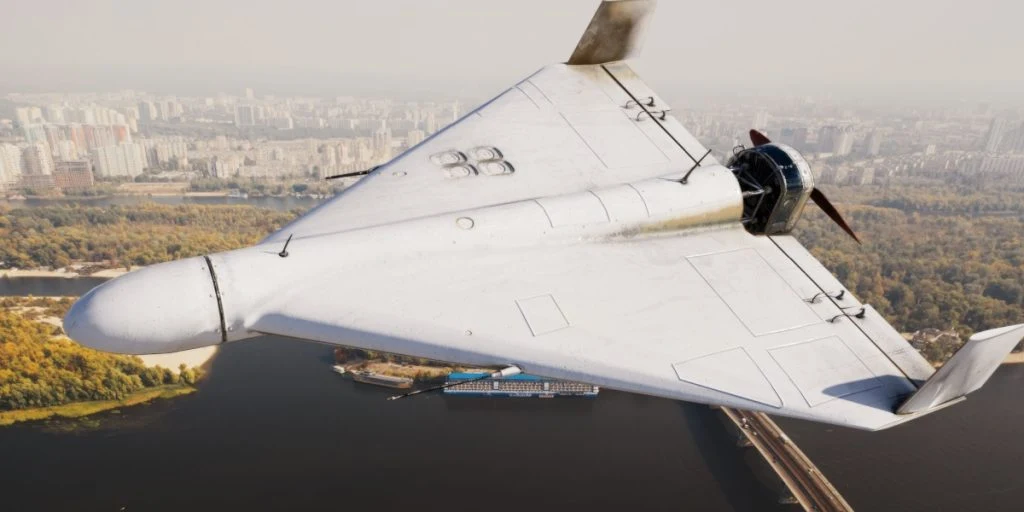
According to To Vima, Russian Shahed drones cost tens of thousands of dollars each, while some Ukrainian interceptor drones can be built for a fraction of that price, allowing for large-scale deployment.


Race against time
But intercepting them is far from simple.
Crews often have only minutes to detect and engage incoming drones, with poor weather or visibility sometimes making missions impossible, the report notes.
Expanding defence
To meet the growing threat, Ukraine has rolled out a nationwide network of interceptor teams.
To Vima reports that around 1,000 units are now operating across the country, forming a key layer in efforts to reduce damage from long-range strikes.
Ambitious target
Ukraine is aiming to stop nearly all incoming drones.
Officials have set a goal of a 95% interception rate, up from roughly 85% earlier this year, though recent figures suggest progress has only reached about 90%, according to the report.
Constant upgrades
The challenge is made harder by Russia’s ongoing improvements.
Shahed drones are being modified with faster engines, better navigation systems and larger warheads, with some newer versions capable of significantly higher speeds.
Falling behind fast
This creates a cycle where new countermeasures quickly become outdated.
“The first interceptor to destroy a Shahed in early 2025 became ineffective after four months,” said Taras Tymochko, highlighting how quickly technology evolves in this conflict.
Human pressure
Behind the systems are crews working under intense pressure.
Operators must locate targets in real time, often with limited visibility, knowing that any missed drone can strike infrastructure or civilian areas.
What’s at stake
According to To Vima, Shahed drones have become a central part of Russia’s long-range strategy, with thousands launched each month.
If Ukraine can reach its 95% target, it could significantly reduce the impact of these attacks—but keeping pace with constant upgrades remains the biggest challenge.
Sources: To Vima



