
 Nicolai Haugsted
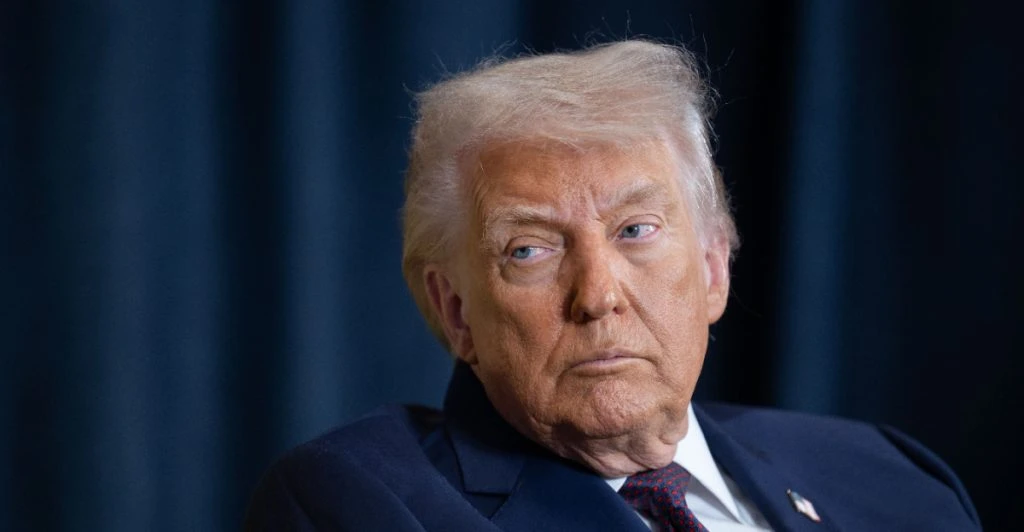
White House pushes back after Trump’s comments about two US cities trigger widespread outrage.

Donald Trump’s speeches have produced plenty of cleanup operations for his communications team over the years. His latest rally in Nebraska has given the White House another one — although this time, officials insist there is nothing to clean up.
A confusing passage about Iran, nuclear weapons and the cost of war quickly spread far beyond the rally hall after Trump mentioned Los Angeles and San Diego as cities that could be “taken out.”
Critics interpreted the president as suggesting the destruction of the California cities would constitute a “small price to pay.”
The White House says that reading gets Trump’s argument backwards.


Fuller context supports a different interpretation: Trump appears to have been arguing that temporarily higher fuel prices are a small price to pay for preventing Iran from acquiring the ability to threaten American cities.
Trump’s wording creates immediate confusion
Trump was speaking Monday in Grand Island, Nebraska, when he turned to the economic consequences of the Iran conflict.
Higher fuel prices have been one of the political headaches associated with the war, and Trump attempted to persuade supporters that those costs were minor compared with the security threat he says his administration is confronting.
“Remember, with the war, it’s just artificial. It’s a little bit high,” Trump said.
“It’s a small price to pay for keeping the world safe, keeping our country safe. They could take out a city. Let them take — let it — let them take out Los Angeles. Let them take out San Diego.”
Trump then returned to his original point.
“That’s — this is a very small price to pay, and it’s going to be over with very soon.”
Those sentences proved easy to isolate from the broader argument — and immediately explosive.
White House says there is no mystery
White House Communications Director Steven Cheung rejected reports and political attacks suggesting Trump had effectively offered up two American cities to Iran.
“The media freakout over President Trump’s comments is not rooted in reality,” Cheung wrote on X.
“He was clearly stating U.S. cities would have been threatened if a nuclear Iran hadn’t been stopped.”
Cheung added: “America is safer because of the President. Iran has no nuclear, no navy, no air force, and no money.”
The White House’s Rapid Response account went considerably harder at the Los Angeles Times over its coverage.
“No, he didn’t, you buffoons,” the account wrote while rejecting the interpretation that Trump had said destroying Los Angeles and San Diego would be an acceptable price.
“He was saying the U.S. is fighting to STOP Iran from having the ability to take out LA and San Diego with a nuclear weapon — which they would if they had the chance.”
Click to display external content from x,
- You can always enable and disable third-party content.

You agree to display external third-party content. Personal data may be sent to the provider of the content and other third-party services.
Earlier comments offer important context
Trump’s previous statements about Iran strengthen the White House’s explanation.
Speaking in Iowa on September 28, Trump made a similar argument while discussing the danger he believes an Iranian nuclear weapon would represent.
“If you want to see turmoil and a travesty, let them take out a city with a nuclear weapon,” Trump said.
“I’m not only talking about Israel and big parts of the Middle East, but let them hit us with a nuclear weapon.”
Back in March, Trump also called higher oil prices “a very small thing” compared with the possibility of Iran obtaining nuclear weapons.
FactCheck.org consequently concluded that, despite Trump’s confusing wording in Nebraska, the more plausible interpretation is that the “small price” referred to higher prices rather than the destruction of Los Angeles or San Diego.
Conservatives accuse media of twisting Trump’s words
Trump’s defenders reached much the same conclusion.
OutKick writer Ian Miller accused news organizations of stripping the remarks of their intended meaning.
“That’s not what he said at all, he said that dealing with Iran is better than letting them take out Los Angeles and San Diego,” Miller wrote on X.
Miller accused “left wing legacy media” of creating “yet another hoax” around the president’s comments.
His characterization of the coverage is an opinion, but the dispute illustrates how rapidly Trump’s unusual phrasing turned into two competing versions of the same speech.
Critics focused on the literal sequence of words.
Supporters focused on the argument surrounding them.
The nuclear threat itself requires another qualification
The White House interpretation also contains a hypothetical threat rather than a description of Iran’s current military capability.
Trump has argued that preventing Iran from acquiring nuclear weapons protects American cities. Experts consulted by FactCheck.org said Iran was not close to possessing an intercontinental ballistic missile capable of reaching the continental United States from Iranian territory.
That distinction matters.
Trump’s argument concerns what Iran could eventually become capable of doing if its nuclear and missile programs advanced sufficiently, rather than an existing ability to launch a nuclear strike against Los Angeles or San Diego.



