
 Jens Asbjørn Bøgen


The incoming Democratic majorities have a January deadline and a tariff list to choose from, and they appear to have made their pick.
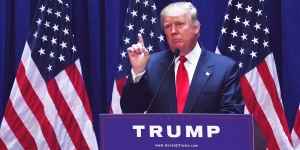

Of all the levies President Donald Trump imposed in his second term, the one headed into Congress first is the one aimed at the country’s northern neighbor.
Lawmakers preparing to take over the Senate and House in January have signaled they will open their trade fight with the 50% tariffs Trump placed on about $20 billion in Canadian goods in August.
Oregon Senator Ron Wyden, the incoming chair of the Senate Finance Committee, is coordinating with colleagues on legislation to roll back the Canada duties as soon as he takes the gavel.
House Democratic Leader Hakeem Jeffries, in line to become speaker when the new Congress convenes on January 3, 2027, has already placed a tariff repeal on his 100-day agenda alongside restoring Medicaid and SNAP funding.


The numbers behind that plan are the problem. Democrats hold at least 254 House seats and 55 Senate seats after the midterms, five short of the 60 Senate votes needed to break a filibuster and well short of the 67 Senate votes required to override a presidential veto.
Trump is widely expected to veto any repeal that reaches his desk.
Why Canada is the opening target
The 50% duties took effect on August 22, 2026, after Trump invoked Section 338 of the Tariff Act of 1930, a Great Depression-era statute that lets the president impose duties of up to 50% on imports from countries deemed to have discriminated against US businesses, according to PBS NewsHour.
The levies hit hockey sticks, wine, cement, seeds, cosmetics, clothing, furniture and a range of items that had previously moved duty-free under the US-Mexico-Canada Agreement.
Wyden told The Daily Beast there is “overwhelming support for repealing the tariffs on products from Canada.” That cross-party reading is what Democrats are trying to turn into a veto-proof coalition, with Wyden seeking Republican votes in the Senate.
Wyden’s broader statutory strategy
The Canada bill is paired alongside a structural fix Wyden introduced in July. His Congressional Trade Powers Reform Act of 2026 would repeal Section 338 of the Tariff Act of 1930 and Section 122 of the Trade Act of 1974, while requiring congressional approval before a president could use Section 301, Section 232 or Section 201 to set tariffs.
Those are the main statutory levers the Trump administration has used: Section 232 for the national-security steel and aluminum duties, Section 301 for the China tariffs, and Section 338 for the Canada package. Stripping them would end unilateral tariff-making by executive decree without a new act of Congress.
Jeffries has framed the push in sharper terms. “The days of the House functioning like a wholly owned subsidiary of the Trump Administration are over,” he said as he laid out his 100-day list, according to The Epoch Times.
What passage would actually take
Clearing a repeal of the Canada tariffs in both chambers is one thing. Overriding Trump’s expected veto is a different matter: it requires two-thirds in each chamber, a bar Democrats cannot reach without substantial Republican crossover.
The Canada-first strategy is an attempt to find that crossover on the one tariff with the most potential Republican discomfort before moving to the broader statutory reform. The House is expected to take up the repeal in the first weeks of the new Congress, which convenes on January 3, 2027.



