
 Asger Risom
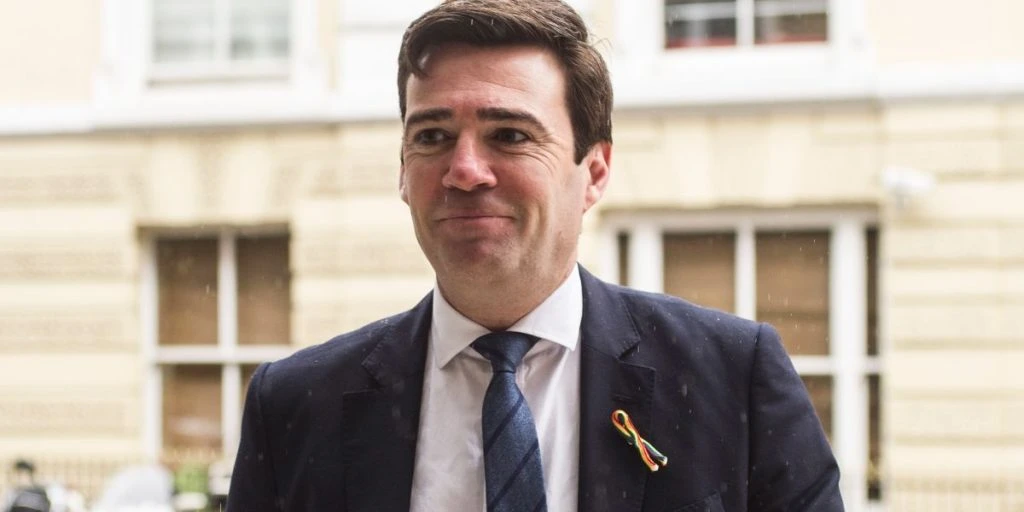
British Prime Minister Andy Burnham fell victim to a diplomatic hoax, exchanging messages with an impostor pretending to be White House Chief of Staff Susie Wiles before growing suspicious.

New UK Prime Minister Andy Burnham recently fell victim to a digital deception involving the highest levels of the United States government. During his first weeks in office, the British leader exchanged messages with an impostor pretending to be Susie Wiles, the powerful White House Chief of Staff. This breach of high-level communication protocols has raised fresh concerns about the growing sophistication of impersonation tactics targeting world leaders.
According to a report by AP News, Burnham believed he was directly texting with the senior adviser to President Donald Trump. He reportedly sent a few messages to the fraudulent contact before becoming suspicious about the identity of the sender and cutting off the interaction. A spokesperson for 10 Downing Street declined to comment on the specifics of the exchange, citing a strict government policy against discussing active national security matters.
Additional reporting from the Washington Examiner indicates that the initial contact was made shortly after Burnham assumed the premiership in July 2026 following Keir Starmer’s resignation. Anonymous officials familiar with the situation described the few exchanged messages as being “of no significance,” confirming that no sensitive conversations took place before the ruse was discovered. However, the incident was still deemed serious enough for the British Embassy in Washington to formally raise the issue with the White House.
A recurring threat in Washington
This is not the first time a malicious actor has successfully weaponized the identity of the White House Chief of Staff. Last year, the FBI and the White House launched a major investigation after various elected officials, state governors, and corporate executives received fraudulent calls and texts from someone impersonating Wiles. At the time, President Trump dismissed concerns about her devices being compromised, insisting that his chief of staff could handle the situation.


Following the latest incident with the British Prime Minister, speculation arose within the UK government that Wiles’ personal devices might have been hacked once again. However, a White House official forcefully rejected that theory, stating that the Burnham episode had absolutely nothing to do with any breach of the chief of staff’s personal technology. Instead, the incident highlights a broader trend of sophisticated phishing and impersonation campaigns aimed at disrupting international diplomacy.
Beyond the immediate circle of the White House, the U.S. State Department has recently issued stark warnings about the misuse of artificial intelligence by malicious actors. Diplomats were specifically alerted about attempts to impersonate Secretary of State Marco Rubio and other senior officials using AI-generated deepfakes. That warning followed a highly coordinated campaign where an impostor posing as Rubio attempted to contact at least three foreign ministers and a state governor.
The diplomatic fallout and security risks
For Andy Burnham, this security gaffe comes at a delicate time in the special relationship between the United States and the United Kingdom. Having taken the reins at 10 Downing Street less than a month ago, the new prime minister has actively tried to forge positive ties with the Trump administration. The prior relationship between the White House and Burnham’s predecessor, Keir Starmer, had reportedly soured, making these early diplomatic interactions particularly critical for the new Labour leader.
While the exchanged messages were ultimately harmless, the ease with which a foreign leader was reached by a fraudster highlights critical vulnerabilities in international communication channels. The incident serves as a stark reminder that even the highest echelons of government are not immune to social engineering tactics. Security experts warn that as AI technology becomes more accessible, distinguishing between genuine diplomatic backchannels and elaborate hoaxes will become increasingly difficult for state leaders.
The UK government has previously faced similar embarrassments regarding digital impersonation, including a 2024 incident where then-Foreign Secretary David Cameron was duped into a video call with a fake Ukrainian president. To prevent the Burnham incident from escalating into a larger diplomatic crisis, both British and American security agencies are quietly reviewing their verification protocols. For now, the prime minister’s office remains tight-lipped, focusing instead on navigating the complex political challenges ahead.



