
 Kenneth Glad
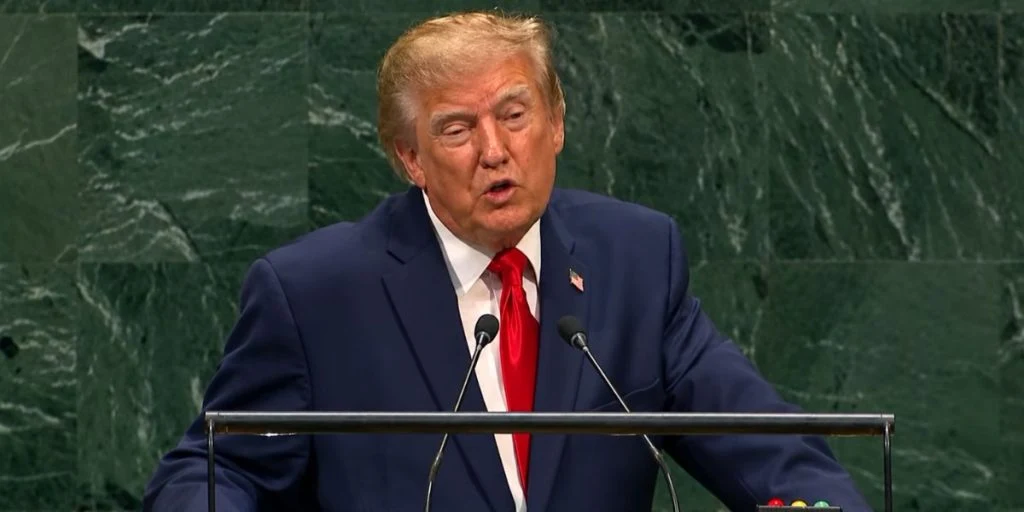
An international diplomatic body meets right now to review pressing security policies and government developments. Delegates listen attentively while official speakers present prospective economic measures and multilateral initiatives.


The annual international summit is currently underway at the United Nations headquarters in Manhattan, where heads of state continue to gather today. The Guardian indicates that diplomats remain deeply attentive as high-stakes discussions proceed inside the main hall throughout this ongoing diplomatic session.
United States President Donald Trump took center stage during these proceedings to detail his administration’s agenda.His speech reflected active military engagements across multiple continents while outlining assertive conditions for future foreign relations among participating sovereign states.
Before the primary address commenced, Brazilian President Luiz Inácio Lula da Silva delivered opening remarks to assembled global representatives. The South American head of state strongly criticized aggressive foreign interventions while defending national sovereignty, explicitly stating, “The Venezuelan people deserve to define their own destiny.”
Severe warnings target international conflict zones
Directing attention toward volatile international regions, Donald Trump issued forceful warnings regarding Iran during his speech. He signaled that uncompromising measures will follow if the adversary government fails to capitulate, threatening to “annihilate” the regime and “drive them into Hell” if they refuse a deal.


Addressing Eastern Europe, he insisted that active combat operations between Russian and Ukrainian military forces must come to an end rapidly. The president emphasized that newly enacted economic sanctions remain fully prepared for swift deployment, telling the assembly, “It’s time to stop the killing.”
The comprehensive address also contained a brief reference regarding territorial arrangements in northern strategic regions.As noted by The Guardian, Donald Trump made only a fleeting mention of today’s treaty signing involving Greenland and Denmark during his exceptionally long presentation to world leaders.
Western hemisphere initiatives emphasize strict security
Shifting focus toward neighboring territories like Mexico, the presentation defended recent controversial military operations executed across ocean transit routes. The Guardian outlines how active maritime strikes are currently being framed by officials as necessary components of a broader counter-narcotics campaign against drug cartels.
The American chief executive also justified recent political shifts in South America, asserting that military power was required to neutralize pressing national security threats. Economic agreements involving Venezuelan oil reserves were described as justified arrangements, with the president boldly declaring, “To the victor belong the spoils.”
Furthermore, stringent economic restrictions enforced against Cuba were highlighted as vital mechanisms for compelling structural political shifts. The administration reaffirmed its determination to maintain intense financial pressure until the communist governing structure collapses completely and allows new leadership to take hold.
The Cuban delegation walked out at this moment of the speech.
Economic metrics and technological advancements dominate the opening remarks
Prior to addressing foreign affairs, the president focused heavily on internal economic figures and domestic policy accomplishments. The Guardian reports that stock market benchmarks, taxation adjustments, and strict border enforcement statistics formed the initial foundation of the entire live address.
Immigration enforcement numbers were presented to demonstrate total control along southern border corridors over recent operational cycles. The speaker attributed these reported enforcement results directly to specialized operational personnel rather than taking personal political credit for achieving the recorded figures.
Technological terminology also surfaced as a notable topic during the live address delivered to international representatives, where the president rejected any “globalist scheme” to control artificial intelligence. The American leader encouraged global organizations to adopt alternative phrasing, asking them to call the technology “super intelligence” or “SI” instead.
The president spent much of his time at the podium delivering an extended monologue of self-praise. He repeatedly prioritized boasting about his own perceived triumphs over engaging in substantive diplomatic dialogue. Ultimately, the address served primarily as a lengthy exercise in self-congratulation before a captive global audience.
Source: The Guardian



