
 Kenneth Glad
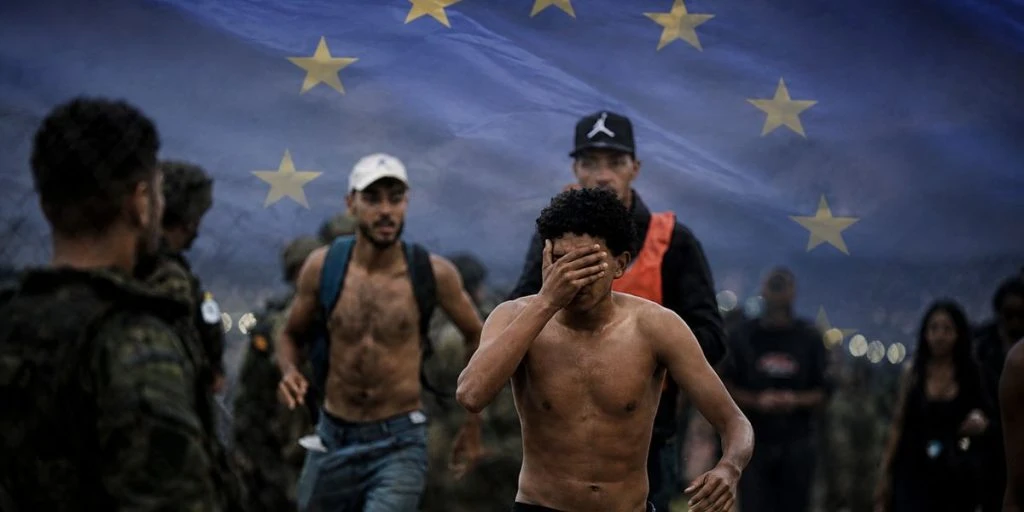
Events at an international frontier have renewed debate about security cooperation and regional diplomacy. The developments illustrate how border incidents can quickly become part of broader geopolitical discussions.


More than 70,000 people entered Ceuta from Morocco, many by swimming or wading around coastal barriers, before large-scale returns began, The Guardian reports.
Ceuta is one of two Spanish enclaves on the North African coast. The Council of the European Union includes land arrivals through Ceuta and Melilla within the Western Mediterranean route into Spain, underlining their importance to European border management.
Morocco does not recognise Spanish sovereignty over Ceuta, adding a territorial dispute to an already sensitive relationship.
The influx recalled May 2021, when more than 8,000 people reached the enclave after Morocco relaxed border controls during a diplomatic confrontation with Spain. That episode followed Madrid’s decision to allow a Western Sahara independence leader to receive medical treatment in the country.


Morocco’s role faces scrutiny
Senior Moroccan officials denied helping to facilitate the latest crossing.
Riccardo Fabiani, North Africa project director at the International Crisis Group, told The Guardian that Moroccan security forces were probably aware of online rumours claiming the border had opened.
He suggested that authorities may have followed the situation without immediately intervening. The account remains an analyst’s interpretation and has not been independently established.
Haizam Amirah-Fernández, director of the Centre for Contemporary Arab Studies in Madrid, told The Guardian that the events bore similarities to the 2021 crisis. He described Morocco’s methods as “hybrid tactics to achieve political objectives”.
The latest episode came during a period of close relations between Rabat and Donald Trump’s administration. During Trump’s first presidency, Morocco agreed to establish relations with Israel as Washington recognised Rabat’s sovereignty claim over Western Sahara.
After the Ceuta influx, Trump, Vice-President JD Vance and the US state department criticised Spain’s Socialist-led government. None publicly addressed allegations that Morocco may have played a role.
According to The Guardian, King Mohammed VI also confirmed that a $1bn highway near Western Sahara would carry Trump’s name. Morocco had earlier announced that it would become the first African state to join Trump’s Board of Peace.
EU dependence limits response
Moroccan cooperation remains important to European efforts to control irregular migration. People travelling through Morocco can reach Spain by sea or through Ceuta and Melilla.
That helps give Rabat an influential role along an established migration route towards Spanish territory. European governments must consider the possible effect on border enforcement, security and trade when responding to disputes with Morocco.
Amirah-Fernández said disagreements among EU governments prevented a coordinated response and divided European capitals over responsibility for the crisis.
The European Commission notes that Ceuta and Melilla are outside the EU customs territory. They are subject to specific rules governing trade with the bloc and with countries covered by EU free-trade agreements.
The territories’ unusual legal and geographical position adds another layer to relations between Spain, Morocco and European institutions. At the same time, the EU’s reliance on Rabat for migration cooperation limits the pressure it can apply during diplomatic confrontations.
“This has made Europe entirely vulnerable and dependent on the goodwill of a country like Morocco,” Fabiani said.
Sources: The Guardian



