
 Kenneth Glad

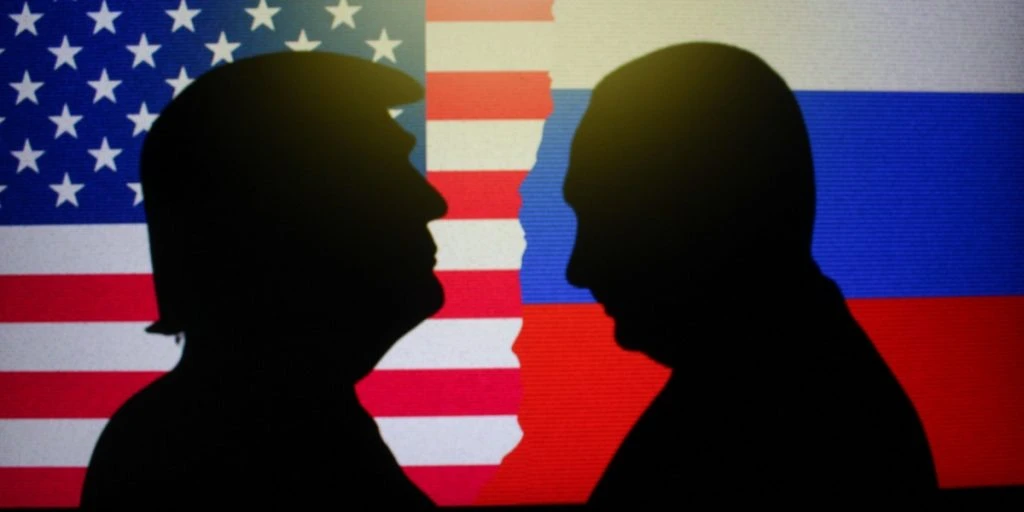
In the world of high-stakes diplomacy, every leader looks for a hidden advantage. Sometimes that edge comes from a sudden breakthrough. Other times it relies on a quiet threat thousands of miles away.


Donald Trump has built his brand on the promise of the perfect deal, relying heavily on a transactional approach to foreign policy during his presidency. His famous 1987 book cemented his reputation as a master negotiator who views global politics through a business lens.
Today, however, those skills face a severe test against Russian President Vladimir Putin, a former KGB intelligence officer trained in strategic patience.
United States researcher Hilde Restad told NRK that Putin holds a clear advantage. She described the Russian leader as a sly operator with a grasp of complex diplomacy that Trump lacks.
This dynamic could have severe consequences for an already fragile region. Moscow and Tehran have nurtured a strategic partnership for decades, and Putin now has the power to drastically increase military aid to Iran, raising the threat level for American troops stationed across the Middle East.


The satellite connection
That threat is not theoretical. On March 27, Iranian forces launched a barrage of drones and rockets at the Prince Sultan Air Base, a sprawling military hub deep in the Saudi Arabian desert.
The strike destroyed an American AWACS surveillance plane valued at half a billion dollars. These aircraft act as flying radar stations, and losing one creates a major blind spot for regional defenses. Twelve soldiers were wounded in the blast.
According to CNN, 14 Russian spy satellites passed directly over the base two days before the attack. Intelligence sources told the network that pulling off such a precise strike against a guarded facility would be nearly impossible without Russian targeting data.
Trading favors
Russia denied any involvement. Still, the timing raised alarms across Western intelligence agencies. Politico reported that a Russian envoy, Kirill Dmitriev, offered a secret swap in March.
Moscow proposed to stop giving Iran the coordinates of American targets. In exchange, the United States had to stop sharing its own battlefield intelligence with Ukraine. The US reportedly rejected the back-channel offer immediately.
American data has been vital for Kyiv. It allows Ukrainian forces to intercept incoming missiles and strike Russian supply lines. Cutting that lifeline would severely weaken Ukraine.
Russia researcher Julie Wilhelmsen told NRK that Putin knows exactly how to pressure the current US administration. She warned that he might boost Iranian military capacity simply to force a compromise on Ukraine. For the Kremlin, helping Tehran serves as a low-cost tool to squeeze Washington.
Public statements
Trump recently addressed the situation on Truth Social, using the platform to broadcast his foreign policy directly to his supporters. He wrote that Russia is doing little to help Iran, adding that he wants to keep it that way. This kind of public signaling completely bypasses normal diplomatic channels.
Restad noted that this statement leaves Trump vulnerable to blackmail. By showing exactly how much he fears a stronger Moscow-Tehran alliance, the president hands leverage straight to the Kremlin. She told NRK that Trump makes it sound like Putin holds all the cards.
Ukrainian President Volodymyr Zelenskyj weighed in during a high-profile visit to Oslo. He traveled to the Norwegian capital specifically to meet with US special envoy Steve Witkoff. Speaking to NRK, he confirmed Russian support for Iran. That military partnership is already a daily reality for Ukrainian cities facing Iranian-designed drones.
“We have seen that Russia has delivered drones to Iran. I also think they have shared information from satellites and other intelligence,” Zelenskyj said. “That is what we know. I do not know much more. But I know that Russia stands on Iran’s side.”



