
 Christine Drews Sieger
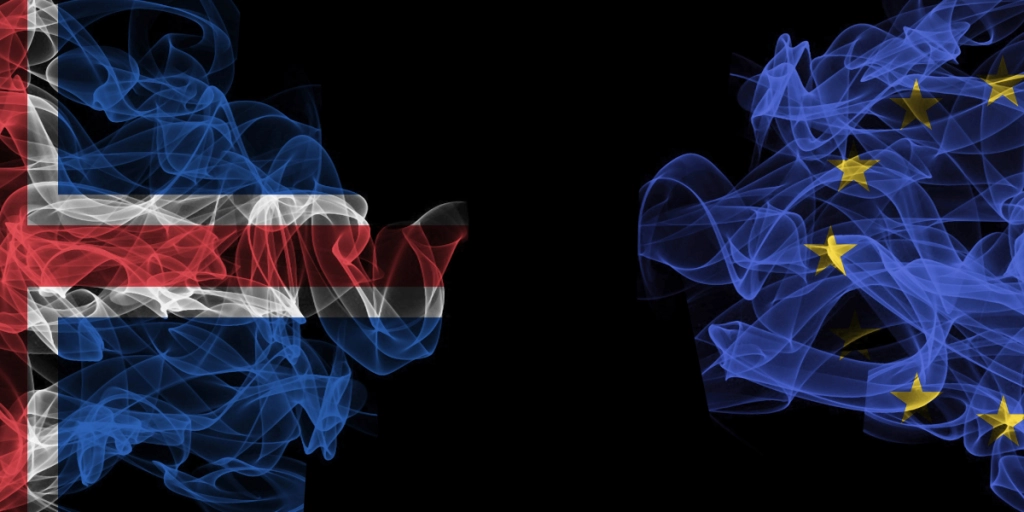
Icelanders have voted against reopening talks to join the European Union.

Citizens across Iceland voted on Saturday to shut down plans to reopen membership negotiations with the European Union.
Media outlets including public broadcaster RUV reported that 52.8% of voters rejected the government’s proposal, while 47.2% supported the push. Voter participation reached 82.5% in the high-stakes referendum, according to NBC News.
Iceland’s prime minister, Kristrún Frostadóttir, had made it clear prior to the vote that a rejection would effectively close the door on EU talks for the foreseeable future.
Her administration had promoted membership as a critical safeguard against global economic volatility and shifting regional dynamics.


Officials in Brussels had watched the vote closely. A “yes” was seen as a way to strengthen European security in the Arctic—a region drawing increased geopolitical focus amid shifting global tensions and renewed U.S. interest in neighboring Greenland.
Deep economic split
Escalating inflation and high interest rates have squeezed household budgets hard across the North Atlantic island, NBC News reports.
Supporters argued that adopting the euro could offer quick relief, pointing out that Iceland’s 8% central bank benchmark dwarfs the European Central Bank rate of 2.25%.
Highlighting the potential financial upside, Vilhjalmur Hilmarsson, chief economist at the Viska labor union, noted that entering the bloc “would not solve Iceland’s structural faults, but it could become a catalyst to a more healthy economy.”
However, opponents centered their campaign on protecting national sovereignty and safeguarding the island’s vital fishing waters.
Opposition leader Guðrún Hafsteinsdóttir insisted that joining would not fix internal trouble: “These are not problems that Brussels will solve for us. These are problems that Icelandic politicians must solve.”
Future on hold
Iceland’s EU ambitions date back to 2009, when a devastating financial collapse prompted the initial application—a process later halted by a Eurosceptic administration in 2013.
For many residents, preserving local control over natural resources and maritime zones mattered far more than potential financial shortcuts.
Pre-election surveys showed a clear shift in public sentiment as polling day approached, according to NBC News.
Voting in Reykjavik, 70-year-old Ragnhildur Skarphedinsdottir felt the country was managing fine on its own: “By staying independent as we are, we look brightly to the future,” she said before casting her ballot.
Europe Without Membership
Iceland’s rejection of renewed EU accession talks does not mean the country is turning away from Europe altogether.
According to Euronews, Iceland already enjoys broad access to the EU’s single market through the European Economic Area agreement and is also part of the Schengen Area.
The referendum instead showed that many Icelanders remain satisfied with the country’s existing relationship with Brussels, which provides close economic and political ties without full EU membership.
For now, voters have chosen to preserve that carefully balanced status quo rather than take the next step toward joining the bloc.



