
 Kenneth Glad

When a television screen flickers on for the evening news, viewers expect to hear about the world outside. They trust the person behind the desk to tell them what happened that day. Sometimes, though, the biggest story is the one unfolding right inside the studio.

The five o’clock news bulletin on Serbian broadcaster RTV usually runs like any other. As a state-funded regional broadcaster, its daily coverage rarely strays from the official government line. But on Monday, the script changed completely.
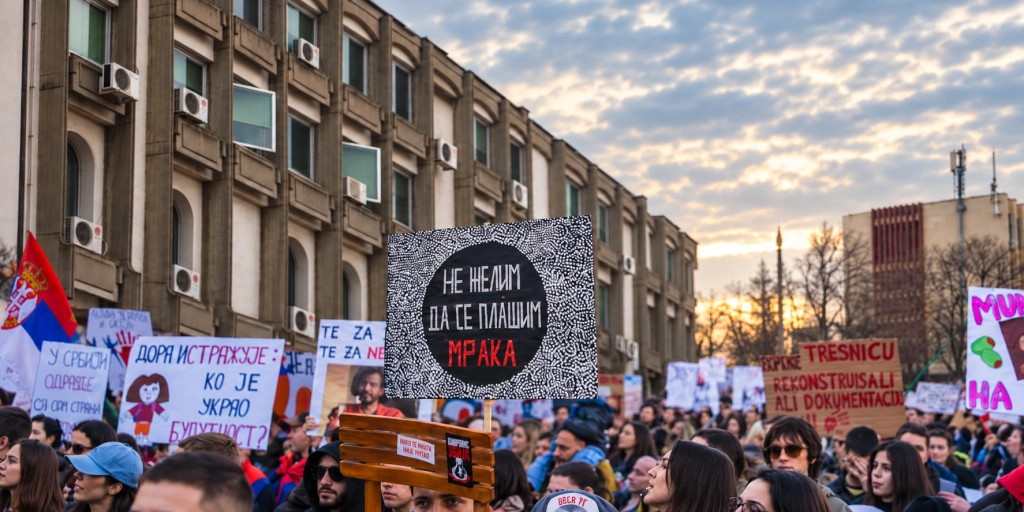
Following the highly charged weekend election, the channel showed footage of citizens celebrating in the streets. The network had ignored these scenes the night before. They aired a heavily filtered rundown of the day instead.
Thousands of voters had rallied across Novi Sad. Recognizing this glaring omission, the presenter decided to clear the air, according to Vreme.
News anchor Goran Eror looked directly at the camera and delivered a stunning message. The words marked a sharp break from years of tightly controlled programming.


Breaking the silence
“The public service did not perform its function for many years. It kept silent, turned a blind eye, informed unilaterally, reported uncritically, did not ask the right questions or did not ask questions at all. And for that, we owe the viewers an apology,” Eror said, according to Vreme.
The anchor explained that staff members had been fighting for editorial freedom behind the scenes.
“Unfortunately, we did not win the battle in time, but we believe it is an important fight to fight,” he read, as reported by Meduza.
The sudden on-air shift followed a massive political upset. A youth movement called the Student List had just won a decisive victory over the political alliance led by Aleksandar Vučić.
Born out of widespread public protests in 2024, the student group secured nearly 53 percent of the vote. That result gives them 140 seats in Serbia’s 250-member parliament, according to the National Herald
Vučić had resigned as president just a month earlier. He hoped to return to power as prime minister. Instead, his coalition secured only 104 seats, triggering immediate public demonstrations outside several major news networks.
Leaders step down
The on-air apology brought immediate consequences. Nenad Ćaćić, the acting editor-in-chief of the main channel, resigned from his leadership post.
Network officials quickly appointed Blažo Popović to take his place, while Predrag Novković took over as program director. According to the National Herald, the Nezavisnost journalists union had been demanding these exact changes for more than a year.
The union frequently called out the broadcaster for favoring the government and destroying the network’s integrity. Union representative Darko Šper even held a meeting in the lobby to remind staff of their ethical duties.
Standing before his colleagues, Šper read four specific rules from the journalistic code. He urged everyone to watch that evening’s broadcast and declared that the public simply needs the truth.
Echoes from Hungary
The scenes in Serbia closely mirror a nearly identical media revolt that took place elsewhere earlier this year. The political shifts reshaping Eastern Europe are forcing state-funded broadcasters to confront their own legacies of censorship.
When the Hungarian government changed hands in the spring of 2026, public television channel M1 cut its broadcast to a black screen, according to El Constitucional. That dramatic move sent a clear signal to viewers across the country.
The network then issued a public apology for spreading political propaganda during Viktor Orbán’s long rule.
Now, Serbian journalists are navigating that same path to rebuild public trust. Reversing an entrenched autocratic media culture remains a complex challenge for the incoming reformists.



