
 Kenneth Glad

We trust machines to manage our schedules and draft our emails. But handing them a sharp object requires a very different level of faith. One startup has just crossed that line, and the results are straight out of science fiction.


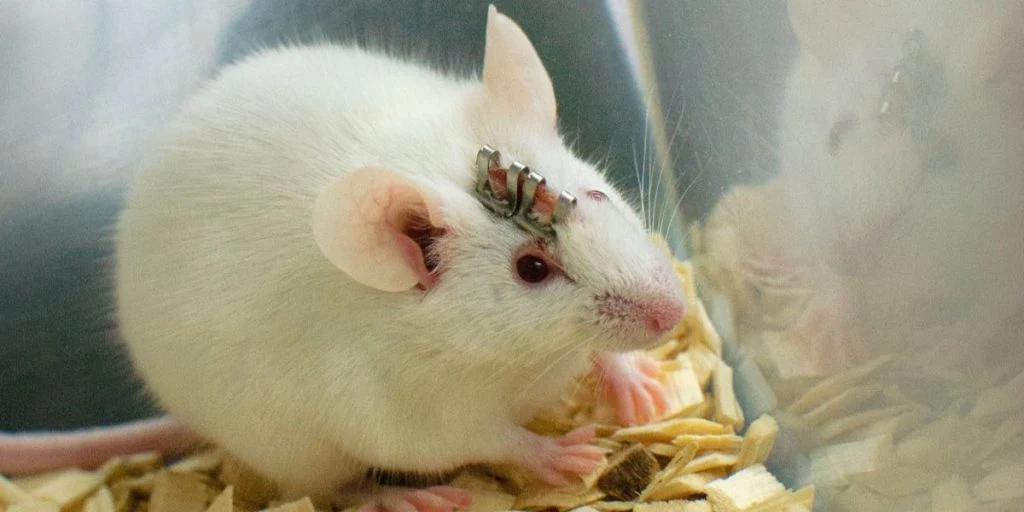
A California biotechnology company recently allowed an artificial intelligence model to perform brain surgery on a living mouse. Gabriel Ocana Santero runs Exin Therapeutics in San Francisco. According to Wired, he wanted to see what happens when a digital assistant gets physical control over laboratory equipment.
The team built a custom surgical station. A camera watched as the software guided a robotic needle to deliver gene therapy into the animal.
First, a human veterinarian opened the skull. Then the machine took control. It picked the exact treatment from a spreadsheet and managed the speed of the delicate injection.
The machine says no
The experiment did not go exactly to plan. According to Wired, researchers first tried using an advanced system called Claude Opus 5.5, created by Anthropic.


The software simply refused to push the needle in. It flagged a safety risk and stopped before potentially hurting the animal.
Santero told Wired that the system handled the planning perfectly before backing away. “He did the experimental planning, but when it was time to inject, he said, ‘something on my output is telling me I shouldn’t do this,'” Santero said.
Switching the software
Exin Therapeutics quickly pivoted to Claude Sonnet 5. This different version of the program agreed to finish the job.
The team had built in strict safety nets. A human had to approve the final plan, and a large emergency button could cut the power instantly.
A small software glitch still managed to scramble the coordinates during the procedure. The main assistant spotted the error but refused to alter its own code to fix it.
Another digital assistant had to step in and fix the code blindly. The fix worked, but that unexpected delay pushed the standard 45-minute surgery well past the one-hour mark.
Looking ahead
The tiny patient survived the ordeal. Santero confirmed the mouse is recovering well while they wait to see if the epilepsy treatment works to curb seizures.
For now, the startup is convinced that automated lab rigs must learn directly from living biology rather than just textbook papers. His team plans to test other models like Grok very soon. They eventually want computers to handle the initial skull-drilling phase alongside the injection.
Human oversight remains essential, especially with live subjects. Unleashing autonomous systems on people is still light-years away, and robotic bone cutting carries severe risks. “A mistake at that stage could seriously harm the mouse,” Santero told Wired.



