
 Christine Drews Sieger
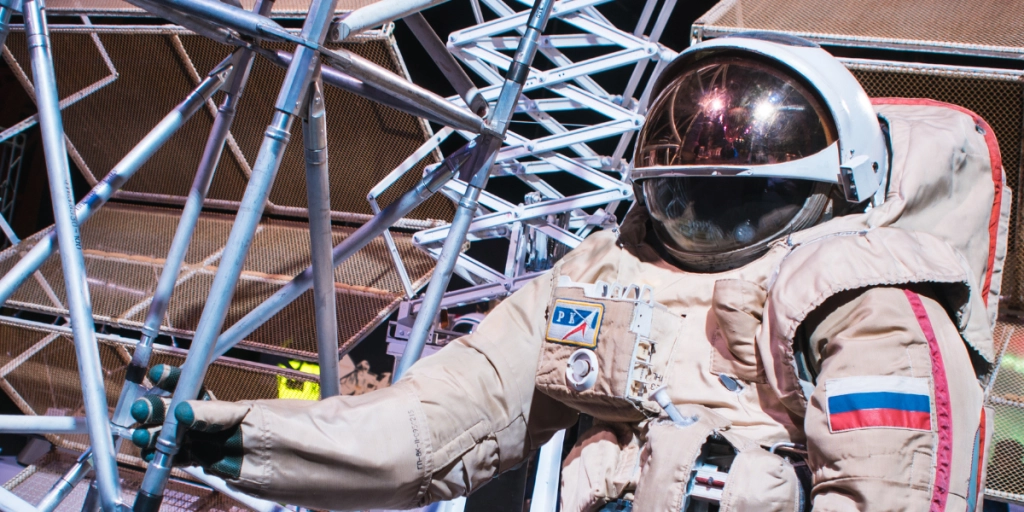
Russia promises ambitious Moon and Mars colonies despite facing historic launch failures and severe delays in its space program.


On August 26, 2026, the head of Russia’s space agency Roscosmos, Dmitry Bakanov, declared that the nation will construct permanent colonies on the Moon and Mars.
Officials emphasize that today’s population could live to see permanent off-world bases equipped with dedicated support systems.
Bakanov framed the lunar surface as more than a scientific research platform, calling it an essential safety net for mankind.
“There should always be a backup option where humanity could ‘move.’ And this will be impossible without space. The first stage is the Moon,” Bakanov said.


By 2036, Russia aims to establish an unprecedented lunar nuclear reactor – an ambition Vice Prime Minister Denis Manturov pitched directly to Vladimir Putin in mid-2025, United 24 Media reports.
Rising launch setbacks
Despite these sweeping announcements, Russia’s space program faces severe operational difficulties and cascading schedule changes on the ground.
A flagship lunar landing effort ended abruptly in 2023 when the Luna-25 probe crashed into the moon, halting momentum.
Technical delays continue to push core timelines further into the future.
Timeline slippage pushed the next uncrewed lunar flight from 2027 to 2028, according to April 2026 statements from Academy of Sciences official Sergei Chernyshev, United 24 Media reports.
Meanwhile, Lev Zeleny, scientific director of the Academy’s Space Research Institute, acknowledged that Moscow has no active plans for piloted deep-space missions over the coming decade.
A major launchpad accident at Baikonur further hampered progress during the Progress MS-33 supply effort.
Historic launch lows
Flight activity across Russia’s space sector has plunged to levels unseen since the earliest days of human spaceflight.
By early 2026, domestic space officials publicly acknowledged that Moscow had relinquished its historical standing among top-tier global space powers.
Annual flight tallies reflect this steep operational downturn across the board.
With a modest 2025 tally of 17 orbital attempts—identical to its 2024 record—Roscosmos tied with New Zealand.
According to United 24 Media, this output pales in comparison to global leaders, lagging behind China by a factor of five and the US by ten.
Without fresh funding strategies or rapid engineering breakthroughs, the gap between Russia’s bold colonization targets and its actual launch capacity continues to widen.
China Partnership Becomes Increasingly Important
Russia’s ambitious plans for permanent settlements beyond Earth are also closely tied to its growing space partnership with China.
According to Interfax, Moscow and Beijing agreed in May 2026 to deepen cooperation on major space projects, including the International Lunar Research Station, lunar exploration and missions into deep space.
The agreement underlines that Russia’s push to return to the Moon is increasingly connected to a broader international partnership, even as Roscosmos faces mounting delays and technical setbacks at home.



