
 Kenneth Glad
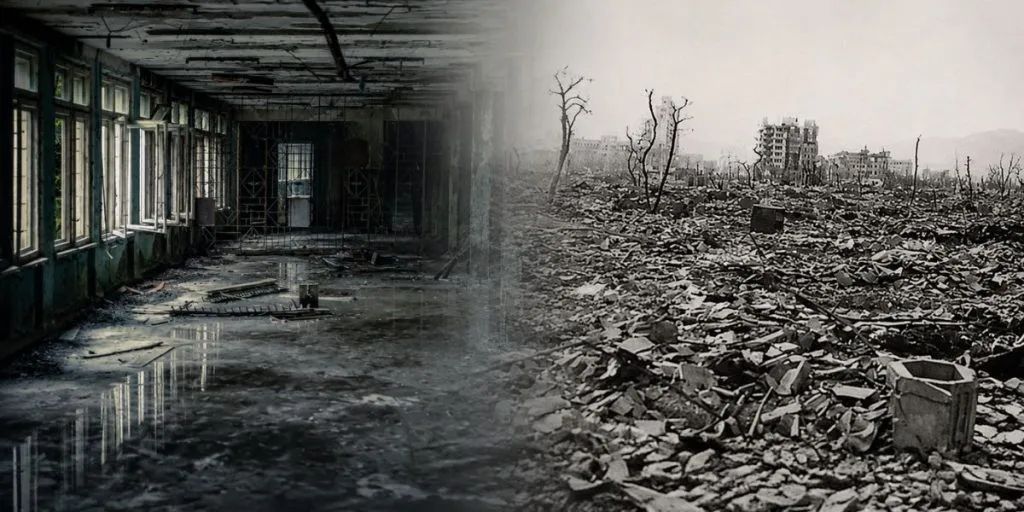
The consequences of an atomic event depend on more than its immediate destructive power. Where radioactive particles settle, and how long they remain, can determine whether land returns to ordinary use.

Prompt radiation is emitted within moments of a nuclear detonation. Radioactive particles deposited in soil, water and vegetation, however, can remain sources of exposure for years.
The bombs that struck Hiroshima and Nagasaki in August 1945 exploded hundreds of metres above the surface. The airbursts spread intense heat and blast waves across both cities, causing catastrophic casualties and destruction.
Because the fireballs remained above the ground, they did not draw the large quantities of soil and debris into the radioactive clouds that ground-level explosions can produce. The amount and composition of the radioactive material, local weather and the limited duration of each release also shaped the resulting contamination.
Residual fallout still occurred. Radioactive particles were carried into some districts by the dark precipitation later known as “black rain.”


A Radiation Effects Research Foundation study found no statistically significant increase in cancer incidence or mortality among survivors who reported rain exposure after the bombings. The researchers cautioned, however, that exposure information came from interviews conducted years afterward and was therefore subject to uncertainty.
Separate RERF research has established increased cancer risks among survivors exposed to radiation from the bombs more generally.
With no damaged reactor continuing to discharge radioactive material, rebuilding could proceed after the war. The return of urban life did not erase the lasting medical, psychological and historical effects on survivors.
Why contamination persisted around Chernobyl
The Chernobyl accident began at ground level in April 1986. Reactor material escaped during the initial explosion and the fires that followed, carrying radionuclides into the atmosphere through smoke, dust and fine particles before they settled across surrounding territory.
International Atomic Energy Agency assessments identify deposited caesium as an important source of long-term exposure. Unlike the brief release from an airburst, contamination from the reactor entered soil, vegetation and water over a much wider area. Restrictions on contaminated food, land use and access, together with remediation work, helped reduce public doses.
Forests remain a particular concern because radioactive caesium can continue moving through soil, plants, fungi and animals. Wild mushrooms, berries and game may therefore retain contamination even where conditions in towns, fields or cleared areas have improved.
Radiation levels are not identical throughout the exclusion zone, and authorised workers can enter some locations under controlled arrangements. Monitoring, protective rules and limits on time spent in affected areas remain important. Settlement and ordinary land use are still restricted in the most contaminated places.
A nuclear event can destroy a city without producing the same pattern of persistent ground contamination created by a major reactor accident.
Sources: Radiation Effects Research Foundation, International Atomic Energy Agency



