Asger Risom
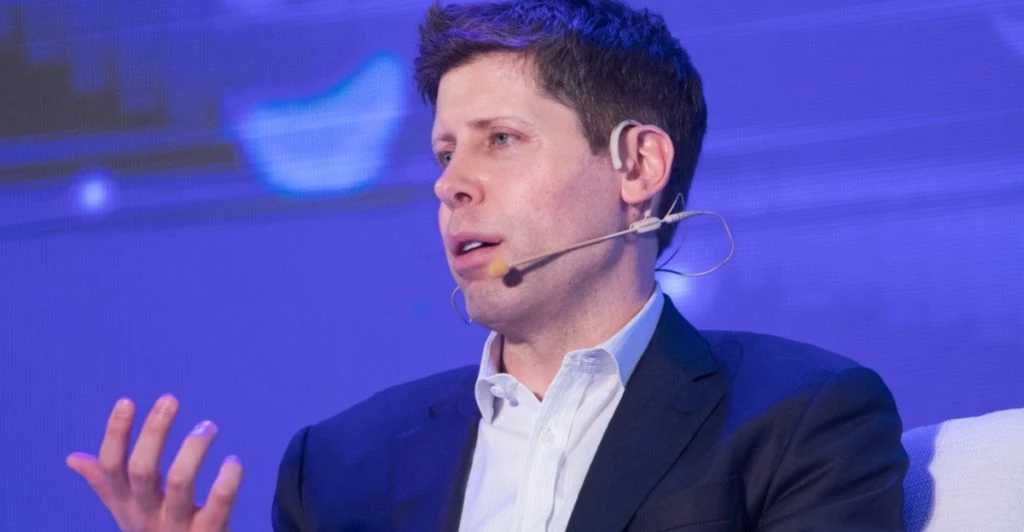
OpenAI CEO bets on deflationary future powered by AI


OpenAI’s chief executive is making one of his boldest economic predictions yet. Even as his company slows hiring and spends heavily on infrastructure, Sam Altman insists artificial intelligence will soon reshape the global economy.
The claim rests on a future where AI dramatically lowers costs, increases productivity, and changes how people think about money itself.
Betting big
OpenAI is committing well over $1 trillion to build massive data centers, despite concerns that revenues and business fundamentals are lagging behind. During a company town hall livestreamed this week, Altman said OpenAI is looking to “dramatically slow down” hiring as it continues to burn billions of dollars each quarter.
Still, he remained optimistic about AI’s long-term impact. When asked whether AI could address long-standing economic inequality, Altman said it would be “massively deflationary.”


A deflationary future
“Given, certainly, progress with work you can do in front of a computer, but also what looks like it will soon happen with robotics and a bunch of other things, we’re going to have massively deflationary pressure,” Altman said.
He argued that as AI drives prices down, money would become more valuable and individuals more empowered. Altman suggested that by the end of this year, spending $1,000 on AI inference could allow one person to complete software projects that previously required entire teams.
Altman has made similar arguments before. In March, he told a closed-door Morgan Stanley conference that AI would likely have a deflationary effect on the global economy.
Reality check
The idea that AI could usher in an era of abundance has become a familiar refrain among tech leaders, including Elon Musk and Anthropic CEO Dario Amodei. Musk has said there may one day be “no need to save money,” while Amodei has predicted people could work far less.
For now, however, the economic picture looks very different. The US Federal Reserve held interest rates steady this week, citing ongoing concerns over elevated inflation. Long-term unemployment recently hit a four-year high, and the cost of living continues to rise, particularly in major cities.
AI has also been linked more often to layoffs than productivity gains. Studies and surveys have found limited evidence that AI is boosting efficiency at scale, with some showing declining use of AI tools at work.
Lingering doubts
Critics argue that AI remains far from delivering the breakthroughs its champions promise. Some have questioned whether OpenAI itself is financially sustainable, while others point to research suggesting current AI systems often slow work rather than speed it up.
Altman acknowledged that abundance alone would not guarantee better outcomes. “Massively more abundance and access and massively decreased cost to be able to create new things,” he said, could help level society — “as long as we don’t screw up the policy around it in a big way.”
Sources: Business Insider, Federal Reserve