
 Mikkel Christensen
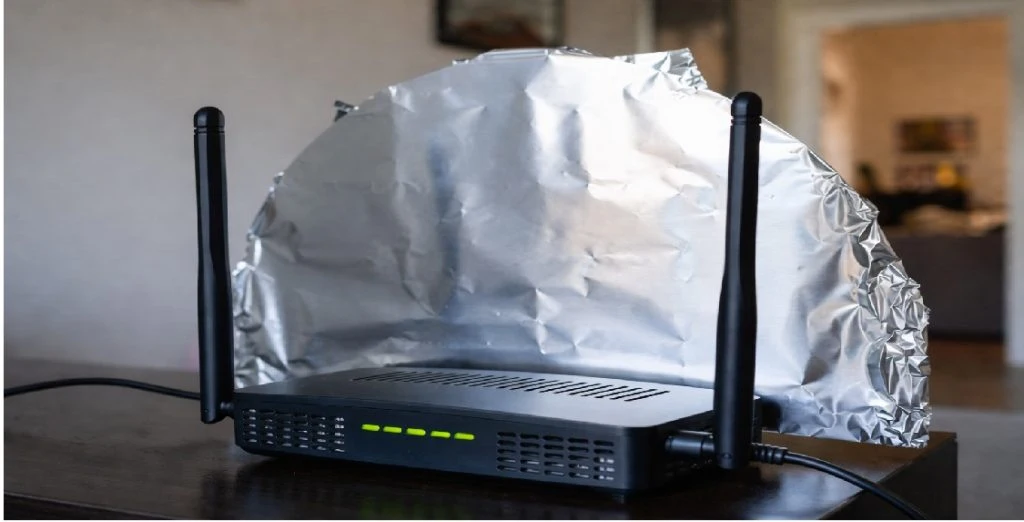
A common kitchen staple is drawing renewed attention for its potential to improve wireless internet.


A common kitchen staple is drawing renewed attention for its potential to improve wireless internet.
What began as an old workaround for TV reception is now being revisited as a way to enhance Wi-Fi coverage at home.
While it may sound unconventional, researchers say there is evidence behind the idea.
Tested in lab
According to BGR, researchers at Dartmouth College’s Department of Computer Science found that reflective materials can help shape Wi-Fi signals.


Their study showed that an “optimized reflector” can strengthen or weaken signals depending on how it is positioned.
Aluminum foil, the report noted, can act as a simple reflector capable of influencing wireless coverage.
How it works
Placed behind a router, the foil redirects signals toward a specific area, rather than allowing them to spread evenly in all directions.
This can help improve coverage where it is needed most.
BGR reported that such adjustments can reduce dead zones and improve signal performance in targeted areas. At the same time, the foil can limit signal strength in other directions.
This directional control may also help reduce unwanted signal reach beyond a home.
DIY solutions
Although effective, placing plain foil behind a router may not be visually appealing. Some users have experimented with more refined setups.
The Dartmouth research included 3D-printed reflectors designed to better guide signals. However, simpler household solutions can achieve similar results.
According to BGR, even a curved sheet of aluminum foil or a repurposed aluminum can can function as a basic reflector.
Practical limits
The foil method is not a replacement for upgrading equipment or internet service, but it can help optimize an existing setup.
As home networks face increasing demand, small, low-cost adjustments like this may offer a practical way to improve performance without additional expense.
Sources: BGR



