
 Jens Asbjørn Bøgen
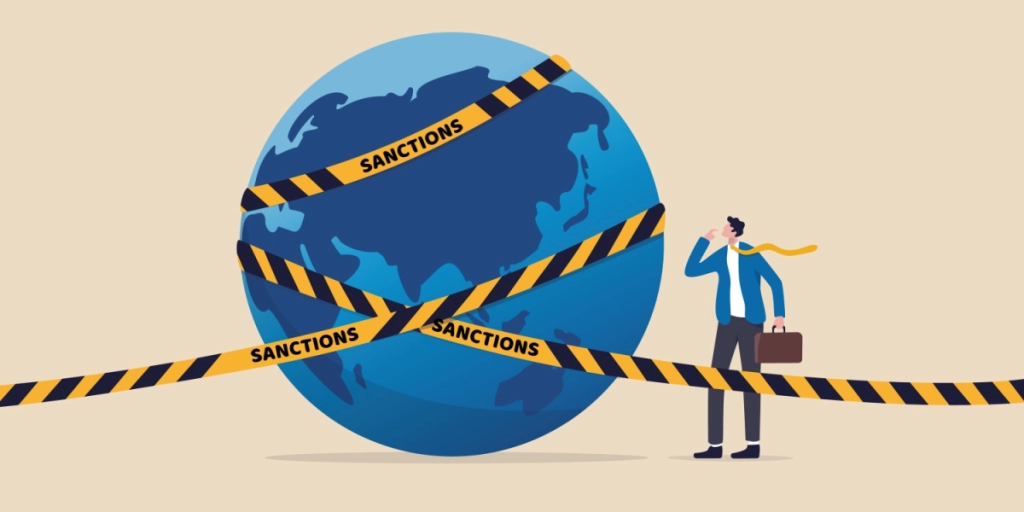
From Havana to Tehran to Moscow, economic pressure has become America’s default response short of war.

Sanctions are everywhere with the EU working on the 22nd sanctions package against Russia and the US imposing sanctions on targets such as Cuba, Iran, North Korea and Russia.
Washington actually now runs more sanctions programs than any government in history, layering restrictions on adversaries and, increasingly, on the companies and banks that trade with them.
Yet the underlying question of whether the tool actually changes the behavior of the countries it targets has a stubbornly consistent answer in the academic record.
The most detailed database of sanctions episodes, maintained by the Peterson Institute for International Economics (PIIE) in Washington, tracks every case since 1914.


Reviewing that record, PIIE researchers concluded in 2008 that sanctions succeed “in about one-third of cases overall,” and that policymakers who expect more are typically disappointed.
The database, first assembled by Gary Hufbauer, Jeffrey Schott and Kimberly Elliott in the 1990 edition of Economic Sanctions Reconsidered, covered 116 episodes; the current version has grown to more than 170.
What separates the winners from the failures
The pattern of wins is narrow. PIIE’s read of the data is that sanctions land hardest when the goal is limited, the target is friendly and the tools mix trade with finance.
“Friends are more likely than foes to comply,” the researchers wrote in 2008.
Sanctions are most effective when aimed at allies and trading partners,” the institute summarized at its own event on the research.
Autocracies, by contrast, absorb the pain and dig in. “Bullying bullies with sanctions is generally an ineffective strategy,” the same PIIE summary notes.
That is almost the exact opposite profile of the countries at the center of current US sanctions policy: Russia, Iran, North Korea, Cuba and Venezuela are authoritarian, not close US trading partners, and are targeted with open-ended, maximalist demands.
The backfire problem
A parallel line of research warns that heavy US reliance on financial sanctions is beginning to erode the leverage that makes them work at all.
In Backfire, published by Columbia University Press, former Economist Intelligence Unit economist Agathe Demarais argues that sanctioned states increasingly forge “closer to each other, or, increasingly, to Russia and China,” and that firms and governments develop circumvention strategies that dull the impact of the next round.
The plumbing of the world economy shows the drift. The dollar’s share of allocated global reserves had fallen to around 58 percent in early 2025, according to IMF data cited by analysts tracking dedollarization, and a growing share of trade between China, Russia and their partners now clears in yuan rather than dollars.
Where US policy is heading anyway
Sanctions are nonetheless deepening. On August 7, the Senate passed the Lindsey O. Graham Sanctioning Russia and Iran Act of 2026 by 86 to 11, authorizing tariffs of up to 100 percent on the top five purchasers of Russian oil or natural gas, according to CBS News.
The bill is named for the late Senator Graham, who died on July 11, 2026.
China, India and Turkey are the countries most exposed as top buyers of Russian energy. The bill now sits with the House, delayed by the summer recess, and would give the president the largest secondary-sanctions authority in US history if enacted.



